Earth Overshoot Day 2025 Hits Record Early Date of July 24 as Global Resource Consumption Outpaces Natural Regeneration

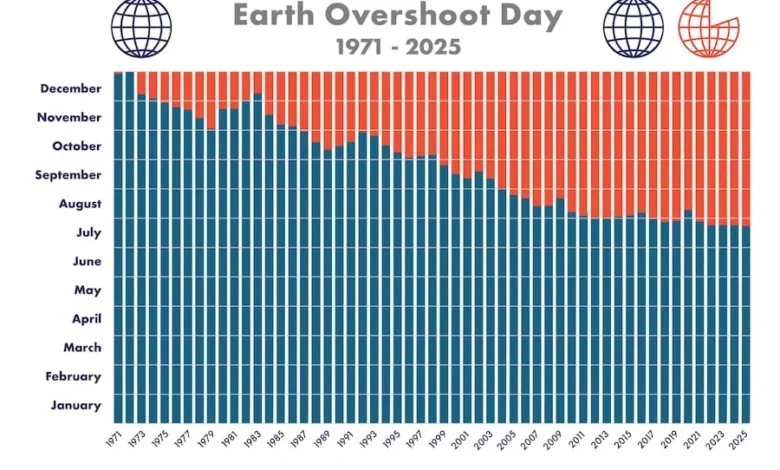
Humanity has officially exhausted the Earth’s budget of biological resources for the year 2025 as of July 24, marking the earliest Earth Overshoot Day since records began. According to data released by the Global Footprint Network, the international research organization that tracks human demand on nature, the world is now operating in an ecological deficit, consuming resources 1.8 times faster than the planet’s ecosystems can regenerate them within a single year. This milestone serves as a stark reminder of the widening gap between human consumption habits and the biological capacity of the biosphere to support them.
Earth Overshoot Day is calculated by dividing the planet’s biocapacity—the amount of ecological resources Earth is able to generate that year—by humanity’s Ecological Footprint, which measures total demand. That quotient is then multiplied by 365, the number of days in a year. For 2025, the results indicate that it would take nearly two Earths to sustainably support the current global population at its existing level of consumption. The July 24 date surpasses the previous record of July 25, which was set in 2022 and matched in 2023, signaling a continued trend of accelerated resource depletion.
The Evolution of Ecological Debt: A Historical Chronology
The concept of Earth Overshoot Day was first conceived by Andrew Simms of the UK think tank New Economics Foundation, who partnered with the Global Footprint Network in 2006 to launch the first global campaign. However, the organization maintains a retrospective timeline that tracks the relationship between human demand and biocapacity back to the 1960s.
In the early 1960s, humanity’s total footprint was well within the planet’s limits, utilizing only about three-quarters of the Earth’s annual regenerative capacity. The shift into "overshoot"—the point at which annual demand exceeds annual supply—occurred in the early 1970s. In 1972, Earth Overshoot Day fell on December 31, meaning the world was almost in balance. By 1979, the date had crept up to November 3.
Throughout the 1980s, the date moved steadily earlier, reaching October 12 by 1989. The 1990s saw a continuation of this trend, with the date landing on September 25 by 1999. When the first official Earth Overshoot Day campaign was launched in 2006, the calculated date was August 22. The 2010s saw the threshold cross into July for the first time in 2018.
A brief and notable anomaly occurred in 2020, when the global lockdowns prompted by the COVID-19 pandemic caused a sharp, albeit temporary, reduction in carbon emissions and resource consumption. This pushed the date back to August 22. However, as global economies reopened and industrial activity resumed, the date immediately returned to its July trajectory. The July 24, 2025, date represents a culmination of decades of increasing industrialization, dietary shifts toward resource-intensive foods, and a global energy system still heavily reliant on fossil fuels.
The Metrics of Consumption: Biocapacity vs. Footprint
The Global Footprint Network’s methodology relies on National Footprint and Biocapacity Accounts, which use UN data to track the resource demands and regenerative capacity of more than 200 countries. Biocapacity represents the productivity of a city, state, or nation’s assets, including cropland, grazing land, forest land, fishing grounds, and built-up land. These areas, especially if managed well, can absorb much of the waste humans generate, particularly carbon emissions.

The Ecological Footprint, conversely, measures the amount of biologically productive land and sea area an individual, a population, or an activity requires to produce all the resources it consumes and to absorb its waste. Currently, carbon emissions from burning fossil fuels make up 60% of humanity’s total Ecological Footprint.
The fact that the world has reached overshoot by late July means that for the remaining 160 days of the year, humanity is surviving on "natural capital" rather than "natural interest." This involves depleting stocks of fish, over-harvesting forests, and, most critically, accumulating carbon dioxide in the atmosphere that the planet’s oceans and forests cannot sequester.
Ecological and Economic Implications of Persistent Overshoot
The consequences of running an ecological deficit are not merely theoretical; they manifest in the degradation of the very systems that support human life. Scientists point to the collapse of fisheries, the loss of biodiversity, and the increasing frequency of extreme weather events as direct results of persistent overshoot.
A critical concern highlighted by the Global Footprint Network is the cumulative effect of these deficits. Lewis Akenji, a board member of the Global Footprint Network, noted that humanity is "stretching the limits of how much ecological damage we can get away with." He emphasized that the world now owes the planet at least 22 years of ecological regeneration to make up for the damage accumulated since the 1970s.
Furthermore, the overshoot is inextricably linked to the "planetary boundaries" framework developed by the Stockholm Resilience Centre. Recent studies suggest that humanity has already breached seven of the nine planetary boundaries, including climate change, biodiversity loss, and land-system change. As these boundaries are crossed, the risk of triggering irreversible "tipping points"—such as the melting of polar ice caps or the dieback of the Amazon rainforest—increases exponentially.
Economically, the reliance on ecological debt creates systemic risks. Resource scarcity leads to price volatility in food and energy markets, disproportionately affecting developing nations. Countries with high biocapacity deficits and low incomes are particularly vulnerable to "ecological bankruptcy," where they can no longer afford to import the resources necessary to sustain their populations.
Official Responses and the Call for "Design over Disaster"
The announcement of the 2025 date has drawn urgent calls for action from environmental advocates and policy experts. Mathis Wackernagel, co-founder of the Global Footprint Network, warned that the current trajectory is unsustainable by the laws of physics. "Overshoot will end," Wackernagel stated. "It will end either by deliberate design or dumped-on disaster."
The "deliberate design" refers to proactive policy shifts, such as the rapid transition to renewable energy, the implementation of circular economy models, and the restoration of natural ecosystems. Conversely, "disaster" refers to the involuntary reduction of consumption through resource wars, famine, or catastrophic climate failure.

The Global Footprint Network has introduced the "Power of Possibility" campaign to highlight scalable solutions that can shift the date (#MoveTheDate). The campaign argues that the tools to delay Earth Overshoot Day already exist and are economically viable.
Pathways to Mitigation: Moving the Date
Analysis by the Global Footprint Network identifies several key areas where significant gains can be made:
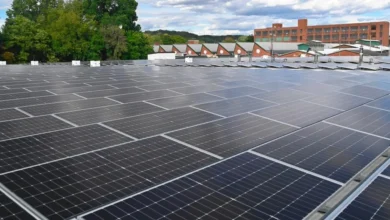
- Energy Transition: Decarbonizing the global economy is the most effective lever. Reducing the carbon component of the humanity’s Ecological Footprint by 50% would move Earth Overshoot Day by 93 days, or roughly three months. This requires generating at least 75% of global electricity from renewable sources, which by itself would move the date by 26 days.
- Food Systems: The way the world produces and consumes food has a massive ecological impact. Cutting global food waste in half would move the date by 13 days. Furthermore, shifting toward more plant-based diets in high-consumption nations could significantly reduce the demand for grazing land and water resources.
- Policy and Infrastructure: Establishing a "Green New Deal" on a global scale—focusing on sustainable urban planning, public transit, and energy-efficient housing—could move the date by an estimated 42 days.
- Nature Restoration: Protecting and restoring 30% of the world’s land and oceans (the "30 by 30" goal) would enhance the planet’s biocapacity, allowing it to absorb more carbon and provide more resources, thereby pushing the overshoot date further back into the year.
Global Disparities in Resource Demand
While Earth Overshoot Day represents a global average, the date varies significantly by country, reflecting deep inequalities in global consumption. If everyone on Earth lived like the average resident of the United States or the United Arab Emirates, Earth Overshoot Day would fall in March. Conversely, if everyone lived like the average resident of many African or Southeast Asian nations, the world would not be in overshoot at all.
This disparity underscores the principle of "common but differentiated responsibilities" often cited in international climate negotiations. Wealthy nations, which have historically contributed the most to ecological debt, face increasing pressure to lead the way in consumption reduction and technological innovation.
Conclusion: A Turning Point for the 21st Century
As the world enters the second half of 2025 already in ecological debt, the urgency of systemic change has never been clearer. The July 24 date is not just a statistic; it is a signal that the current model of infinite growth on a finite planet is nearing its breaking point.
The transition to a sustainable future requires a fundamental shift in how value is measured, moving away from short-term GDP growth toward long-term ecological health and human well-being. As Lewis Akenji remarked, the scale of ambition required for adaptation and mitigation must "dwarf any previous historical investments" if the planet is to remain a viable home for future generations. The choice between "design and disaster" remains open, but the window for deliberate action is closing with every passing year.