Middle East Crisis Intensifies as US Launches Eighth Consecutive Night of Airstrikes Against Iran, Regional Allies Face Retaliation

The volatile Middle East crisis has escalated dramatically with the United States military undertaking its eighth consecutive night of airstrikes against Iran, a direct and forceful response to an Iranian attack in Jordan that tragically claimed the lives of two American service members, left one missing, and hospitalized four others. This renewed offensive by Washington follows the collapse of a month-old ceasefire agreement, pushing the region closer to an all-out conflict. Amidst this military tit-for-tat, Iran’s Revolutionary Guards Corps (IRGC) has reported maritime "accidents" in the Strait of Hormuz, while US allies across the Gulf – including Jordan, Kuwait, and Bahrain – grapple with a barrage of Iranian missile and drone attacks, prompting widespread security alerts and civilian evacuations.
Escalation in the Gulf: US Retaliation and Iranian Responses
The latest round of US airstrikes, ordered by President Donald Trump, commenced at 6 pm ET (10 pm GMT) on Saturday. The US military’s Central Command (Centcom) stated that these operations were designed to "swiftly punish" Iran’s Revolutionary Guard and "further degrade" Tehran’s capacity to threaten commercial shipping in the strategically vital Strait of Hormuz. Iranian state-run media, including Irna news agency and broadcaster Irib, reported that targets included areas near Sirik, Hajiabad in Hormozgan province, and Qeshm Island within the strait, with explosions heard in the port city of Bandar Abbas. Centcom later confirmed on social media that its forces had specifically targeted "Iranian military coastal surveillance and air defense facilities, maritime capabilities, and missile and drone storage sites."
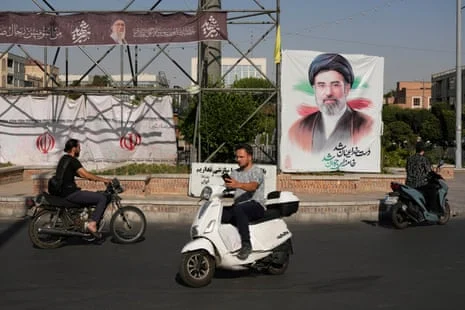
In response to the escalating US actions, Iran’s supreme leader, Mojtaba Khamenei, issued a defiant warning, stating that Washington would "pay for seeking to escalate the conflict." He further asserted that US actions had rendered President Trump’s signature "utterly worthless and devoid of credibility," promising "even heavier costs and further humiliation" for the US.
Adding to the tensions, Iran’s Revolutionary Guards claimed that two ships were involved in an "accident" while attempting to transit the Strait of Hormuz via an "unsafe route," allegedly "with US backing." The IRGC statement, reported by Tasnim news agency (though not independently verified), warned that "Vessels that are influenced by the words of the Americans and enter unsafe routes will certainly face accidents." This incident underscores the precarious situation in the Strait of Hormuz, a critical chokepoint through which a significant portion of the world’s oil supply passes. The US has consistently advised mariners to use the southern route through Oman’s territorial waters, while Iran insists on vessels utilizing its self-designated northern lanes close to the Iranian coast, threatening consequences for non-compliance.

Regional Fallout and Security Alerts
The intensified conflict has had immediate and tangible repercussions across the broader Middle East, triggering widespread alarm and defensive measures.
Jordan Under Threat: The US embassy in Amman announced that authorities in the Jordanian city of Aqaba, a crucial port and international airport hub, had evacuated both facilities due to a "specific and credible threat." The embassy "strongly" advised all American citizens to avoid travel to these locations, adhere to Jordanian security directives, and steer clear of military bases in the country. This advisory follows a pre-existing directive issued on March 2 by the US State Department, which ordered the departure of non-emergency US government employees and their family members from Jordan due to mounting safety risks, indicating a sustained concern for security in the kingdom. US citizens were also cautioned to avoid protests, large gatherings, or areas with significant police presence, and to generally "keep a low profile."
Kuwaiti Defenses Activated: Kuwait has been directly impacted by Iranian aggression, with its army confirming it was actively intercepting hostile missile and drone attacks. A post on X by Kuwait’s army indicated that explosions heard were likely the sound of air defense systems neutralizing incoming threats. The Iranian army had earlier claimed responsibility for targeting two US bases in Kuwait – an ammunition depot at Camp Buehring (formerly Camp Udairi) and radar and air surveillance systems at Ali Al Salem air base – in retaliation for US strikes. Furthermore, Kuwaiti authorities and the Kuwait Petroleum Corporation reported significant damage to a water desalination plant and an oil facility. This marks the second attack on a desalination plant in Kuwait in as many days, a particularly alarming development given the small nation’s heavy reliance on desalinated water for approximately 90% of its drinking supply, raising serious humanitarian concerns.
Bahrain Intercepts Attacks: Sirens blared across Bahrain’s capital, Manama, which hosts a significant US naval base. The Bahrain Defence Force condemned Iran’s "repeated attacks targeting (its) civilians," confirming that its air defense systems had "intercepted and destroyed several treacherous Iranian aerial attacks" launched earlier this morning. The General Command urged residents to "exercise caution, avoid approaching any strange or suspicious objects resulting from the remnants of the brutal Iranian aggression, and report them immediately." The statement underscored that "the deliberate use of missiles and drones to target civilians and private property constitutes a flagrant violation of international humanitarian law."
Iraq: Dissident Group Targeted: The conflict’s reach extended to Iraq, where a base near Irbil belonging to the Kurdistan Freedom Party, an Iranian Kurdish dissident group, was struck by a drone early on Sunday, resulting in injuries to eight of its members.

Casualties and Human Cost
The human toll of the escalating hostilities continues to mount. The two US troop deaths in Jordan on Friday mark the first direct fatalities from Iranian fire since the initial phase of the conflict. US Defense Secretary Pete Hegseth acknowledged the sacrifice, stating on X: "Their sacrifice only stiffens our resolve." These latest casualties bring the total number of US service members killed since the war began to 16, with more than 430 having sustained injuries. On the Iranian side, Iran’s health ministry reported on Saturday that 50 people had been killed and over 500 injured in US strikes on the country over the past three weeks, highlighting the devastating impact on civilian populations.
President Trump’s Stance and Strategic Landscape
President Donald Trump, speaking briefly with NewsNation, expressed his sorrow over the deaths of the American service members, describing them as a "shame." He reiterated that the war against Iran was initiated to prevent Tehran from acquiring nuclear weapons, stating that the troops "did it because they don’t want to see Iran have a nuclear weapon." When pressed on Iran’s declaration that it would no longer honor the memorandum of understanding if Washington failed to uphold its obligations, Trump dismissed the concern, stating, "I couldn’t care less."
Trump had previously declared the ceasefire "over" earlier this month, signaling a return to more aggressive postures. However, experts note that despite the US’s superior military might, Iran retains significant leverage. Tehran’s ability to exert control over the Strait of Hormuz directly impacts global energy prices, a politically sensitive issue for President Trump, especially with US midterms approaching. Furthermore, Iran could expand the conflict by mobilizing its regional allies. Reuters reported on Thursday that Iran has reportedly instructed Yemen’s Houthi rebels to prepare to close the Red Sea oil route should the US target Iranian power infrastructure, an action that would wreak havoc on the global economy. Iran also possesses the capability to inflict severe damage on US-allied Gulf countries through sustained and widespread attacks on critical infrastructure such as desalination plants, leading to potentially devastating civilian costs, as evidenced by the recent attacks in Kuwait. While Iranian attacks on Kuwaiti power and desalination plants have been relatively limited in scope thus far, their potential for wider disruption remains a grave concern.
Broader Implications and Expert Analysis
The current trajectory of the US-Iran conflict suggests a dangerous escalation. As The Guardian’s defence and security editor, Dan Sabbagh, highlighted in a recent analysis piece, Iran possesses more than enough capability to inflict damage despite the perceived military superiority of the US. Sabbagh noted that a frustrated US administration is exploring various options to bring Iran to heel, but a substantial ground campaign – which the US is neither prepared for nor has the appetite for – seems unlikely.
Military escalation discussions at a White House Situation Room meeting included options such as bombing a deep-lying nuclear site or seizing the strategic Kharg Island, a vital conduit for Iran’s oil exports. While the US could potentially capture such locations, holding them against Iranian missile and drone attacks would pose a significant challenge. Moreover, continued US bombing raids are depleting hard-to-make air defense interceptors and expensive missiles, with estimates from the Center for Strategic and International Studies thinktank suggesting stockpiles are down by a quarter to a third.
The renewed intensity of attacks following the collapse of the ceasefire deal raises profound questions about the long-term stability of the Middle East and the potential for a wider regional conflagration. The economic implications, particularly concerning global energy markets and critical civilian infrastructure like water supplies, are immense. As both sides dig in and exchange retaliatory blows, the international community watches anxiously, aware that the risk of miscalculation and an uncontrollable escalation grows with each passing day.