Education Researchers Warn That Proposed Federal Grant Overhaul Could Stifle Scientific Progress and Politicize Academic Inquiry

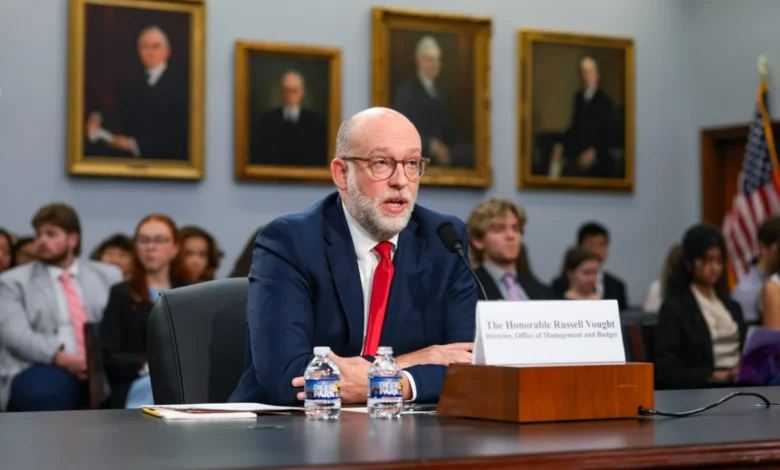
The research framework supporting the "science of reading"—a movement that has fundamentally reshaped literacy instruction across the United States—was not built overnight; rather, it was constructed over several decades through a rigorous, federally funded pipeline involving cognitive science, neuroscience, psychology, and linguistics. However, a sweeping 100-page proposal from the federal Office of Management and Budget (OMB) aims to overhaul the rules governing these grants, sparking a massive backlash from the nation’s leading education research organizations. These groups warn that the proposed changes, which include a new layer of review by political appointees and restrictions on diversity-related data, could dismantle the very mechanisms that produce such vital bodies of evidence.
The OMB maintains that the proposed revisions, released on May 29, are designed to strengthen accountability, transparency, and oversight of taxpayer-funded initiatives. If enacted, the rules would alter how the Department of Education and the National Science Foundation (NSF)—the two primary engines of federal education research—award and monitor billions of dollars in grants. According to the proposal, the White House intends for the final rule to take effect by October 1. Yet, as the July 13 deadline for public comment passed, the research community responded with a deluge of opposition, arguing that the overhaul could narrow the scope of scientific inquiry, allow political ideology to supersede empirical quality, and disrupt critical studies already in progress.
A Challenge to Equity and Demographic Analysis
One of the most contentious aspects of the OMB proposal involves new restrictions on research related to student outcomes and demographic disparities. The rule seeks to prohibit federal funds from supporting what the administration characterizes as “unlawful diversity, equity, and inclusion” (DEI) activities. More specifically, it would restrict funding for “disparate impact studies”—research that analyzes whether seemingly neutral policies result in different outcomes for different groups of students based on race, gender, or disability status.
In a formal letter signed by 19 education and science organizations, the National Academy of Education warned that such language is dangerously broad. The organization argued that the rule could effectively ban studies examining the racial achievement gap or the effectiveness of interventions for specific populations. "Whether a reading intervention works differently for English language learners, whether a discipline policy falls more heavily on students of color, whether a gifted education program under-identifies students with disabilities—these are not fringe questions," the Academy wrote. "They are central empirical questions of education policy research."
Furthermore, researchers pointed out a significant legal contradiction: existing federal laws often mandate the very analysis the OMB proposal seeks to restrict. For instance, Title I of the Elementary and Secondary Education Act, a $17 billion program for high-poverty schools, requires states and districts to disaggregate student outcome data by race, income, and English-learner status. By creating a vague prohibition on "disparate impact" research, the OMB may be placing researchers in a position where they must choose between following federal education mandates and adhering to new grant restrictions.
Chronology of the Rulemaking Process and Public Response
The timeline of this proposal suggests an aggressive push for implementation before the end of the current fiscal year. The following chronology outlines the development of the conflict:
- May 29: The OMB officially releases the 100-page proposal to revise federal grant rules, citing a need for "national interest" alignment and increased fiscal oversight.
- June 2026: Education research groups, including the American Educational Research Association (AERA) and the Knowledge Alliance, begin internal reviews, identifying what they describe as "unintended and harmful consequences."
- July 13: The deadline for public comments concludes with a staggering 496,775 submissions. Major education organizations submit detailed letters calling for the proposal’s total withdrawal.
- July 14: Reports emerge indicating that scientific societies across multiple disciplines—including medicine and climate science—coordinated a "comment flood" to ensure the OMB must address hundreds of thousands of technical objections.
- October 1 (Projected): The date the OMB intends for the final rule to take effect, potentially impacting all new grant cycles for the 2027 fiscal year.
The Shift Toward Political Oversight
Beyond the content of the research, the OMB proposal introduces significant changes to the grant selection process itself. Currently, federal research grants are typically awarded through a "peer-review" system, where independent subject-matter experts evaluate proposals based on scientific rigor, methodology, and feasibility. The new proposal would require all grants to be reviewed by political appointees before they are issued.
Researchers argue that this move would prioritize political alignment over scientific merit. The proposal states that agencies must consider whether a project aligns with "federal priorities" and the "national interest"—terms that remain undefined in the document. The American Educational Research Association (AERA) expressed concern that these priorities could shift drastically from one administration to the next, creating a volatile environment where long-term scientific goals are sacrificed for short-term political wins.
Additionally, the proposal advocates for "gold standard science," a term that researchers fear will be used to favor specific methodologies, such as randomized controlled trials, while devaluing other essential forms of inquiry. Education research often relies on a "mixed-methods" approach, utilizing surveys, longitudinal data analysis, and qualitative interviews to understand complex classroom dynamics that cannot always be reduced to a laboratory-style experiment.

Financial Constraints and Administrative Burdens
The OMB proposal also targets the financial structure of research. It suggests that federal agencies should give preference to grant proposals with low "overhead costs." While this may sound fiscally responsible, it creates a significant disadvantage for large research universities. These institutions rely on overhead (or indirect cost) reimbursements to maintain the laboratories, libraries, and administrative infrastructure necessary to support large-scale federal projects.
The proposed rules would also cut federal funding for publication costs and attendance at professional conferences unless specifically approved on a case-by-case basis. Researchers would be required to provide exhaustive written justifications for every funding request, adding a layer of "regulatory paperwork" that critics say will stifle productivity.
Rachel Dinkes, president of the Knowledge Alliance—a group representing 20 research organizations—noted that the "science of reading" is the perfect example of why the federal government should avoid a narrow focus on "immediate results" or "breakthrough innovations."
"Researchers would be less likely to pursue important long-term questions that are critical to creating the foundational knowledge needed for scientific breakthroughs," Dinkes wrote. She emphasized that the current success in reading outcomes is the result of evidence accumulated over many years and across multiple presidential administrations.
Risks to Longitudinal Research and International Standing
One of the most practical fears voiced by the National Academy of Education is the potential for the sudden termination of ongoing studies. The proposal includes provisions that would make it easier for the government to suspend or terminate grants after they have begun.
For longitudinal studies—which track the same group of students over five, ten, or twenty years—even a brief interruption in funding can be catastrophic. Missing a single year of data collection can break the continuity of the study, rendering decades of previous work and millions of dollars in prior investment useless.
The impact of such terminations is not theoretical. Researchers cited a 2025 incident where the Department of Education abruptly ended dozens of studies, resulting in 1,600 high school students with disabilities losing access to specialized services that were being provided as part of the research interventions.
There are also concerns regarding international collaboration. The proposal suggests broad limits on foreign partnerships, which researchers argue could jeopardize U.S. participation in global benchmarks like the Programme for International Student Assessment (PISA) and the Trends in International Mathematics and Science Study (TIMSS). These assessments are vital for policymakers to understand how American students compare to their peers in Europe and Asia.
Analysis of Implications and Future Legal Challenges
The sheer volume of public comments—nearly half a million—suggests that the research community is preparing for a protracted legal battle. By "flooding" the OMB with technical objections, organizations are creating a robust administrative record. Under federal law, agencies are required to respond to "significant" comments before finalizing a rule. If the OMB ignores these concerns or fails to provide a reasoned basis for its changes, the administrative record can be used in court to challenge the rule as "arbitrary and capricious."
If the proposal stands, the landscape of American education research could shift from an independent, merit-based system to one that is closely managed by the executive branch. This could lead to a "chilling effect," where researchers avoid studying sensitive topics like systemic inequality or school climate to ensure their funding remains secure.
As the October 1 deadline approaches, the tension between the White House and the scientific community remains high. While the OMB argues that these changes are necessary to protect the "national interest," the nation’s leading educators and scientists contend that the true national interest lies in the preservation of independent, data-driven inquiry—the kind of inquiry that taught the nation how to teach its children to read.