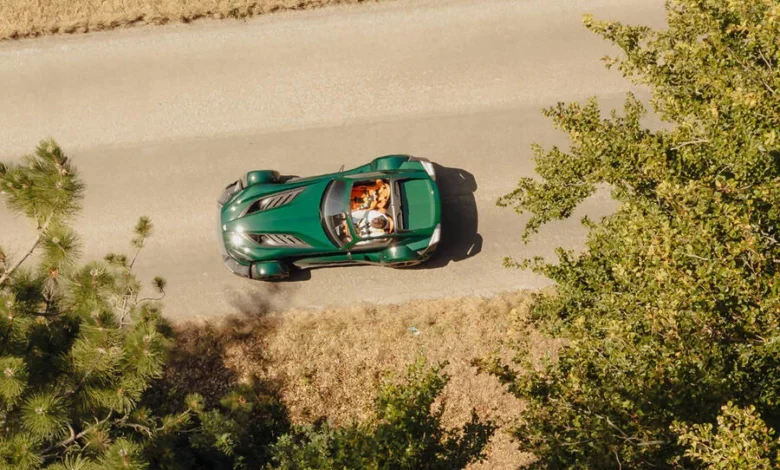
Donkervoort Automobielen, the boutique Dutch manufacturer renowned for its radical, high-performance reinterpretations of the lightweight sports car concept, is preparing a significant expansion into the British market. For decades, the Lelystad-based firm has been a cult favorite among European enthusiasts, but it is now poised to challenge the domestic titans of the lightweight sector on their own turf. With the introduction of the P24 RS, a 592bhp machine weighing just 840kg, Donkervoort is not merely entering the UK; it is doing so with its first-ever factory-supported right-hand-drive (RHD) production models.
The move marks a historic pivot for a company that began as a Lotus Seven importer and evolved into a manufacturer of some of the world’s most visceral supercars. By appointing Premier GT in Washington, West Sussex, as its sole UK retail outlet, Donkervoort is signaling its intent to capture a share of a market currently occupied by brands such as Caterham, Ariel, and BAC. However, with a price tag exceeding £300,000, the P24 RS occupies a significantly more premium echelon, blending artisanal craftsmanship with extreme performance.
A Half-Century Evolution: From Lotus Roots to Dutch Innovation
The history of Donkervoort is rooted in the pursuit of perfection through modification. In the late 1970s, company founder Joop Donkervoort sought to sell Lotus Seven kit cars in the Netherlands. However, the Dutch authorities imposed stringent type-approval regulations that the original British design could not meet without extensive revision. Rather than abandoning the project, Joop Donkervoort re-engineered the vehicle so thoroughly—strengthening the chassis and refining the bodywork—that it became a distinct entity. With the blessing of Lotus, the Donkervoort S7 was born in 1978.
Over the ensuing decades, the company steadily distanced itself from its "Seven" origins. The 1980s saw the introduction of the S8, which offered increased dimensions to accommodate taller European drivers, a trend that continued with the D8 series in the 1990s. The 2000s brought closed-cockpit variants like the D8 GT, which proved the platform’s aerodynamic viability.
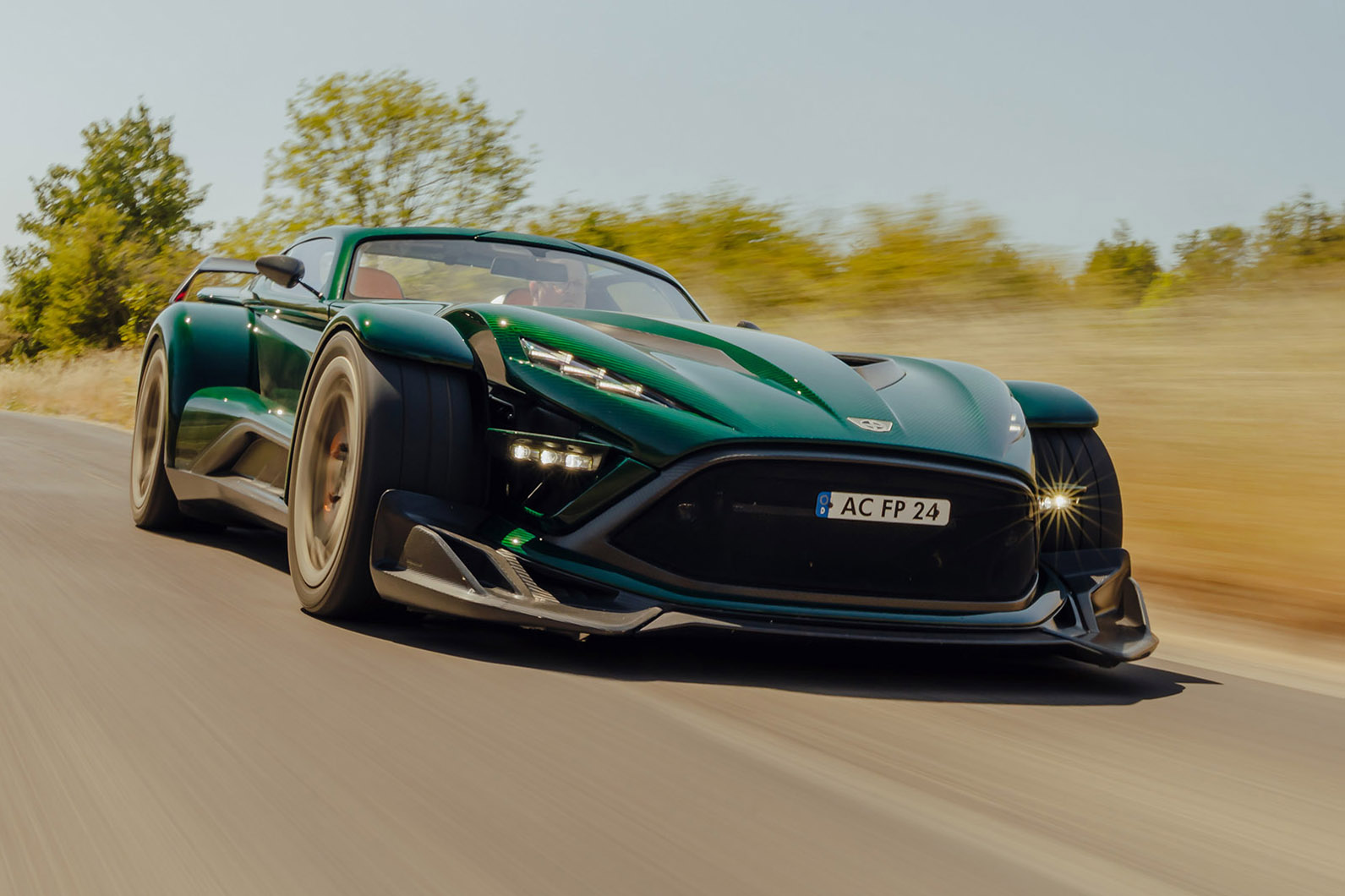
The current era of Donkervoort is defined by its proprietary "Ex-Core" carbon fiber technology. Developed in-house, this process involves a carbon fiber sandwich moulding with a foam core, allowing for incredibly complex shapes that are both lighter and stronger than traditional steel or aluminum structures. This technology was the cornerstone of the F22, launched in 2022, and has been further refined for the P24 RS.

Engineering the P24 RS: The Heart of the Beast
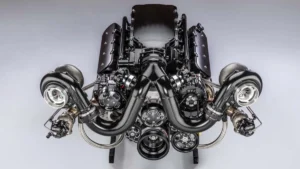
The most significant technical shift in the P24 RS is the departure from Audi’s celebrated 2.5-liter five-cylinder engine, which had powered Donkervoort models for years. In its place sits a bespoke version of the 3.5-liter V6 engine famously used in the latest Ford GT. This powerplant utilizes parallel-twin, ball-bearing turbochargers supplied by Van der Lee, a Dutch firm with deep ties to Formula 1 engineering.
This engine swap was motivated by more than just a quest for power. The Audi five-cylinder engine’s asymmetric layout made it notoriously difficult to package for right-hand-drive configurations without compromising steering geometry. The Ford V6, conversely, allows for a perfectly symmetrical "north-south" mounting within the car’s elongated snout. This symmetry provided the necessary clearance to relocate the steering system, finally making a UK-spec RHD version a commercial reality.
The performance figures are staggering:
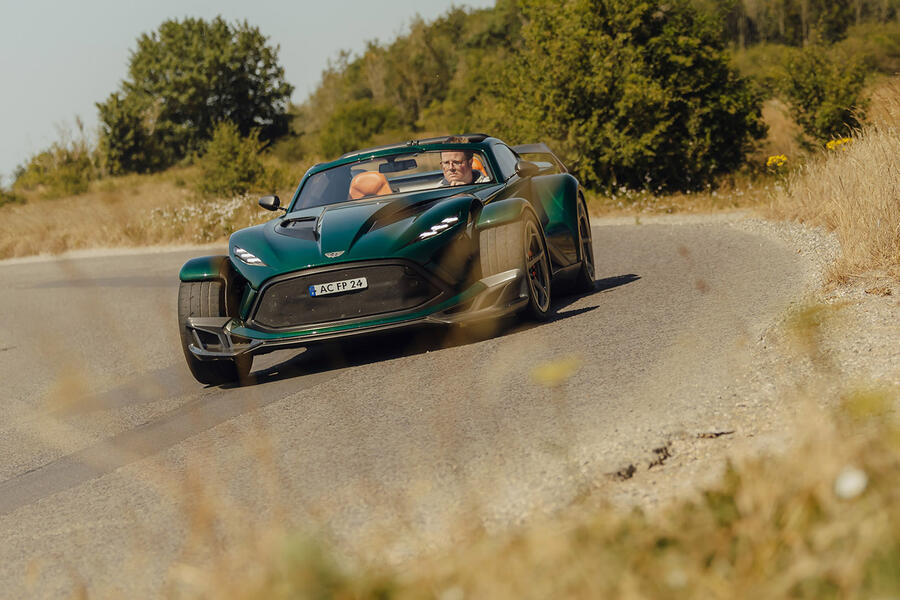
- Maximum Power: 592bhp at 5,500rpm
- Peak Torque: 590lb-ft at 4,500rpm
- Kerb Weight: 840kg
- Power-to-Weight Ratio: Approximately 705bhp per tonne
- Top Speed: In excess of 186mph
To manage this immense output, Donkervoort has opted for a purist’s drivetrain. Unlike many modern supercars that rely on dual-clutch transmissions and electronic torque vectoring, the P24 RS utilizes a Tremec TKX five-speed manual gearbox and a Torsen mechanical torque-biasing differential. While electronic traction control is included, the car deliberately lacks electronic stability control (ESC), emphasizing the brand’s commitment to "analog" driver involvement.
Advanced Chassis and Suspension Dynamics
The P24 RS is built upon a hybrid chassis composed of alloy spaceframe tubing and stressed carbon fiber panels. This construction method allows the car to achieve double the torsional rigidity of the previous D8 GTO generation while maintaining a dry weight of roughly 750kg (840kg at the kerb).
One of the vehicle’s most innovative features is its semi-active suspension system. It utilizes hydraulic struts capable of adjusting the ride height by up to 35mm, allowing the driver to transition from a track-ready low profile to a more compliant "High" setting for public roads. The six-stage adaptive dampers incorporate roll-canceling functionality, a technical solution that removes the need for traditional anti-roll bars. This reduces unsprung weight and allows the suspension to react more independently to road imperfections.
Despite these modern touches, the braking system remains a focal point for traditionalists. While electromechanical power steering is an available option, anti-lock brakes (ABS) remain optional, as the company believes many of its clients prefer the unfiltered feedback of a manual braking setup.
The UK Market Strategy and Timeline
The introduction of the P24 RS to the United Kingdom represents a "full circle" moment for the brand. In its official communications, Donkervoort acknowledged the irony of bringing a lightweight sports car to the country that invented the genre—referencing the idiom of "carrying coal to Newcastle." However, the company argues that its unique blend of hypercar-level performance and boutique Dutch craftsmanship offers something the current UK market lacks.
Premier GT has been tasked with handling the UK rollout. The first right-hand-drive units are expected to be delivered to British customers in early 2027. This timeline allows Donkervoort to finalize the "Anglicization" of the vehicle, ensuring that the suspension tuning and cooling systems are optimized for the unique challenges of British B-roads and the UK’s temperate (yet often unpredictable) climate.
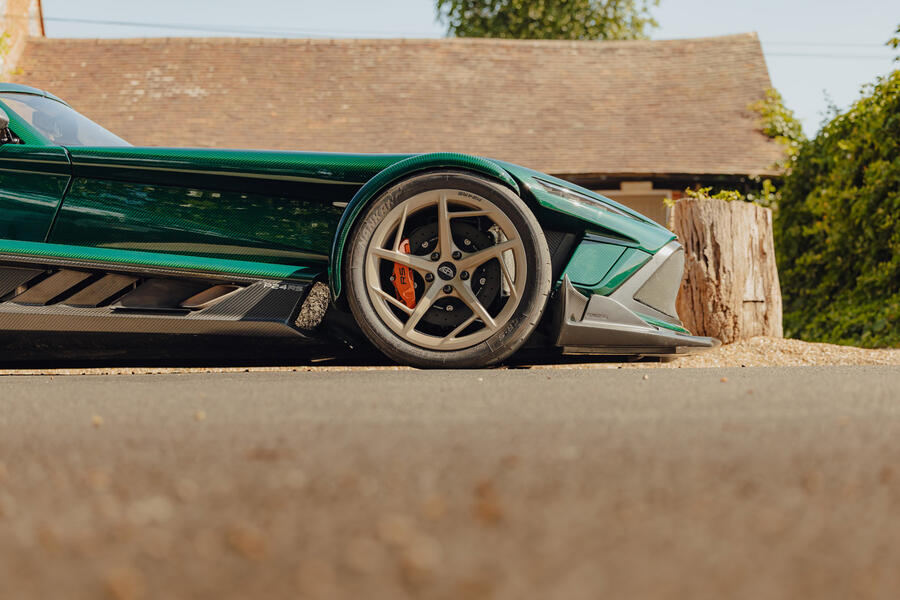
The pricing reflects its positioning as a luxury item for the connoisseur. At £302,400, the P24 RS is nearly three times the price of a top-tier Caterham 620R and significantly more expensive than an Ariel Atom 4RR. Donkervoort justifies this through its use of exotic materials, a more spacious and adjustable cabin, and a level of exclusivity that comes from a highly limited production run.
Driving Impressions: A Raw and Physical Experience
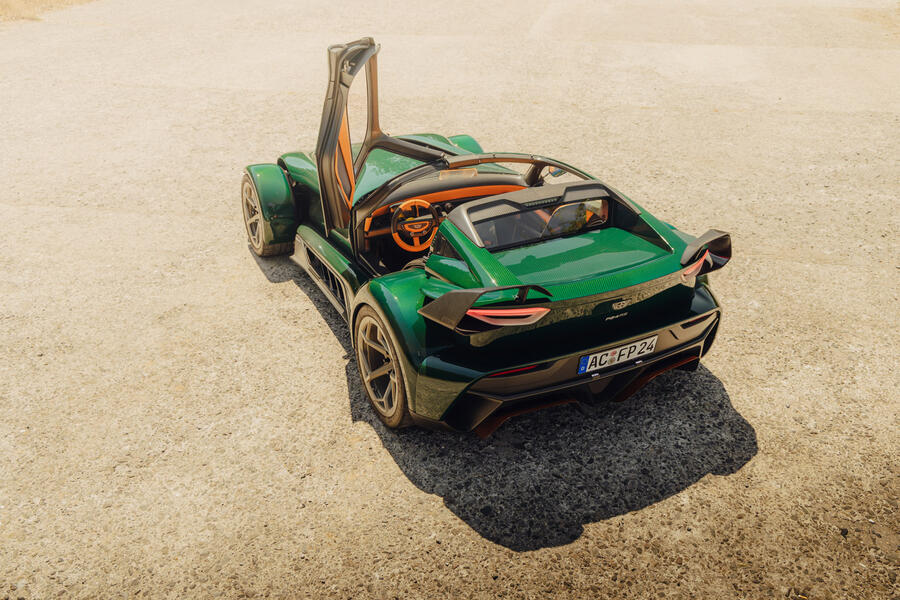
Initial evaluations of the P24 RS on British roads, including the demanding terrain of Salisbury Plain, reveal a car of immense character and occasional idiosyncrasy. The cabin, while more spacious than a Caterham—thanks in part to the Dutch propensity for tall stature—remains a focused environment. High-gloss carbon fiber dominates the interior, and the dihedral-style doors provide a sense of occasion.
The driving experience is defined by its physicality. The Tremec manual gearbox requires deliberate, mechanical inputs, and the long gear ratios are a departure from the short-shifting nature of most track toys. First gear is capable of reaching significant speeds, while fifth gear is reserved for high-speed cruising and reaching the car’s 186mph-plus ceiling.
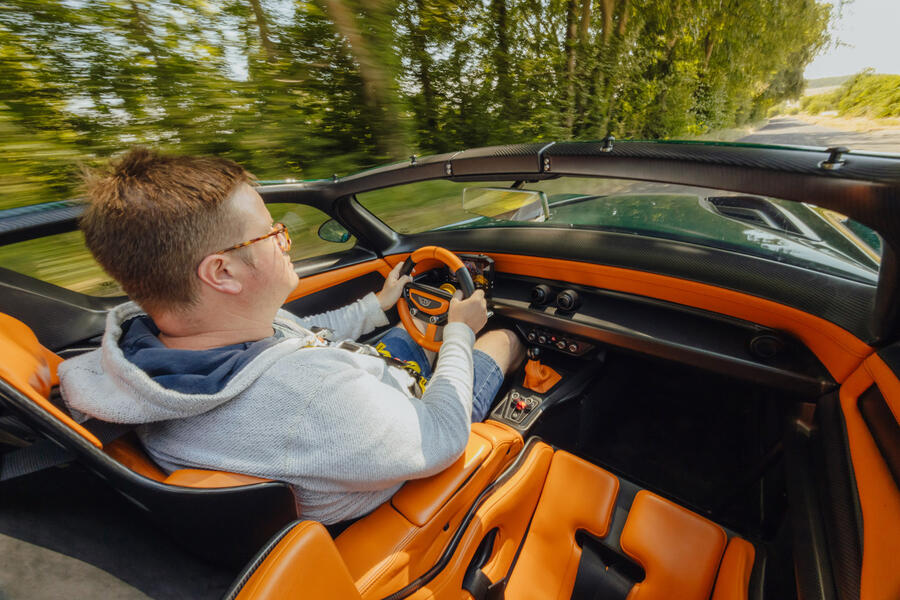
On the road, the P24 RS displays two distinct personalities. In its "High" ride height and softest damping settings, it possesses a surprising degree of "Lotus-like" flow, absorbing minor road imperfections with poise. However, as the pace increases and the dampers are stiffened, the car’s track-bred DNA comes to the fore. The light steering, while communicative, requires a high degree of driver trust when approaching the limit, and the absence of ABS demands precision during heavy deceleration.
One notable observation from early testing is the significant heat soak within the cabin. Due to the proximity of the high-output V6 and the extensive use of carbon fiber, the interior can become remarkably warm. Consequently, automotive experts suggest that air conditioning—though a weight-adding option—will likely be a mandatory box for UK buyers intending to use the car for more than just short track bursts.
Broader Impact and Industry Implications
The arrival of the Donkervoort P24 RS comes at a transformative time for the lightweight sports car industry. As major manufacturers like Lotus transition toward heavy electric SUVs and mid-engined supercars, a vacuum has opened for ultra-lightweight, internal combustion-powered enthusiast machines.
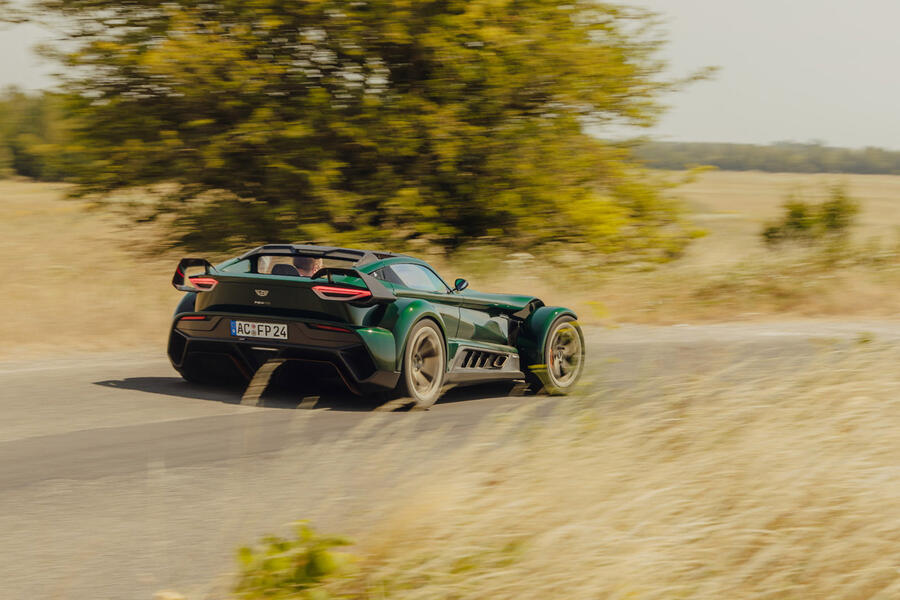
Donkervoort’s entry into the UK suggests that there is still a robust market for high-end, analog driving experiences. By offering a car that is larger and more usable than a traditional "Seven" but more visceral than a modern Ferrari or McLaren, Donkervoort is carving out a niche as a manufacturer of "hyper-lightweights."
As the company moves toward its 2027 RHD delivery target, the automotive world will be watching to see if this Dutch interpretation of a British classic can truly find a permanent home in the UK. The P24 RS is a testament to the idea that "Dutch courage" in engineering—the willingness to eschew modern electronic safety nets in favor of pure mechanical engagement—can result in one of the most exciting vehicles of the decade.