The automotive industry has long utilized special edition vehicles as a strategic tool to maintain consumer interest during mid-cycle product refreshes and to commemorate significant corporate or national milestones. While some manufacturers rely on superficial aesthetic modifications—such as unique paint colors or localized badging—Ford Motor Company has established a legacy of leveraging the F-Series platform to explore mechanical performance, cultural trends, and technical innovation. By analyzing these releases from a historical perspective, it becomes clear that the most successful Ford special editions are those that bridge the gap between marketing-driven aesthetics and genuine engineering advancement.
The Bicentennial Era and the Rise of Factory Graphics
The mid-1970s marked a pivotal moment for domestic manufacturers as they navigated the post-oil crisis landscape. In 1976, as the United States celebrated its 200th anniversary, Ford introduced the Bicentennial Option Group for its F-100 through F-350 lineups. This initiative was a response to a burgeoning national sentiment that sought to reclaim American industrial identity through patriotic imagery. The package featured a distinct gold stripe, a prominent flying-eagle graphic, and interior upholstery characterized by patriotic plaid cloth.
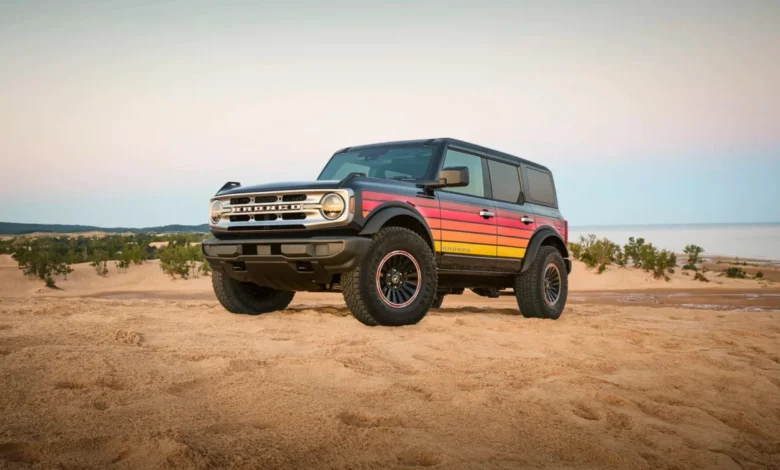
From an analytical standpoint, the Bicentennial package succeeded because it aligned with a specific, time-sensitive cultural zeitgeist without compromising the truck’s utility. It set a precedent for the "Free Wheeling" era that followed between 1977 and 1981. The Free Wheeling line represented a departure from traditional utilitarian branding, utilizing vibrant rainbow-hued stripes and blacked-out exterior trim to target a younger, lifestyle-oriented demographic. This period solidified the concept that the F-Series could serve as a canvas for self-expression, a philosophy that continues to influence the automotive aftermarket today.
Performance and the Evolution of the Sport Truck
While aesthetics defined the late 1970s, the 1980s and 1990s shifted the focus toward performance-oriented street trucks. The Ranger GT, launched in Southern California in 1986, served as an experimental precursor to modern performance pickups. Equipped with a 2.9-liter V6 engine and a refined suspension geometry, the Ranger GT demonstrated that compact trucks could provide a dynamic driving experience suitable for paved roads.
This focus on performance reached its zenith with the introduction of the Ford F-150 SVT (Special Vehicle Team) Lightning in 1993. The Lightning was not merely a trim package; it was a dedicated engineering effort to optimize the F-150 for acceleration and handling. The first generation, featuring a 5.8-liter V8, produced 240 horsepower, a significant figure for the era. The second generation, introduced in 1999, utilized a supercharged 5.4-liter V8 to achieve a 0-to-60 mph time of approximately 5.2 seconds—performance metrics that challenged contemporary sports cars. The SVT Lightning effectively redefined the expectations for a full-size truck, proving that market demand existed for high-performance vehicles that did not sacrifice cargo capacity for speed.
Lessons in Risk: The Bigfoot Cruiser
Not every special edition project yielded positive results. The 1987 Bigfoot Cruiser package, developed in collaboration with Scherer Truck Equipment, serves as a case study in the risks associated with rapid product expansion. Designed to capitalize on the rising popularity of monster truck culture, the package included heavy-duty suspension, specialized winches, and aggressive exterior decals.
However, the execution suffered from significant technical failures. Investigations revealed that the suspension lifts were insufficient for the installed tire sizes, leading to mechanical interference, while improper lug nut specifications created a safety hazard where wheels could detach during operation. Ford was subsequently forced to initiate a comprehensive recall, effectively ending the program. The Bigfoot Cruiser incident remains a cautionary tale for the automotive industry regarding the necessity of rigorous engineering validation, even for marketing-driven, cosmetic-heavy initiatives.
The Shift to Niche Branding and Technical Integration
By the late 1990s and early 2000s, Ford began exploring partnerships with high-profile cultural brands. The F-150 NASCAR Edition of 1998 was a calculated effort to leverage the rising television ratings of stock car racing. With a limited production run of 3,000 units, the truck utilized a 3.73 rear axle ratio to improve acceleration, offering a tactile connection to the racetrack that went beyond mere stickers.
Similarly, the Harley-Davidson Edition, which spanned from 2000 to 2012, remains one of the longest-running special edition programs in Ford’s history. It demonstrated the effectiveness of cross-brand synergy, where the target demographics of the motorcycle manufacturer and the truck manufacturer overlapped significantly. The inclusion of performance upgrades, such as the supercharged 5.4-liter V8 in the 2002 model, ensured that the branding was supported by substantial mechanical capability.
Contemporary Performance and the Tremor Philosophy
As emission standards and fuel efficiency mandates evolved in the 2010s, Ford pivoted toward forced-induction V6 power plants. The 2014 F-150 Tremor was initially met with skepticism by enthusiasts who remained attached to the traditional V8 architecture. However, the Tremor utilized a 3.5-liter twin-turbocharged EcoBoost engine, which provided 365 horsepower and 420 lb-ft of torque.
The Tremor’s inclusion of 4.10:1 gearing and a locking rear differential provided legitimate off-road and towing benefits, demonstrating that smaller displacement engines, when properly tuned, could outperform their predecessors. The Tremor package essentially served as a bridge between the classic performance trucks of the 1990s and the highly sophisticated off-road platforms like the Raptor that dominate the market today.
Broader Implications for the Automotive Market
The history of Ford’s F-Series special editions illustrates a fundamental evolution in consumer expectations. In the 1970s, consumers prioritized exterior graphics that communicated a sense of American identity. By the 1990s, the market demanded tangible performance upgrades, leading to the creation of the SVT division. Today, special editions are increasingly defined by technical integration—such as advanced suspension systems and engine management software—that enhances the core functionality of the vehicle.
From a corporate strategy perspective, these vehicles have served as effective "halo" models. Even when produced in limited numbers, they generate media coverage and showroom traffic that benefit the broader F-Series lineup. The success of these editions relies on a delicate balance: they must offer a unique value proposition that distinguishes them from the base model without compromising the fundamental reliability that the F-Series brand represents. As the industry transitions toward electrification, the legacy of these special editions will likely inform how manufacturers approach the performance and aesthetic customization of electric trucks, ensuring that the tradition of innovation continues to mirror the shifting priorities of the American consumer.