The Untold Story of the Mitsubishi 8A80: The World’s First Production Gasoline Direct-Injection V8

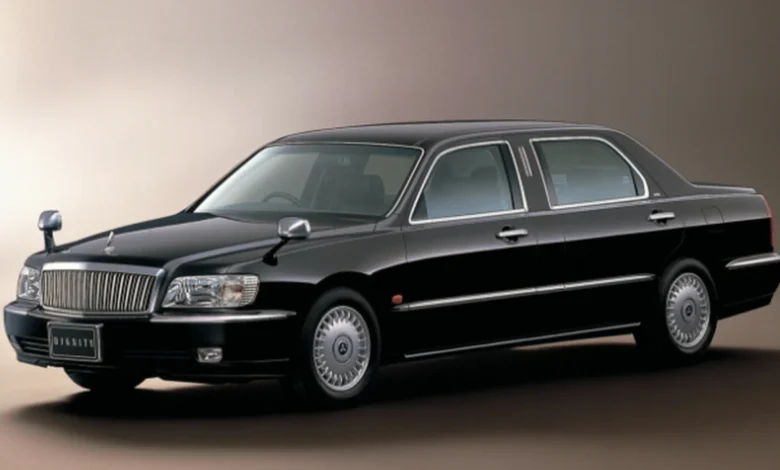
When automotive enthusiasts reflect on the storied heritage of Mitsubishi Motors, the conversation almost invariably gravitates toward the golden era of the Lancer Evolution, Tommi Mäkinen’s World Rally Championship dominance, and the rugged, terrain-conquering legacy of the Pajero in the Paris-Dakar Rally. These vehicles were defined by high-revving four-cylinder turbocharged engines and sophisticated all-wheel-drive systems. In the context of this performance-focused history, the concept of a massive, naturally aspirated V8 engine seems almost antithetical to the brand’s identity. Indeed, today’s Mitsubishi lineup is characterized by fuel-efficient crossovers, plug-in hybrids, and a pivot toward electrification, leaving little room for the displacement-heavy V8 configurations that once defined the upper echelons of luxury motoring.
However, buried within the archives of late 20th-century automotive engineering lies a fascinating, often overlooked milestone: the Mitsubishi 8A80. This engine holds the distinction of being the first gasoline direct-injection (GDI) V8 to enter series production. While it never achieved the widespread fame of its rally-bred siblings, the 8A80 represents a bold, if commercially ill-fated, attempt by Mitsubishi to challenge the established titans of the luxury sedan market.
A Technological Genesis: The 8A8 Project
The development of the 8A80 began in the mid-1990s as a joint venture between Mitsubishi Motors and Hyundai Motor Company. At the time, both manufacturers were seeking to elevate their market positioning. Mitsubishi aimed to replace its aging Debonair flagship, while Hyundai sought to establish a foothold in the premium executive segment—a territory dominated by the Toyota Century in Japan and the Mercedes-Benz S-Class globally.
The collaboration was strategic. Hyundai, which was rapidly expanding its manufacturing capabilities, took the lead on the development of the engine’s bottom end and structural integrity. Mitsubishi, leveraging its deep expertise in precision engineering and internal combustion research, assumed responsibility for the cylinder heads and the revolutionary direct-injection fuel system. The resulting powerplant, a 4.5-liter naturally aspirated V8, was designed to balance high-end output with the efficiency gains promised by GDI technology.
By injecting fuel directly into the combustion chamber rather than the intake port, the 8A80 could achieve a more precise air-fuel mixture, resulting in higher thermal efficiency, lower emissions, and increased torque. Producing approximately 276 horsepower and 304 pound-feet of torque, the engine was a sophisticated piece of hardware that aimed to prove that "luxury" and "technological innovation" were not mutually exclusive.
Chronology of the GDI V8
The deployment of the 8A80 was limited, confined to a small set of high-end sedans that would become footnotes in automotive history.
- 1997: Mitsubishi and Hyundai finalize the architecture for the G8AA (Hyundai designation) and 8A80 (Mitsubishi designation) engines.
- 1999: The Mitsubishi Proudia and its stretched limousine counterpart, the Dignity, are launched in the Japanese market. Both feature the 8A80 engine as their flagship offering.
- 1999: Hyundai introduces the first-generation Equus (marketed as the Centennial in various export territories), featuring the G8AA version of the V8.
- 2001: Mitsubishi abruptly halts production of the Proudia and Dignity due to dismal sales figures, effectively ending the 8A80’s primary application.
- 2009: Hyundai retires the first-generation Equus, bringing a close to the era of the joint-developed GDI V8.
The Failure of the Flagship: A Market Analysis
Despite the technical prowess of the 8A80, the vehicles it powered—the Mitsubishi Proudia and Dignity—were commercial failures. The Proudia, produced from 1999 to 2001, saw only 1,227 units roll off the assembly line. The Dignity fared even worse, with a total production run of just 59 units.
The primary challenge was brand perception. In the late 1990s, the Japanese luxury market was exceptionally rigid. Consumers seeking prestige turned almost exclusively to the Toyota Century, the Lexus LS, or German imports. Mitsubishi, despite its rally pedigree, lacked the "luxury brand" cachet required to convince buyers to spend premium prices on its executive sedans. Furthermore, the GDI technology—while efficient in theory—faced early-adoption hurdles, including carbon buildup issues that plagued many early direct-injection engines, which may have deterred prospective buyers who valued long-term reliability over cutting-edge experimentation.
Hyundai, however, saw significantly more success with the Equus. Over its ten-year lifecycle, the first-generation Equus sold over 110,000 units. While the majority of these were equipped with V6 engines, the V8 variant served as an important "halo" product, helping to transform Hyundai from a budget-focused manufacturer into a legitimate contender in the premium segment. Government recall data from 2004 provides a rare window into the engine’s reach, noting that at least 3,156 units of the Equus were equipped with the G8AA V8 engine, confirming its scarcity even within the Hyundai portfolio.
Implications and Legacy
The Mitsubishi 8A80 serves as a compelling case study in the risks of automotive innovation. It was a pioneering engine that arrived at a time when the market was not yet prepared to embrace the complexities of direct injection in a luxury context. From a modern perspective, the 8A80 was ahead of its time. Today, direct-injection technology is the industry standard for virtually every gasoline engine produced, from high-performance V8s to fuel-sipping inline-threes.
The legacy of the 8A80 is not found in the number of units sold, but in the lessons it taught both Mitsubishi and Hyundai. For Mitsubishi, it marked a rare foray into the upper-crust luxury segment, a direction the company largely abandoned in favor of SUVs and utility vehicles. For Hyundai, the engine provided the necessary technological proof-of-concept that eventually paved the way for the creation of the Genesis brand.
Ultimately, the 8A80 remains a "white whale" for collectors. Its rarity is compounded by the fact that many of the vehicles it powered were operated as government or corporate fleet cars and were subsequently scrapped once they reached the end of their service lives. While the "Powertard" dump truck engines of the era may be the more infamous V8s in Mitsubishi’s history, the 8A80 represents a quiet, ambitious, and scientifically significant chapter that deserves its place in the history books of internal combustion. It remains a testament to a time when two manufacturers, seeking to redefine their identities, bet on a technology that would eventually define the entire automotive industry.
Related posts: