Lotus Emira 420 Sport Review: Engineering the Final Performance Chapter of the Internal Combustion Era

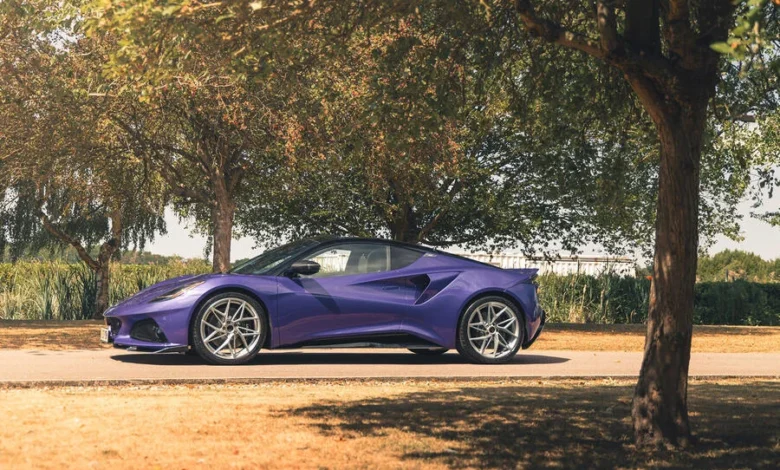
Lotus Cars has officially introduced the Emira 420 Sport, a model that serves as a refined bridge between the standard four-cylinder Emira and the brand’s high-performance future. While the automotive world increasingly looks toward electrification, the 420 Sport represents a meticulously tuned evolution of the traditional mid-engine sports car formula, emphasizing chassis precision and tactile feedback. Central to this new iteration is a revised powertrain and a suite of lightweight components designed to sharpen the driving dynamics of what is already considered one of the most balanced chassis in its segment.
One of the most immediate aesthetic and functional updates is the inclusion of a new removable glass roof panel. Designed to be enjoyed at a more sedate pace, this panel can be removed in seconds and stored securely behind the seats, offering an open-air experience without the structural compromises often associated with full convertibles. However, the most significant updates to the 420 Sport are found beneath its sculpted bodywork, where Lotus engineers have focused on extracting more performance from the Mercedes-AMG-sourced powertrain and refining the suspension architecture.
The Evolution of the Emira Platform
The Lotus Emira was first unveiled in 2021 as the "final hurrah" for the brand’s internal combustion engine (ICE) lineage. Following the discontinuation of the Elise, Exige, and Evora, the Emira was tasked with carrying the torch of Lotus’s heritage into a new era of global expansion under the ownership of Geely. Initially launched with a 3.5-litre supercharged V6, the range was later expanded to include a 2.0-litre turbocharged four-cylinder engine provided by technical partner Mercedes-AMG.
The 420 Sport builds upon this foundations by optimizing the 2.0-litre "M139" engine. Through a bespoke software calibration, often referred to as a "software tickle," Lotus has increased the power and torque outputs to 416bhp and 369lb ft. These figures represent an increase of 16bhp and 15lb ft respectively over the Emira Turbo SE. This enhancement ensures that the 420 Sport occupies a unique position in the lineup, offering a power-to-weight ratio that appeals to track enthusiasts while maintaining the everyday usability required of a modern sports car.
Chassis Engineering and the Lightweight Handling Pack
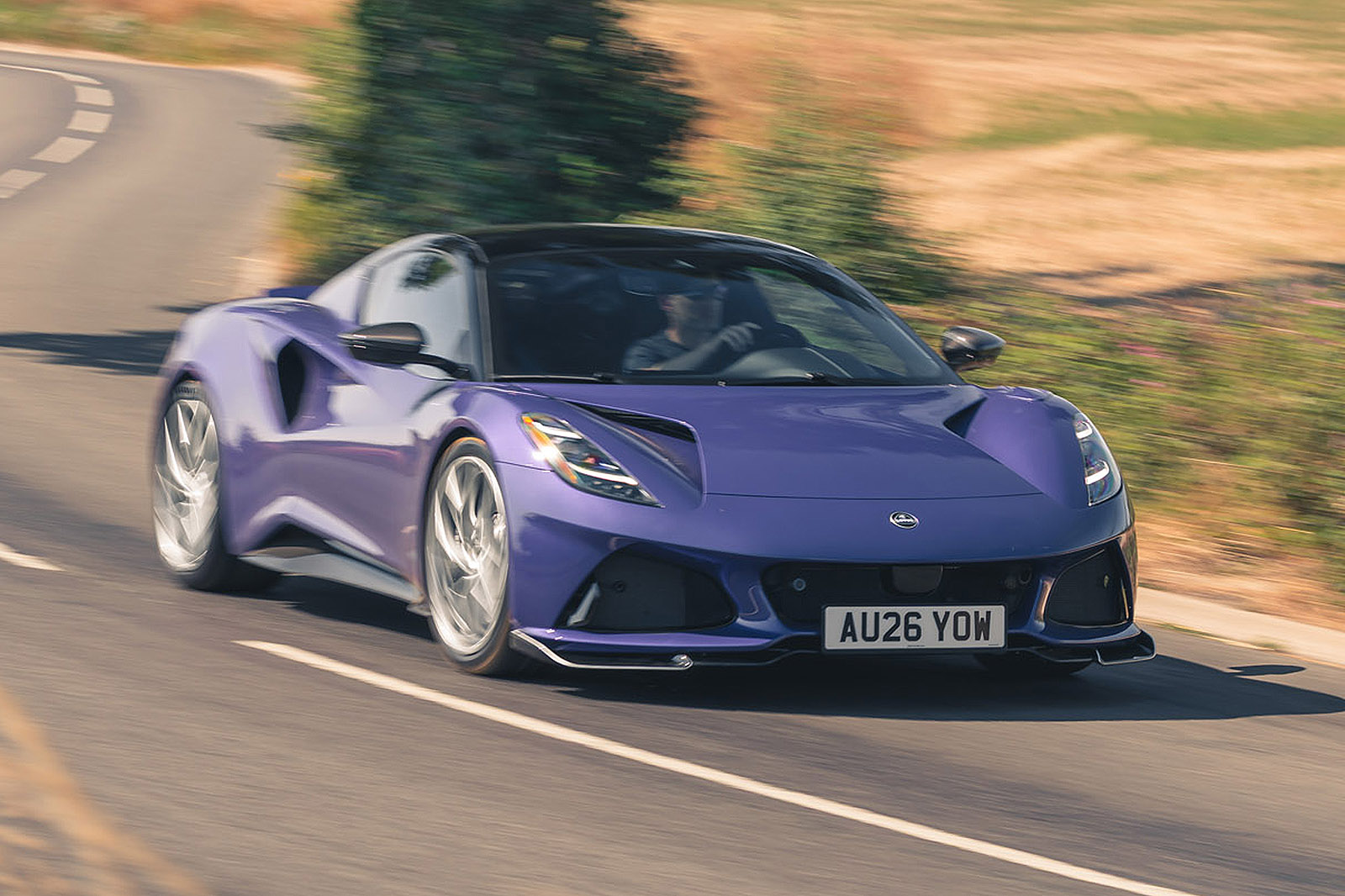
Lotus has long been synonymous with superior ride and handling, a reputation built on the philosophy of "simplify, then add lightness." The Emira 420 Sport adheres to this ethos through a series of chassis upgrades. As standard, the vehicle features bespoke Bilstein dampers and a ride height that has been lowered by 5mm compared to the standard model, lowering the center of gravity and reducing body roll during high-speed cornering.
For those seeking the ultimate performance threshold, Lotus offers an optional Lightweight Handling Pack. This package is instrumental in defining the 420 Sport’s character, providing a 25kg weight reduction through the use of high-performance materials. Key components of this pack include:
- Titanium Exhaust System: Reducing weight while providing a more resonant acoustic profile.
- Lithium-Ion Battery: A significant weight-saving measure compared to traditional lead-acid units.
- Carbon Fibre Louvred Engine Cover: Enhancing thermal management and visual appeal.
- Multimatic Spool Valve Dampers: These advanced dampers offer 11 clicks of manual adjustment, allowing drivers to fine-tune the suspension for specific road conditions or track layouts.
The inclusion of Multimatic dampers is particularly noteworthy. This technology, often found in high-end supercars and GT3 racing machines, utilizes precision-engineered spool valves rather than traditional shims to control oil flow. The result is a damper that is more consistent under high-load situations and offers a broader range of adjustability.
Performance Analysis: The Hethel Test Track Experience
Testing the Emira 420 Sport at Lotus’s historic Hethel test track reveals the extent of the engineering refinements. With the Multimatic dampers set to a higher stiffness level (specifically nine out of eleven), the car exhibits a flat and composed cornering attitude. Crucially, the suspension retains enough compliance to communicate the limits of grip to the driver, preventing the car from feeling "skittish" or overly rigid.
The steering remains a standout feature. In an era where most manufacturers have transitioned to electric power steering (EPS), Lotus has retained a hydraulically assisted system for the Emira. This choice pays dividends in tactile feedback; the steering is fast and precise without being overly sensitive, providing the driver with a detailed "map" of the road surface.
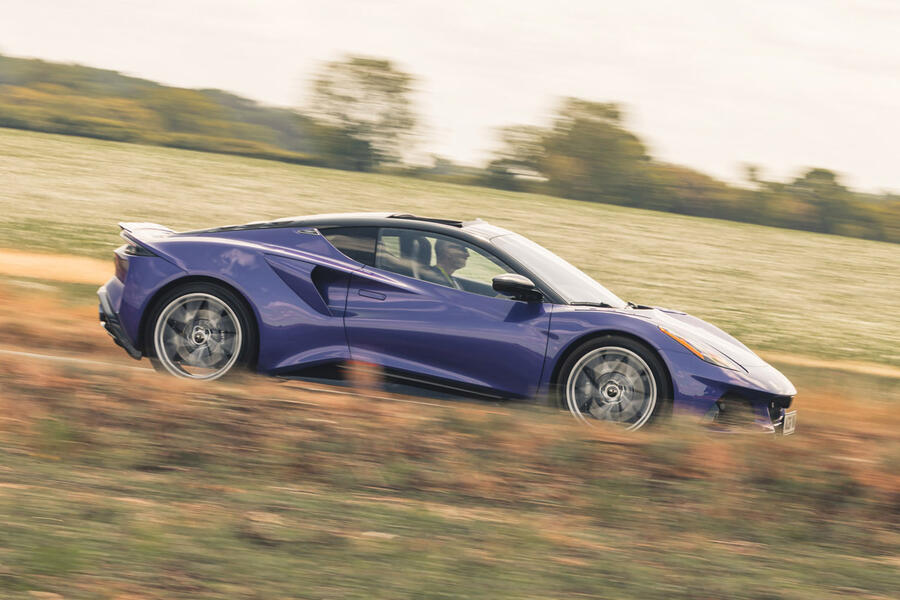
The 420 Sport feels perceptibly sharper than the standard Emira. On the optional Michelin Pilot Sport Cup 2 tires, the car demonstrates exceptional mechanical grip. The balance is such that the driver can choose between a clean, technical line or a more expressive driving style, as the chassis remains approachable even when pushed beyond the limit of adhesion.
Interior Refinement and Ergonomics
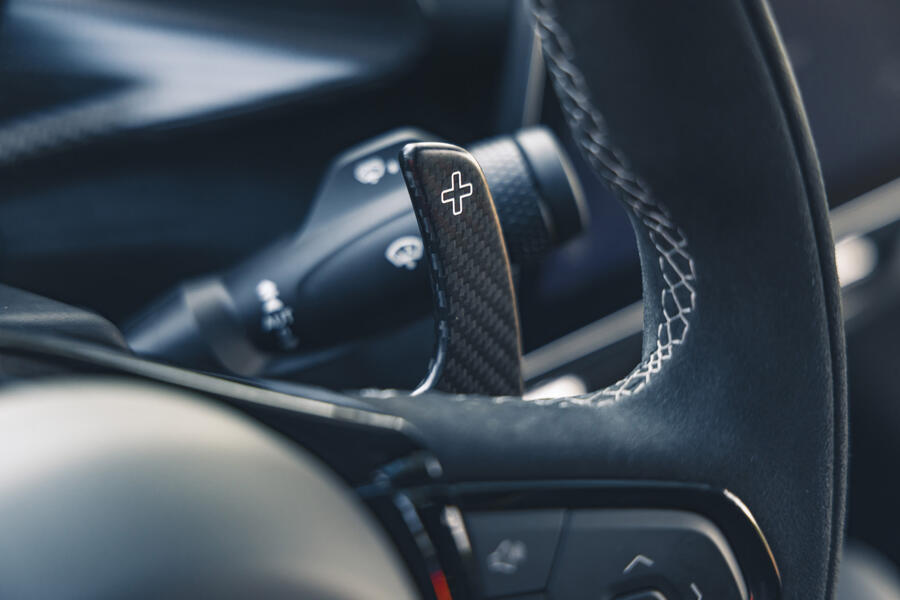
Inside the cabin, the Emira 420 Sport balances its track-focused intentions with the luxury expected of a modern grand tourer. The cabin is finished in bespoke trim materials, creating a snug and premium environment. The most functional interior update is the introduction of longer, carbon fibre gearshift paddles. These new paddles offer a more positive "click-clack" action, addressing a common critique of the standard paddles and enhancing the engagement level of the dual-clutch transmission.
Despite the focus on performance, the Emira does not sacrifice everyday usability. The seats provide excellent lateral support for track driving while remaining comfortable for long-distance journeys. However, some ergonomic quirks remain. For instance, while the brakes are exceptionally strong and progressive under hard use, they require a delicate touch during low-speed maneuvers, making smooth "limo-style" stops a challenge for the uninitiated.
Powertrain Dynamics and Comparative Analysis
While the chassis and steering receive universal acclaim, the Mercedes-AMG powertrain remains a point of discussion. When the turbocharger is fully engaged, the 420 Sport is a formidable performer, capable of rapid acceleration that rivals many dedicated supercars. The new titanium exhaust adds a layer of aural drama, with pops and cracks on the overrun in Sport and Track modes.
However, some critics note that the engine lacks the "soulful" character of the V6 or the naturally aspirated engines of Lotus’s past. At low revolutions, there is a perceptible amount of turbo lag, and the throttle response occasionally lacks the razor-sharp precision found in the car’s steering and braking systems. Despite these minor criticisms, the integration of the AMG engine is a technical feat, providing the reliability and efficiency required for global markets.
Market Context and Broader Implications
The release of the Emira 420 Sport comes at a pivotal time for Lotus. Under the "Vision80" strategy, the company is transitioning into a global luxury electric vehicle brand. The success of models like the Eletre SUV and the Emeya sedan is funding the final development phases of the brand’s sports car lineage.
In the competitive landscape, the Emira 420 Sport finds itself positioned against the Porsche 718 Cayman GTS 4.0 and the Alpine A110 R. While the Porsche offers a more clinical and polished overall package, and the Alpine emphasizes extreme lightness, the Lotus carves out a niche by offering the most tactile and "analog" driving experience of the trio.
Timeline of the Lotus Emira Development
- July 2021: Global debut of the Lotus Emira at Hethel, Norfolk.
- Early 2022: Production commences for the V6 First Edition models.
- 2023: Introduction of the 2.0-litre four-cylinder AMG engine variant.
- 2024: Launch of the Emira Turbo SE and subsequent development of the 420 Sport.
- 2025/2026: Expected peak production of the 420 Sport as the final ICE models are prepared for enthusiasts.
Conclusion: A Fitting Tribute to Lotus Heritage
The Lotus Emira 420 Sport is more than just a power upgrade; it is a comprehensive refinement of a platform that has become a favorite among driving purists. By combining the best of German engine technology with British chassis engineering, Lotus has created a car that feels at home on both a B-road and a race circuit.
While the automotive industry moves inexorably toward a silent, electric future, the 420 Sport serves as a reminder of the visceral joy of a well-balanced internal combustion sports car. It is a machine defined by its lack of inertia, its communicative steering, and its ability to make the driver feel central to the experience. For those looking to own a piece of the final chapter of Lotus’s petrol-powered history, the 420 Sport represents the pinnacle of the Emira’s development.