NHS Surgical Crisis as Record-Breaking Heatwaves Force Over 1,000 Operation Cancellations Across England and Wales

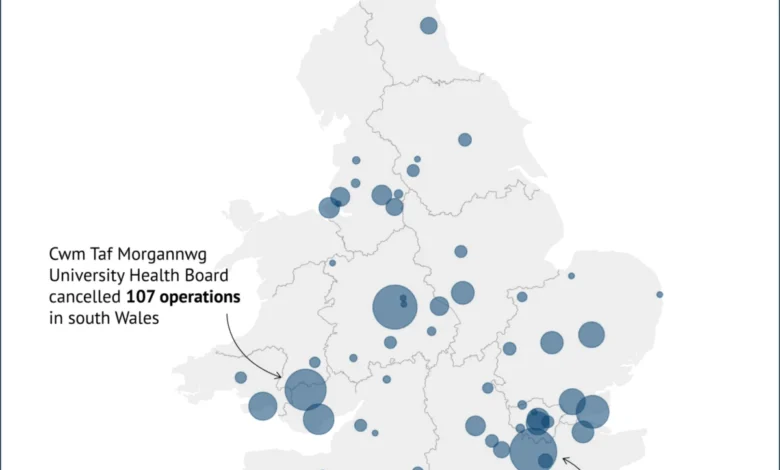
The United Kingdom’s healthcare infrastructure faced an unprecedented challenge during the extreme heatwaves of May and June 2026, as soaring temperatures forced NHS trusts to cancel more than 1,000 surgical procedures. An investigative analysis by Carbon Brief, utilizing Freedom of Information (FOI) requests submitted to 140 NHS trusts and health boards, has exposed a critical vulnerability in the national health system: a surgical estate that is fundamentally ill-equipped to manage the realities of a warming climate.
The disruption, which spanned a 17-day period of intense heat, affected a broad spectrum of medical care. Among the 1,110 recorded cancellations were 167 orthopaedic surgeries, including essential hip and knee replacements, alongside procedures for heart, eye, and skin cancer patients. Most alarmingly, the data reveals that at least 10 emergency surgeries—procedures required for life-threatening conditions—had to be aborted or delayed, while an additional 18 operations were abandoned midway through as surgical theatres became intolerably hot.

A Chronology of Climate-Induced Disruption
The heatwaves, which gripped England and Wales between May 22–28 and June 18–27, 2026, prompted the UK Health Security Agency (UKHSA) to issue "amber" and "red" heat-health alerts. These periods represented the peak of the disruption.
In late May, as temperatures began to climb, hospital administrators across the southern regions of England—the areas hardest hit by the mercury—began reporting failures in environmental control systems. By the time the June heatwave arrived, with temperatures in regions such as Crawley approaching 36C, the frequency of cancellations spiked. The Surrey and Sussex Healthcare NHS Trust emerged as the most severely affected, reporting 140 cancellations at Crawley Hospital alone. Similarly, Cwn Taf Morgannwg University Health Board in South Wales documented 107 cancellations, highlighting that the crisis was not confined to London and the South East but was a systemic issue affecting diverse geographical regions.
The Engineering of Failure: Why Theatres Overheat
The root cause of these cancellations lies in the complex, highly engineered nature of modern operating theatres. These clinical environments rely on sophisticated ventilation and air-handling units designed to maintain precise temperature and humidity levels. According to NHS anaesthetist Dr. Ed Robinson, these systems are not merely for comfort; they are essential for infection control.

"An operating theatre is a very tightly engineered clinical environment," Dr. Robinson explained. "There are quite complicated ventilation systems which dilute airborne contaminants and remove fumes from anaesthetic gases. When it gets to a certain heat, those systems can fail."
When ventilation systems falter, the risk of pathogen transmission increases, and the environment becomes hazardous for both patient and surgeon. Surgeons, who often operate in heavy personal protective equipment (PPE)—sometimes including lead-lined aprons to protect against radiation during X-ray guided procedures—find their ability to maintain concentration and physical endurance severely compromised in temperatures that frequently exceed 30C in non-ventilated rooms.
Furthermore, medical equipment and materials are often validated only for specific temperature ranges. For instance, the specialized "bone cement" used in orthopaedic joint replacements can set prematurely if the ambient temperature is too high, rendering the material unusable and potentially endangering the success of the procedure.

The Data Gap and Underestimation of Impact
It is critical to note that the figure of 1,110 cancellations is almost certainly a significant underestimate. Of the 140 NHS trusts contacted, fewer than half provided comprehensive data regarding heat-related surgical disruptions. Many trusts informed researchers that they do not systematically record "heat" as a specific reason for cancellation, opting instead for generic categories such as "equipment failure" or "facility issues."
This lack of standardized reporting suggests a systemic blind spot in how the NHS tracks the impact of climate change on clinical delivery. While 59 trusts provided specific details of heat-related disruption, 63 others responded without such data, often citing that their internal systems were not configured to track the environmental triggers of surgical delays. This lack of transparency makes it difficult for policymakers to grasp the true extent of the damage being done to elective care waiting lists.
Broader Implications for NHS Resilience
The cancellations represent a compounding factor in an already strained healthcare system. With the NHS battling record-high A&E demand and chronic staff shortages, the additional burden of climate-induced cancellations creates a "double-hit" scenario.

Richard Egan, an endocrine surgeon and national clinical director within NHS Wales, emphasized the long-term human cost. "That’s a significant impact on waiting lists," he stated. "For every week that patients are waiting on a waiting list, their condition could get worse and deteriorate."
The situation has triggered a debate regarding the "ad hoc" nature of the current response. While the government has pledged £32 million from a larger £1.5 billion capital investment fund to improve hospital resilience, critics argue that this is a drop in the ocean compared to the scale of the required infrastructure overhaul. Many NHS hospital buildings date back decades and were never designed for the extreme heat events now becoming a regular feature of the British summer.
The Climate Change Committee (CCC), which advises the government, has set a target for all healthcare buildings to be capable of maintaining safe and appropriate temperatures by 2035. Achieving this will require a massive retrofitting program that addresses ventilation, insulation, and cooling capacity. However, as the King’s Fund thinktank has frequently observed, years of underinvestment have left the NHS estate in a state of deterioration, with outdated technology frequently failing to meet modern clinical standards.
Addressing the Future: A Call for Systemic Adaptation
The events of the summer of 2026 serve as a stark warning. Climate change is no longer a distant environmental concern but an immediate operational threat to the delivery of critical medical services. The "poorly prepared" assessment of the surgical system, first highlighted after the 2022 heatwaves, remains largely relevant today.
Public health experts like Dr. Dmitri Nepogodiev argue that there is no "magic solution." Instead, hospitals must move toward a model of "broader preparedness" that treats heat-related stress as a seasonal pressure, comparable to the winter surge. This includes better forecasting, improved cooling technology, and a more robust reporting mechanism that allows the NHS to identify and address vulnerabilities in real-time.
As the UK moves forward, the pressure on the Department of Health and Social Care to modernize the physical infrastructure of the NHS will likely intensify. The current reliance on staff to "reorganize and adapt" in the face of failing ventilation is, as Tim Lane, president of the Royal College of Surgeons of England, noted, an unsustainable model. "Resilience alone cannot compensate indefinitely for outdated infrastructure," he concluded.
The 1,110 cancelled surgeries represent more than just a data point in a government report; they represent over a thousand individual patients whose lives were put on hold, whose pain was prolonged, and whose trust in a stable healthcare system was tested. As temperatures continue to rise, the question for the NHS is not whether it can survive another heatwave, but whether it can afford not to adapt.