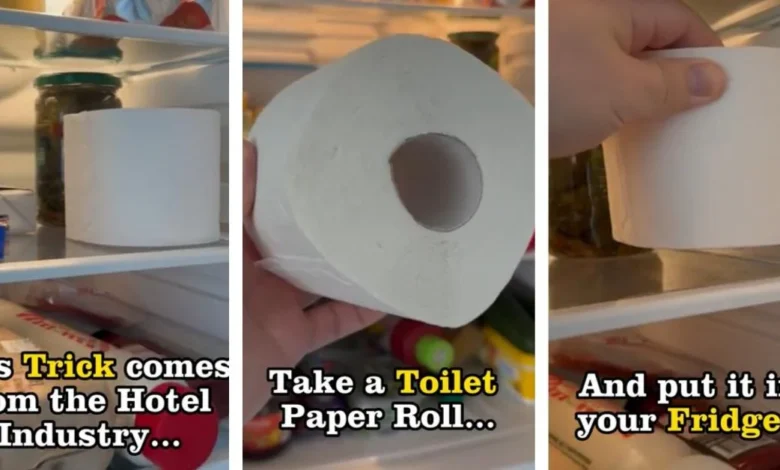
The modern household refrigerator is an indispensable marvel of domestic engineering, designed to extend the shelf life of perishable goods, preserve leftovers, and maintain optimal food safety temperatures. However, despite its crucial role in food preservation, the appliance is frequently plagued by a persistent and unpleasant issue: mixed food odors. From pungent leftover cheeses and aromatic onions to decaying produce and raw proteins, the internal atmosphere of a refrigerator can rapidly deteriorate into an olfactory challenge. For generations, homeowners have relied on traditional remedies—most notably an open box of baking soda—to neutralize these unwanted smells. Yet, social media platforms have recently popularized an unconventional alternative that has sparked widespread curiosity and debate: placing a roll of standard toilet paper inside the refrigerator.
This viral trend, which gained significant momentum on video-sharing platforms like TikTok through channels such as Smart Fox Lifehacks, suggests that a fresh, unused roll of toilet paper can effectively absorb moisture and trap ambient refrigerator odors. As the hack spread across digital networks, major media outlets, including the New York Post and House Digest, began analyzing the phenomenon, prompting consumers to reevaluate their kitchen maintenance routines. While the concept may sound peculiar at first glance, understanding the underlying science, evaluating its practical efficacy, and comparing it to traditional methods reveals a nuanced picture of modern household life hacking.
Origins of the Trend and Social Media Propagation
The genesis of the toilet paper refrigerator hack is frequently traced back to housekeeping practices utilized within the hospitality industry. According to lifestyle influencers and digital creators, certain hotel housekeeping staffs have historically placed rolls of toilet paper in confined spaces—ranging from guest room refrigerators to small storage compartments—as an inexpensive moisture and odor control measure. When the tip was adapted for domestic use on TikTok, it quickly captured the public imagination due to its simplicity, low initial cost, and the widespread availability of the item in question.
The viral video presented a straightforward protocol: take a brand-new roll of toilet paper directly from its protective plastic packaging, place it on a shelf inside the refrigerator, and allow it to sit undisturbed for a period of three to four weeks before replacing it. As the content circulated, it attracted millions of views, generating thousands of comments ranging from enthusiastic endorsement to utter disbelief. While some users praised the hack for its apparent simplicity, others raised immediate hygienic concerns regarding the proximity of paper products to food storage areas, forcing lifestyle commentators to clarify that the method strictly requires a pristine, untouched roll rather than a recycled bathroom product.
The Science of Absorbency: How Toilet Paper Interacts with Refrigerator Environments
To determine whether the toilet paper hack holds any scientific validity, it is necessary to examine the physical properties of the material itself. Toilet paper is specifically engineered to be highly porous and absorbent, designed primarily to capture moisture efficiently. Within the enclosed, refrigerated environment of a kitchen appliance, two primary factors contribute to odor development: excess humidity and airborne volatile organic compounds (VOCs) released by stored foods.
Because refrigerators frequently experience humidity fluctuations—especially when doors are opened repeatedly or when uncovered moisture-rich foods are stored—excess water vapor can condense on interior surfaces, creating an ideal breeding ground for mold and bacteria, which in turn generate foul smells. The high-surface-area cellulose fibers in a roll of toilet paper readily absorb this excess ambient moisture. By trapping the humidity, the paper indirectly reduces the moisture-borne particles that transport odors throughout the cabinet. Furthermore, the porous structure of the paper can physically trap certain airborne aromatic molecules, offering a temporary dampening effect on localized kitchen smells.
However, sanitation experts and food safety advocates have issued strong caveats regarding this practice. The most critical operational warning involves the source of the paper. Utilizing a roll that has previously resided in a domestic bathroom is strongly discouraged by hygiene professionals. Bathrooms are subject to the well-documented "aerosol effect" or toilet plume phenomenon, wherein microscopic fecal and urinary particles are propelled into the air during flushing and subsequently settle on surrounding surfaces, including toilet paper roll holders. Introducing a contaminated paper product into an appliance dedicated to food storage creates an unacceptable vector for cross-contamination and foodborne illness. Consequently, proponents of the hack emphasize that only factory-sealed, dedicated rolls can be considered for kitchen use.
Comparative Analysis: Toilet Paper Versus Traditional Baking Soda
To evaluate the practical viability of the toilet paper method, industry analysts frequently compare it to the gold standard of refrigerator deodorization: sodium bicarbonate, commonly known as baking soda. Baking soda has been recommended by home economists and culinary experts for decades due to its unique chemical properties. Unlike toilet paper, which functions merely as a physical sponge for moisture and trapped particles, baking soda engages in active chemical neutralization.
Baking soda is an amphoteric compound, meaning it can react with both acidic and basic odor molecules. Most unpleasant refrigerator odors are caused by either acidic compounds (such as spoiled dairy or rotting fruits) or basic compounds (such as amines found in decaying fish and meats). When baking soda comes into contact with these odor-causing molecules, a chemical neutralization reaction occurs, effectively transforming the volatile compounds into odorless salts. This process permanently eliminates the smell rather than simply masking or temporarily trapping it within a fiber matrix.
Furthermore, a direct comparison of longevity and economic sustainability heavily favors the traditional approach. According to home management authorities such as The Spruce, an open box of baking soda can remain active and effective inside a refrigerator for approximately three months before it needs to be discarded and replaced. In contrast, proponents of the toilet paper hack suggest swapping out the paper roll every three to four weeks—and in some extreme lifestyle columns, even more frequently due to saturation limits.
Adopting a routine of replacing toilet paper monthly generates significantly more household waste compared to a single box of baking soda, which is typically packaged in recyclable cardboard. From an environmental and economic perspective, consuming paper products solely for deodorizing purposes represents an inefficient use of resources, especially when the item is discarded prematurely due to moisture overload.
Broader Implications for Household Hacks and Digital Media
The widespread fascination with the toilet paper refrigerator hack highlights a broader cultural phenomenon: the democratization and rapid acceleration of domestic advice through social media algorithms. In the digital age, traditional housekeeping knowledge passed down through generations has been largely supplanted by short-form video content designed for maximum engagement. While these platforms can successfully democratize clever, sustainable innovations, they also foster an environment where unverified, inefficient, or redundant hacks can achieve viral status.
The prevalence of such trends underscores a critical need for consumer media literacy and critical thinking when evaluating online lifestyle advice. When presented with a novel home remedy, consumers must weigh factors such as hygiene, cost-efficiency, environmental impact, and scientific plausibility against established industry standards. In the case of the refrigerator odor debate, while a clean roll of toilet paper will technically absorb moisture and provide a minor, short-term reduction in ambient smells, it ultimately falls short of traditional chemical deodorizers in terms of longevity, effectiveness, and sustainability.
Expert Recommendations for Maintaining a Fresh Refrigerator
Ultimately, sanitation experts and appliance manufacturers agree that no deodorizing hack—whether baking soda, activated charcoal, coffee grounds, or toilet paper—can substitute for proper maintenance and hygiene practices. The most effective strategy for preventing unpleasant refrigerator odors involves addressing the root causes of the problem rather than managing the symptoms.
Key preventative measures recommended by culinary and sanitation professionals include:
- Immediate Spill Management: Liquid spills and food residue should be cleaned up promptly using warm, soapy water or a food-safe disinfectant to prevent bacterial proliferation and stubborn odor bonding with plastic shelving.
- Airtight Storage: Storing leftovers, strongly scented cheeses, and cut produce in airtight glass or plastic containers prevents volatile aromatic compounds from escaping into the circulating air of the appliance.
- Regular Inventory Audits: Discarding expired or spoiled food items on a weekly basis eliminates the primary source of putrid microbial activity.
- Temperature Regulation: Maintaining the refrigerator at or below 40 degrees Fahrenheit (4 degrees Celsius) slows down the rate of food spoilage and bacterial growth.
While the toilet paper refrigerator trend offers a fascinating glimpse into the mechanics of viral internet culture and basic porous absorption, consumers seeking a reliable, hygienic, and environmentally sound method for maintaining a fresh kitchen appliance would do well to stick to proven, traditional solutions.