The intersection of automotive passion and funerary traditions has long produced peculiar, high-profile anecdotes that challenge the conventional boundaries of memorialization. While the vast majority of interments involve traditional caskets, a small subset of individuals has chosen to be laid to rest alongside—or inside—the vehicles that defined their lives. This practice, often referred to as an "automotive burial," serves as a profound, if unconventional, testament to the deep-seated emotional attachment between humans and their machines. From the 1984 Chevrolet Corvette of George Swanson to the 1964 Ferrari of socialite Sandra West, these final acts of legacy preservation continue to fascinate historians, funeral directors, and automotive enthusiasts alike.
The Case of George Swanson: A Corvette Farewell
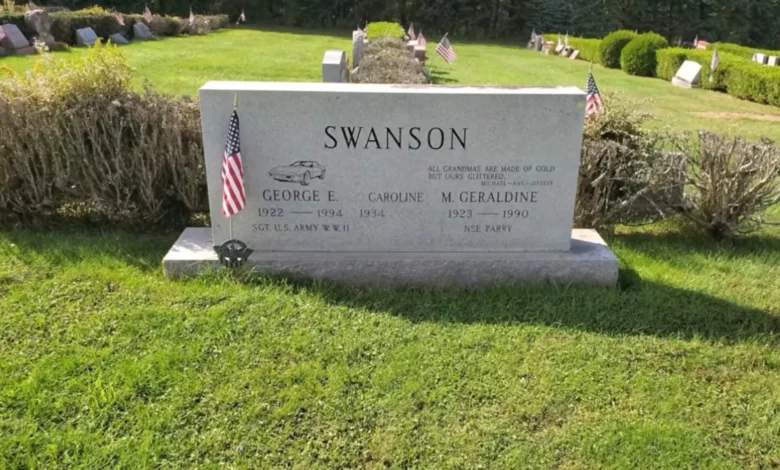
In 1994, George Swanson made headlines for his uncompromising vision of his own funeral. A devoted enthusiast of the C4 Chevrolet Corvette—a model that remains a polarizing subject within the automotive community—Swanson requested that he be interred within his own white 1984 model. The execution of this request was anything but simple. Swanson had originally selected a cemetery outside of Pittsburgh, but the facility attempted to renege on the agreement upon his passing.
The logistical hurdles were significant. To accommodate the footprint of a full-sized American sports car, the family was required to purchase twelve individual burial plots. The interment process itself necessitated the use of heavy-duty construction equipment, specifically a crane, to carefully lower the vehicle into the excavated earth. The ceremony was marked by a blend of solemnity and personal tribute; his wife, Caroline, arrived at the graveside in her own Corvette, sprinkling his ashes into the driver’s seat of the vehicle that would serve as his final resting place. The mood was punctuated by the playing of Engelbert Humperdinck’s "Release Me" from the car’s factory cassette deck. This event serves as a primary example of how personal legacy can supersede traditional norms, even when faced with significant bureaucratic and physical opposition.
A Chronology of Automotive Entombment
While Swanson’s story is often cited in automotive circles, the history of being buried in a vehicle dates back further and encompasses a variety of socioeconomic backgrounds. The following timeline outlines notable instances that have helped define this niche practice:
- 1977: The Sandra West Precedent. Perhaps the most famous instance of high-end automotive burial occurred in San Antonio, Texas. Sandra West, a wealthy socialite, was interred in her 1964 Ferrari 330 America. West was famously positioned in the driver’s seat, attired in an Italian lace nightgown. To protect the investment and ensure the sanctity of the grave, the Ferrari was placed inside a reinforced wooden crate, lowered into the ground via crane, and subsequently encased in a thick shell of concrete.
- 1994: The Swanson Interment. George Swanson’s Pittsburgh burial solidified the trend of using mass-market performance cars as funerary vessels, bringing the concept into the mainstream media spotlight.
- 2009: The Lonnie Holloway Memorial. Demonstrating that the practice is not reserved for the ultra-wealthy, 90-year-old Lonnie Holloway was buried in his 1973 Pontiac Catalina. Unlike the performance-focused burials of West or Swanson, Holloway’s choice was deeply personal, reflecting the vehicle he purchased upon his retirement. He was also interred with his extensive gun collection, a move intended to ensure the weapons were permanently removed from circulation.
The "Casket-Mobile" Phenomenon
It is essential to distinguish between actual vehicle interments and the use of "casket-mobiles"—custom-built coffins styled to resemble automobiles. A notable example is the burial of "Willie the Wimp," the son of a Chicago gangster. While urban legends and popular culture, including songs by Stevie Ray Vaughan, suggest he was buried in a Cadillac, the reality was a meticulously crafted coffin designed to mimic the silhouette of a Cadillac Eldorado. This distinction is important for understanding the cultural impulse; while some desire the physical presence of their actual vehicle, others seek the aesthetic association of the brand as a symbol of status or lifestyle.
Logistical and Regulatory Challenges
The legal and logistical implications of burying a vehicle are profound. Most modern cemeteries operate under strict regulations governed by state law and private bylaws. These regulations generally prioritize environmental protection and space management.
- Environmental Concerns: Modern burial practices are heavily regulated to prevent soil contamination. Fluids—including motor oil, transmission fluid, coolant, and gasoline—must be completely drained from any vehicle intended for burial. This is a non-negotiable requirement for any cemetery that grants such a request.
- Structural Integrity: A grave must be able to withstand the weight of the earth above it. A standard casket is designed to withstand a certain amount of pressure, but a vehicle, while structurally sound, is prone to corrosion. Cemeteries often require that the vehicle be placed within a massive concrete vault to prevent the ground from subsiding over time.
- Space Allocation: The purchase of multiple plots is almost always required. A standard burial plot is roughly 3 feet by 8 feet. A vehicle, such as a Corvette or a Catalina, occupies a significantly larger footprint, necessitating the purchase of a block of plots to accommodate the width and length of the chassis.
Broader Implications and Cultural Shift
Why do individuals feel the need to be associated with their vehicles even in death? Sociologists suggest that for many, a car is not merely a tool for transportation; it is an extension of the self. In the 20th century, the automobile became the primary symbol of personal freedom, economic mobility, and individual identity. By choosing to be buried with a vehicle, individuals are essentially choosing to be remembered in the context of their greatest achievements or their most cherished experiences.
Funeral homes and memorial parks have increasingly begun to recognize these requests as a legitimate form of "personalized memorialization." While still considered an outlier, some funeral directors argue that as the "baby boomer" generation—a demographic deeply shaped by the car culture of the 1960s and 70s—reaches the end of their lives, we may see an increase in such unconventional requests.
Furthermore, the practice serves as a unique data point for historians. The vehicles chosen for burial often represent a specific snapshot of the owner’s life and the era they inhabited. The 1964 Ferrari 330 America represents the height of luxury and status, while the 1973 Pontiac Catalina represents the stability and rewards of a long-term career. These burials act as time capsules, preserving the physical objects that defined the personal histories of those interred.
Conclusion: The Future of the Final Ride
The act of being buried in a car remains a rare and complex phenomenon that sits at the intersection of private desire and public regulation. It requires significant financial resources, logistical coordination, and the cooperation of cemetery authorities. Yet, as our cultural understanding of memorialization evolves, the desire to link one’s identity to their most prized possession continues to manifest in these dramatic, steel-encased departures. Whether motivated by a desire to signal status, a need to preserve a piece of personal history, or simply a final, eccentric request, these automotive burials stand as a testament to the enduring bond between people and the machines they drive. As we look toward the future, it is likely that the conversation surrounding these unique interments will continue to evolve, reflecting our changing attitudes toward the legacy we leave behind in the driver’s seat.