California’s Car Culture Is Codified With Passing Of Leno’s Law And New Lowrider License Plate Design

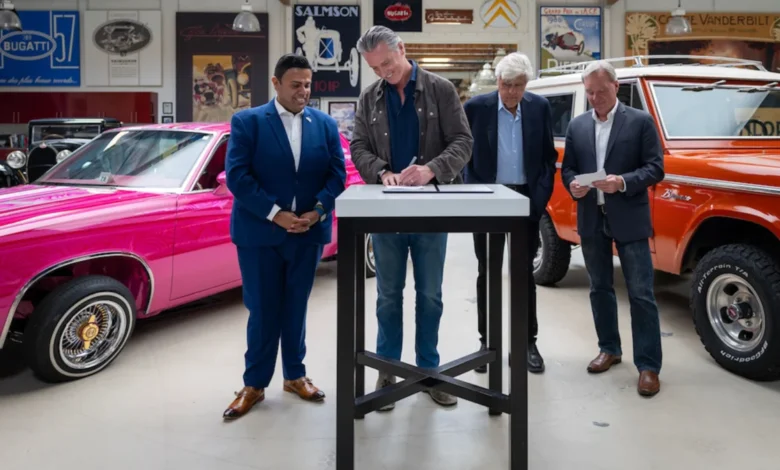
In a significant move to balance the state’s rigorous environmental mandates with its deep-seated automotive heritage, California Governor Gavin Newsom has signed a trio of legislative acts that promise to reshape the landscape for enthusiasts, collectors, and aftermarket manufacturers. The legislative package—comprising SB 1392 (Jay Leno’s Law), AB 2541, and SB 1069—represents a nuanced recalibration of how the state interacts with its diverse car culture, moving from a position of near-total restriction to one of managed, heritage-conscious regulation.
The Evolution of Jay Leno’s Law: From Ambition to Compromise
The journey of SB 1392 has been a protracted legislative saga, reflecting the tension between California’s pioneering environmental goals and the preservation of historical mechanical assets. The concept, colloquially named after the famous comedian and vehicle collector Jay Leno, first surfaced in a more expansive form as SB 712. That initial iteration proposed a broad exemption from the state’s biennial smog certification requirements for any vehicle older than 35 years, provided it was registered and insured as a collector’s car.
However, the 2025 legislative session saw that proposal falter in committee, primarily due to concerns regarding the potential impact on air quality in the South Coast Air Basin and other regions struggling to meet federal ozone standards. The revised version, SB 1392, which was signed into law today, represents a narrowed, more targeted compromise. It specifically limits the smog exemption to vehicles manufactured between 1976 and 1985 that are either insured as collector vehicles or driven fewer than 1,000 miles per year.
This specificity is critical. By imposing a mileage cap, the state effectively ensures that these classic vehicles remain "weekend drivers" rather than primary transportation, thereby minimizing their cumulative contribution to nitrogen oxide (NOx) and volatile organic compound (VOC) emissions. For decades, vehicles produced before 1976 have enjoyed a blanket exemption in California, and diesel-powered vehicles from 1997 or earlier have maintained a similar status. SB 1392 essentially creates a bridge for the "modern classic" era, acknowledging that while these vehicles are historically significant, they must be managed within the state’s broader air quality framework.
Legislating Identity: The Lowrider License Plate Program
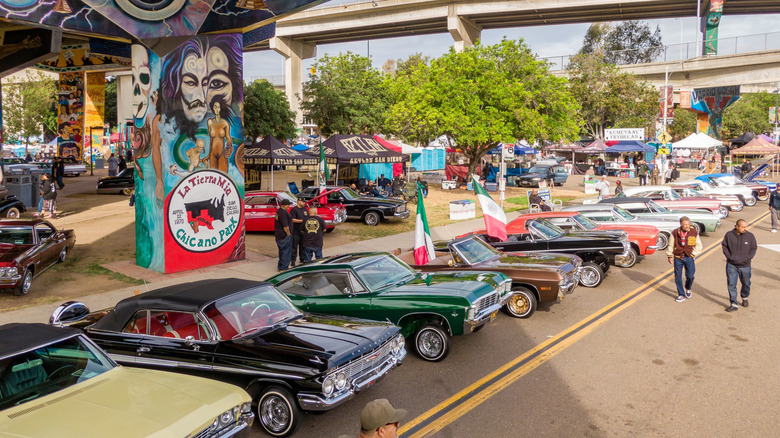
Beyond the technicalities of internal combustion emissions, the signing of AB 2541 marks a major cultural victory for the Chicano community. For years, the lowrider movement—a vital pillar of Mexican-American history in California—faced systemic marginalization through municipal "cruising bans" and strict aesthetic regulations that effectively criminalized the modification of vehicle suspensions.
The passage of AB 2541 serves as both a symbolic and functional recognition of this legacy. Authored by Assemblymember Mark González, the bill directs the California Department of Motor Vehicles (DMV) to develop a specialized license plate design that celebrates lowrider heritage. The program is contingent on the state receiving at least 7,500 paid applications by January 1, 2032, a threshold that observers expect will be reached quickly given the passionate, organized nature of the lowrider community.
The financial structure of the bill is particularly noteworthy. A portion of the proceeds from these license plate fees will be funneled into a newly established Lowrider Arts and Culture Fund. These resources are earmarked for the preservation of lowrider arts and the support of youth programs that carry the movement’s traditions forward. This move effectively pivots the state’s stance from one of suppression to one of cultural stewardship, acknowledging that the lowrider is not merely a car, but a rolling canvas of community identity and artistic expression.
Streamlining the Aftermarket: SB 1069 and Economic Competitiveness
The third pillar of the new legislation, SB 1069, addresses the economic and technical side of the automotive industry. Backed by the Specialty Equipment Market Association (SEMA), the bill aims to modernize the regulatory pathway for aftermarket performance parts. Previously, manufacturers of emissions-related products faced a laborious and often opaque process to obtain a California Air Resources Board (CARB) Executive Order (EO) before their products could be legally sold or installed within the state.
Under the new law, a conditional approval process is established. It allows products that have passed the SEMA Certified Emissions Program to be sold in the California market while the final CARB review is still underway. Crucially, this does not grant a permanent bypass of emissions standards; CARB retains its full authority to audit, approve, or reject any product. Instead, the law functions as a logistical accelerator, reducing the "time-to-market" for businesses that have already invested in rigorous third-party emissions testing.
For small businesses, this is a vital lifeline. The uncertainty of the previous approval timeline often deterred companies from investing in California-specific product development. By providing a clearer, faster pathway, SB 1069 allows manufacturers to compete more effectively while maintaining the integrity of the state’s environmental baseline.
Contextualizing the Shift: A Delicate Balance
To understand the weight of these changes, one must look at California’s unique position in the automotive world. The state is home to the largest vehicle market in the United States and has historically been the primary driver of national emissions policy. The California Air Resources Board (CARB) has often been viewed by enthusiasts as an adversary, with its strict regulations sometimes making the maintenance of older vehicles prohibitively difficult.
Historically, the state’s smog crisis was so severe that by the mid-20th century, residents in Los Angeles frequently experienced eye irritation, respiratory distress, and visibility issues that led many to believe they were living through a period of chemical warfare. The subsequent decades of stringent regulation, starting with the 1970 Clean Air Act and the evolution of CARB, have undeniably improved air quality. However, as the state moves toward a future dominated by Electric Vehicles (EVs), the preservation of internal combustion history has become an increasingly delicate political issue.
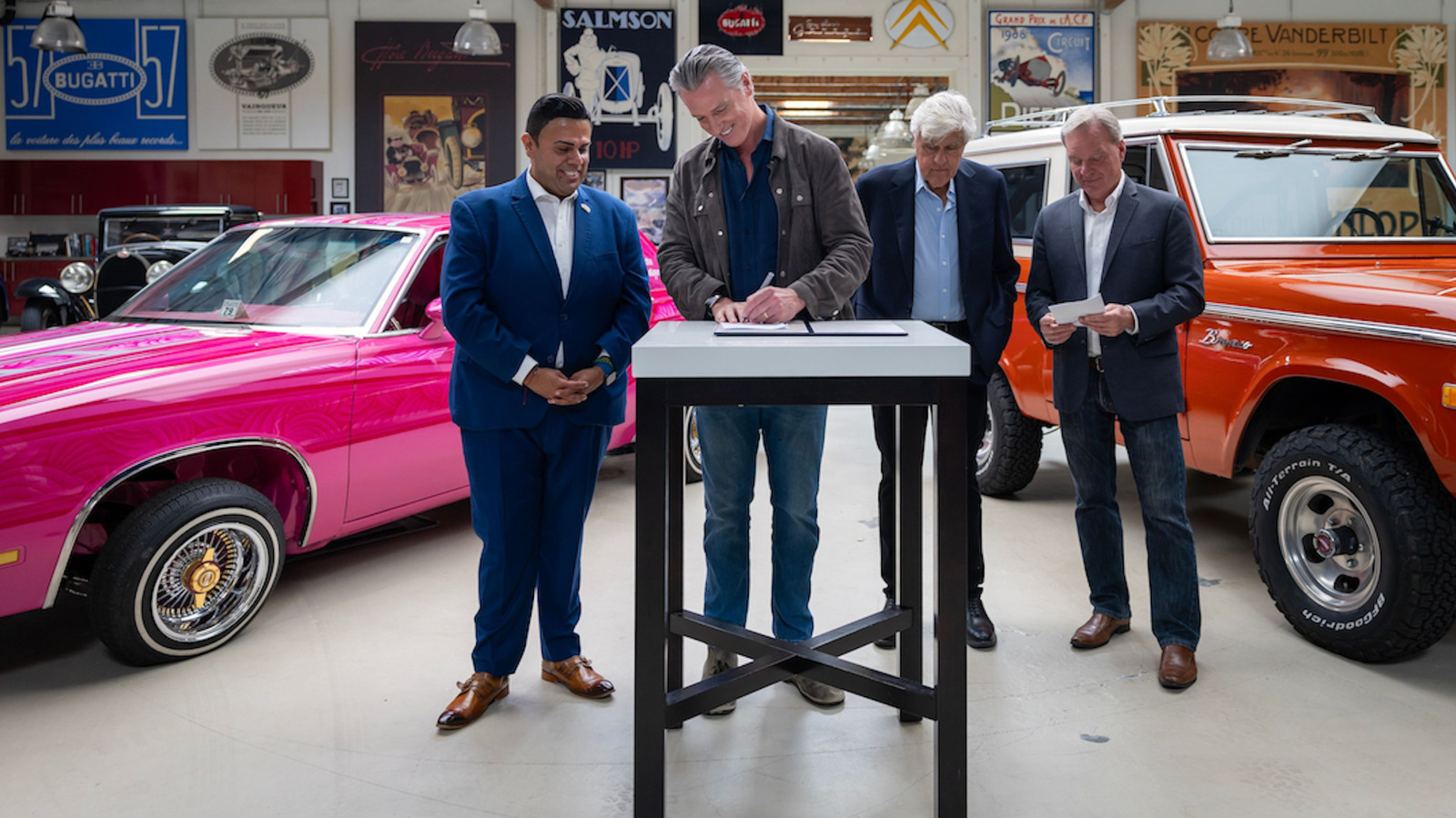
Governor Newsom’s office has framed these laws as a "third way"—a method to keep the state’s foot on the accelerator regarding clean energy transitions while simultaneously protecting its role as a global epicenter for automotive culture. The governor’s visit to Jay Leno’s garage to sign these bills was a symbolic nod to the hobbyist community, suggesting that the state is willing to listen to the concerns of enthusiasts who feel that modern environmental policy threatens their way of life.
Broader Implications and Future Outlook
The legislative impact of these three bills will be felt in stages. In the short term, owners of 1976–1985 vehicles will begin preparing their documentation for collector status to qualify for the new smog exemption. Simultaneously, the DMV will begin the design phase for the lowrider license plates, a process that will involve significant consultation with the California Arts Council and the broader lowrider community to ensure the imagery is both accurate and respectful.
In the long term, these bills represent a shift in how the state treats automotive hobbyists. By legitimizing cruising and offering a path for aftermarket innovation, California is signaling that its future does not necessarily require the complete erasure of its mechanical past. While the climate crisis remains a top-tier priority for the California legislature, there is a newfound recognition that cultural heritage—when managed with technical guardrails—can coexist with environmental policy.
As of today, the automotive landscape in California is more nuanced than it was yesterday. The state continues to push for a carbon-neutral future, but with the passage of SB 1392, AB 2541, and SB 1069, it has also created a formal, legal framework for its citizens to continue celebrating the history and the art that have defined the California road for over a century. The success of these programs will likely be measured by how effectively the state balances the continued demand for air quality improvements against the growing desire to preserve the machines and cultures that built the state’s identity.