Methane has emerged as the most critical focal point for immediate climate action, serving as both a formidable accelerator of global heating and a unique opportunity for rapid mitigation. While carbon dioxide (CO2) remains the primary long-term driver of the climate crisis due to its sheer volume and longevity, methane’s potency and shorter atmospheric lifespan make it the "low-hanging fruit" of global decarbonization. As a colorless, odorless hydrocarbon consisting of one carbon atom and four hydrogen atoms, methane is the primary constituent of natural gas. However, its presence in the atmosphere—stemming from both natural biological processes and anthropogenic activities—now accounts for approximately 30 percent of global warming since the Industrial Revolution.

A Chronology of the Methane Challenge
The trajectory of atmospheric methane has shifted from relatively stable historical levels to a period of unprecedented acceleration. Before the Industrial Revolution, methane concentrations hovered around 700 parts per billion (ppb). By 2023, data from the World Meteorological Organization indicated that concentrations had soared to 1,934 ppb—a staggering 265 percent increase.
The modern concern regarding methane gained significant political traction in 2021 at the COP26 summit in Glasgow, where the United States and the European Union spearheaded the Global Methane Pledge. This initiative committed participating nations to a 30 percent reduction in methane emissions from 2020 levels by 2030. Despite this high-level commitment, the reality on the ground has been stark: emissions have continued to rise, with 2023 marking yet another record-breaking year for atmospheric methane concentration.

The Physics of Potency: Why Methane Matters
To understand why scientists prioritize methane, one must distinguish between its "Global Warming Potential" (GWP) and its lifespan. Methane is an exceptionally efficient heat-trapping gas. Over a 20-year timeframe, methane is 86 times more potent at trapping heat than carbon dioxide. Even when assessed over a 100-year period, it remains 28 times more potent.
Crucially, while CO2 persists in the atmosphere for centuries, methane typically breaks down within 12 years. This short lifespan creates a paradox: if we fail to curb emissions, the planet will face rapid, near-term temperature spikes. Conversely, if we successfully slash methane emissions today, the atmospheric concentration will drop relatively quickly, offering a rare opportunity to "bend the curve" of global temperature rise within a single generation. The Intergovernmental Panel on Climate Change (IPCC) has underscored this, noting that a 34 percent reduction in methane by 2030 is essential to keeping the 1.5 degrees Celsius warming limit within reach.

Mapping the Sources: Human and Natural Drivers
Anthropogenic activities are responsible for roughly 60 percent of global methane emissions, while natural sources, such as wetlands, account for the remaining 40 percent.
- Agricultural Sources: Agriculture is the largest human-caused source, contributing about 40 percent. Ruminant livestock, such as cattle and sheep, produce methane during digestion through a process known as enteric fermentation. Furthermore, manure management and rice cultivation—specifically in flooded paddies that facilitate anaerobic microbial activity—round out this sector’s footprint.
- Fossil Fuel Operations: The energy sector accounts for roughly 35 percent of human-caused emissions. These occur during the extraction, processing, and transportation of oil and natural gas. "Venting" and "flaring"—the intentional release of gas—along with unintentional leaks from aging infrastructure, represent massive, often preventable, emission sources.
- Waste and Landfills: Waste management systems, particularly landfills and wastewater treatment facilities, contribute approximately 20 percent of human-caused emissions as organic matter decomposes in oxygen-deprived environments.
The Rise of Satellite Monitoring and "Super-Emitters"
Advancements in remote sensing have revolutionized our understanding of methane leakage. Previously, regulators relied on "bottom-up" accounting—estimating emissions based on equipment counts and standard leak rates. This method consistently underestimated the scale of the problem. Modern "top-down" monitoring, utilizing high-resolution satellite imagery, has revealed the existence of "super-emitters." These are individual incidents, such as a faulty valve at a natural gas processing plant or a catastrophic leak at a coal mine, that release vast quantities of gas in a short period. Studies have shown that the largest 5 percent of leaks are responsible for more than half of all gas-industry emissions, a fact that was largely invisible to traditional reporting methods until recently.

The "Bridge Fuel" Fallacy and LNG Expansion
For years, proponents of natural gas marketed the fuel as a "bridge" to a renewable future, arguing that it burns cleaner than coal. While it is true that burning natural gas emits less CO2 per unit of energy than coal, this argument fails to account for the "methane leakage" that occurs throughout the entire supply chain.
When methane leakage rates exceed a certain threshold—often cited as low as 3 percent—the climate benefit of switching from coal to gas evaporates entirely. The rapid expansion of Liquefied Natural Gas (LNG) infrastructure in the United States, Australia, and Canada has introduced new concerns. Critics, including environmental advocates and energy analysts, argue that the massive buildout of LNG export terminals locks in fossil fuel reliance for decades, effectively canceling out emissions reductions achieved in other sectors. The U.S. Department of Energy has noted that these exports are increasingly likely to compete with, rather than replace, renewable energy infrastructure.

Implications for Public Health
The impact of methane extends beyond the thermometer. Methane is a key precursor to ground-level ozone, a potent respiratory irritant. Ozone is formed when methane reacts with other pollutants in the presence of sunlight. This smog-like pollutant is linked to approximately 500,000 premature deaths annually due to respiratory and cardiovascular diseases. Furthermore, ground-level ozone is phytotoxic, meaning it damages plant tissue and reduces agricultural yields. Studies suggest that every million metric tons of methane avoided would prevent thousands of asthma-related hospitalizations and protect significant volumes of global wheat, soy, and corn harvests.
A Multi-Pronged Mitigation Strategy
Achieving the necessary reductions requires a combination of policy, technological innovation, and behavioral shifts:

- Energy Sector Reform: The International Energy Agency (IEA) has concluded that 70 percent of methane emissions from the oil and gas sector can be mitigated using existing, cost-effective technology, such as improved leak detection and repair (LDAR) programs.
- Agricultural Innovation: Feed additives for livestock, such as specific types of seaweed or chemical inhibitors like 3-NOP, have demonstrated the ability to reduce methane production in ruminants by over 50 percent. Additionally, "Alternative Wetting and Drying" techniques in rice cultivation can significantly lower emissions without sacrificing crop yields.
- Waste Management: Transitioning toward a circular, zero-waste economy is the ultimate goal. In the interim, capturing methane from landfills for use as biogas and upgrading wastewater treatment facilities can yield immediate results.
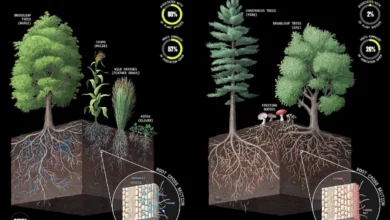
- Nature-Based Solutions: Recent research into the role of tree bark in absorbing methane via methanotrophic bacteria suggests that forest preservation may play a larger role in methane regulation than previously understood.
The Path Forward: Policy vs. Implementation
While the Global Methane Pledge signaled a shift in political rhetoric, the "implementation gap" remains the primary hurdle. As of 2023, only 13 percent of global methane emissions were covered by formal reduction policies. The economic incentives for fossil fuel companies to patch leaks are often outweighed by the costs of repair and the lack of stringent regulatory enforcement.
For individuals, the most effective levers remain changing dietary patterns—specifically reducing consumption of ruminant meat—and advocating for local and national policies that restrict new fossil fuel infrastructure. As the world navigates the increasingly volatile climate, the reduction of methane stands as the most viable mechanism to limit short-term warming. It is a challenge defined by scientific clarity: the tools to curb methane exist, the economic incentives are increasingly aligned, and the environmental urgency has never been greater. Whether global leadership will translate these realities into the necessary legislative action remains the defining question of the decade.