Alphabet Erases Nearly $500 Billion in Historic Market Sell-Off as AI Spending Spree Rattles Wall Street

The technology sector experienced a historic shock on Thursday as Alphabet Inc., the parent company of Google, recorded the worst single-day stock decline in its corporate history. Shares plummeted 12.29 percent by the closing bell, wiping out nearly $500 billion in market value in a matter of hours. According to financial data compiled by Yahoo Finance, the staggering losses marked the second-largest one-day market capitalization drop ever recorded by a United States-listed corporation.
The severe contraction sent immediate shockwaves across global financial markets, dragging down major indexes including the Dow Jones Industrial Average, the S&P 500, and the Nasdaq. The sudden downturn occurred despite Alphabet reporting robust revenue growth during its third-quarter earnings call. However, hidden within the company’s official regulatory filings were sobering financial metrics regarding its aggressive artificial intelligence investments, prompting a sharp reassessment of risk by institutional and retail investors alike.
The Scale of the Loss: Quantifying a Half-Trillion-Dollar Wipeout
To comprehend the sheer magnitude of a $500 billion market valuation loss, financial analysts often rely on unconventional comparisons. To visualize the scale, if one were to stack $5 billion worth of physical $100 bills vertically, the resulting tower would pierce the Earth’s atmosphere and extend approximately 90 miles beyond the orbit of the International Space Station. Alternatively, if an individual were to spend $1 million every single day without interruption, it would take precisely 1,369 years to deplete a sum of $500 billion.
Beyond these abstract comparisons, the immediate real-world consequence was a severe contraction in investor wealth. As one of the preeminent heavyweights in the global technology sector, Alphabet’s sudden drop catalyzed a broader sell-off. Portfolio managers rushed to rebalance tech-heavy holdings, fearing that the golden age of unfettered artificial intelligence expenditures might be approaching a dangerous inflection point.
Decoding the Market Panic: Discrepancies in Q3 Filings
The primary catalyst for the market panic was not the headline revenue figures presented by Alphabet executives during their quarterly conference call, but rather the fine print discovered within the official Q3 earnings filing submitted to the Securities and Exchange Commission (SEC).
According to analyses by Bloomberg and other financial institutions, the corporate filing revealed exposure to financial risks substantially greater than those verbally communicated by leadership. Alphabet currently faces over $1 trillion in future purchase commitments largely tied to infrastructure buildouts, data centers, and advanced computing hardware necessary for generative artificial intelligence. More alarmingly, the regulatory filing disclosed an additional $98.5 billion in contingent or possible purchase commitments that had not been heavily emphasized in previous investor presentations.
This massive discrepancy laid bare the precarious nature of the current technology landscape. Wall Street has grown increasingly anxious that the unprecedented capital expenditures flowing into artificial intelligence resemble an inflating financial bubble—one that risks bursting if commercial monetization fails to match the staggering upfront costs.
Cash Flow Negative: A Historic First for Google
Compounding investor anxieties was a critical milestone reported during the same fiscal period: Alphabet posted negative cash flow for the third quarter. This marked the second consecutive or recent reporting period where the tech giant faced negative cash flow pressures, driven almost entirely by the astronomical costs of acquiring and maintaining AI-focused hardware and infrastructure.
For decades, Google has operated as a prolific cash-generation engine, relying on high-margin advertising revenue to fund experimental ventures, acquisitions, and long-term research. The transition into a cash-flow-negative operational status, even temporarily, signaled to conservative investors that the company’s fiscal discipline has been sidelined in the global race for artificial intelligence supremacy.
The AI Arms Race: High Stakes and High Rewards
Despite the palpable anxiety gripping the trading floors, not all market participants share a pessimistic outlook regarding Alphabet’s trajectory. During the same earnings presentation, the company highlighted a very strong 25 percent year-over-year revenue growth figure, bolstered significantly by the surging demand for Google Cloud services and enterprise artificial intelligence integrations.
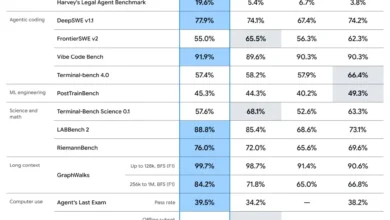
Furthermore, technological milestones continue to validate the company’s engineering prowess. Google’s latest frontier artificial intelligence model, Gemini 4 Carbon, recently claimed the top position on the Artificial Analysis Intelligence Index, demonstrating that the massive capital expenditures are indeed producing industry-leading technological capabilities. Proponents of Alphabet’s long-term strategy argue that these investments are foundational, comparing the current spending spree to the heavy infrastructure investments made during the dawn of the cloud computing era or the commercialization of the internet. Under this bullish thesis, early pain will yield dominant market control once enterprise adoption of AI standardizes across global industries.
However, the events of Thursday served as a stark reminder that the market’s patience is not infinite. If the anticipated financial returns fail to materialize in upcoming fiscal quarters, the consequences will extend far beyond Alphabet’s balance sheet, potentially triggering a broader economic correction across the technology sector and the wider financial markets.
Broader Economic Implications and Industry Reactions
As regulators, economists, and market analysts dissect the aftermath of Alphabet’s historic sell-off, attention has naturally shifted toward other major technology conglomerates engaged in similar artificial intelligence capital expenditure cycles. Companies such as Microsoft, Meta, and Amazon have similarly poured tens of billions of dollars into data centers, specialized silicon chips, and energy infrastructure.
Financial institutions are now calling for greater transparency regarding the long-term amortization of these assets and clearer metrics on how AI tools are translating into direct net income rather than merely top-line revenue expansion. The risk profile of the entire technology sector has effectively been recalibrated, with investors demonstrating a new intolerance for opaque financial commitments and unverified long-term projections.
For Alphabet, the immediate challenge lies in restoring market confidence during the upcoming quarters. Leadership will need to demonstrate a clearer path toward monetizing its AI investments, optimizing infrastructure expenditures, and returning the company to positive cash flow generation without sacrificing its competitive edge in a rapidly evolving technological ecosystem. Until those assurances are solidified, Wall Street remains on high alert, acutely aware that the stakes of the artificial intelligence revolution have never been higher.