Tesla Opens Cybercab Pre-Orders for Personal Use with Strict Geographic Restrictions and a Planned December 2026 Delivery Timeline

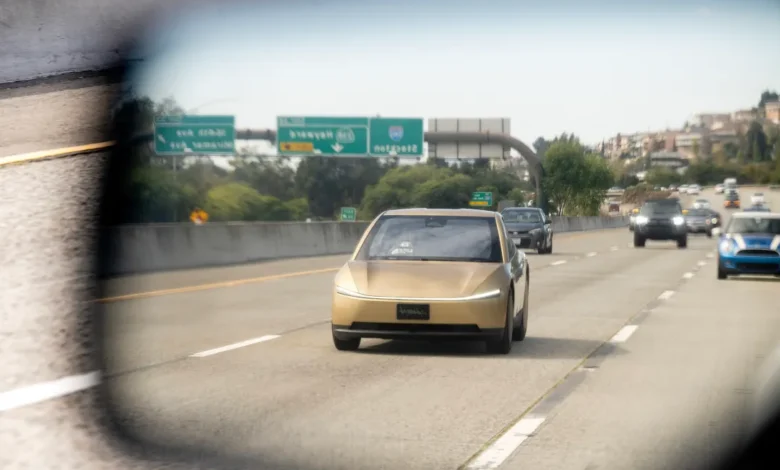
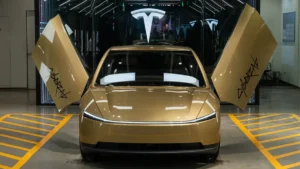
The electric vehicle landscape shifted significantly on a Friday evening in November 2026, when Tesla officially announced that a select tier of customers would be granted the opportunity to pre-order its highly anticipated, autonomous golden Cybercab for personal use. The announcement marks a critical transition point for the automaker, moving its vision of unsupervised robotaxis from corporate fleet concepts into the hands of individual consumers. However, the rollout is accompanied by a strict set of operational conditions, geographical limitations, and recurring subscription costs that highlight the current regulatory and technological hurdles facing autonomous driving technology.
As initial buyers gained access to the private order portal, details regarding the vehicle’s deployment quickly surfaced online. Prominent tech reviewer Marques Brownlee took to social media to share critical findings from the checkout page. According to the documentation, prospective buyers are required to take physical delivery in one of a designated handful of Texas cities. Furthermore, the Cybercab will not feature unrestricted nationwide driving capabilities upon release; instead, it will operate exclusively within strictly geofenced urban boundaries. Tesla has currently slated the estimated delivery window for these initial consumer-owned vehicles for December 2026.
Financial structure and subscription requirements also came under immediate scrutiny. While the base vehicle carries an advertised price tag of $29,990—positioning it as an affordable disruptor in the personal transit market—buyers are initially faced with an operational fee of $299 per month. This ongoing charge is designed to cover the continuous data connectivity, cloud processing, and advanced neural network updates required to maintain unsupervised autonomous operations.
The Pricing Debate and Leadership Adjustments
The initial $299 monthly operational fee quickly sparked debate across tech and automotive communities, prompting a public clarification from Tesla leadership. Responding directly to Marques Brownlee’s breakdown on social media, Tesla CEO Elon Musk acknowledged that the current configuration fee is excessive. Musk stated publicly that the monthly cost is “too high” and should ultimately match the pricing structure associated with Tesla’s Full Self-Driving (FSD) capability and connectivity packages offered for other vehicle models. According to Musk, the target rate should align closer to approximately $115 per month once the system scales.
Further technical clarification regarding how these privately owned vehicles will navigate their environments came from Ashok Elluswamy, Tesla’s director of software engineering. Elluswamy explained that the consumer-owned Cybercabs will function with complete autonomy—specifically operating as unsupervised systems—but will be constrained to the exact same geo-located parameters established for the broader commercial robotaxi network. Rather than serving public fares on demand, these personal units will execute autonomous tasks exclusively to serve the specific daily travel needs of their individual owners.
Strategic Shifts in Manufacturing and Factory Realignment
The launch of personal Cybercab pre-orders does not occur in a vacuum; it arrives amid a broader, aggressive strategic pivot within Tesla’s manufacturing operations. Just days prior to opening the order books, Tesla made the high-stakes announcement that it will completely cease production of its polarizing Cybertruck by the end of the following year.
The decision to shutter Cybertruck manufacturing lines stems directly from disappointing sales figures that fell far short of internal projections and Wall Street expectations. Rather than letting expensive assembly capacity sit idle, Tesla executives confirmed plans to repurpose the newly freed factory footprint specifically to accelerate the mass production of the Cybercab. This industrial reallocation underscores the company’s urgent priority: pivoting away from niche consumer novelties and diving headfirst into the high-volume autonomous mobility market.
Background and Context of the Cybercab Project

The genesis of the Cybercab traces back through years of iterative promises regarding Full Self-Driving capabilities. Long promoted under various conceptual names, the vehicle was envisioned from the ground up as a dedicated autonomous transport pod, notably featuring a minimalist interior devoid of traditional driver controls such as a steering wheel or pedals.
Industry analysts have noted that Tesla’s strategy relies heavily on achieving unsupervised regulatory clearance on a state-by-state basis. While competitors in the autonomous vehicle sector—such as Alphabet’s Waymo and General Motors’ Cruise—have spent years methodically mapping cities, securing commercial permits, and operating localized fleets with safety drivers before going driverless, Tesla has pursued an end-to-end neural network approach. By leveraging data gathered from millions of customer vehicles equipped with FSD hardware, Tesla aims to bypass the intensive, manual mapping process required by legacy LiDAR-based autonomous systems.
However, this camera-only vision approach has historically invited rigorous scrutiny from safety regulators, including the National Highway Traffic Safety Administration (NHTSA) and various state departments of motor vehicles. The decision to launch the Cybercab within strictly geofenced Texas cities reflects a pragmatic concession to these regulatory realities, ensuring that the vehicles operate only where municipal approvals and comprehensive telemetry data support unsupervised navigation.
Chronology of Key Events Leading to the Rollout
To understand the trajectory of Tesla’s autonomous strategy, a review of recent milestones highlights the rapid pace of development and the sudden pivots required by market pressures:
- October 2026: Tesla publicly unveils finalized production designs and operational concepts for the golden Cybercab, generating immense media attention and setting the stage for consumer-focused applications.
- Early November 2026: Facing lagging market demand and high retooling costs, Tesla announces it will permanently halt production of the Cybertruck in 2027, redirecting those factory resources entirely toward Cybercab manufacturing lines.
- Mid-November 2026 (Friday Evening): Tesla quietly launches an exclusive pre-order portal, granting select customers the ability to reserve the Cybercab for personal use at a base price of $29,990.
- Mid-November 2026 (Weekend Following Launch): Tech reviewers uncover mandatory Texas delivery requirements and geofencing limitations, leading to public discussions regarding the $299 monthly subscription fee. CEO Elon Musk and software lead Ashok Elluswamy step in to clarify pricing corrections and operational boundaries.
- December 2026 (Projected): The tentative target window for the first wave of select consumer deliveries to take place within authorized Texas jurisdictions.
Implications for the Automotive and Mobility Sectors
The commercialization of a sub-$30,000 autonomous vehicle available for personal ownership represents a potential inflection point for urban transportation, yet the immediate implications are laden with complex challenges.
From an economic perspective, a $29,990 base price challenges traditional assumptions about the cost of hardware capable of high-level autonomy. If Tesla can successfully scale production by repurposing its Cybertruck facilities, the company could drastically undercut traditional automotive manufacturing cost structures. However, the requirement for a recurring subscription fee—even if recalibrated down to the anticipated $115 monthly threshold—introduces a software-as-a-service (SaaS) financial model that consumers accustomed to traditional car ownership will have to evaluate against public transit and rival ride-hailing services.
From a regulatory standpoint, the rollout in Texas serves as a critical stress test. Because the vehicles are restricted to specific geofenced boundaries, owners living outside these zones cannot fully utilize the unsupervised capabilities of their purchases. This creates a patchwork ownership experience where utility is dictated strictly by local regulatory frameworks rather than national vehicle capabilities. Musk’s assertion that the vehicle “will be available nationwide, as we receive regulatory approval” highlights that Tesla’s primary bottleneck is no longer engineering the vehicle itself, but rather navigating the bureaucratic and legislative landscape across individual states and municipalities.
As December 2026 approaches, the automotive industry will closely monitor whether Tesla can successfully deliver these vehicles on schedule, manage the transition of its manufacturing plants, and secure the necessary legal approvals to expand unsupervised personal autonomy beyond the borders of Texas. The success or failure of this initial rollout will likely dictate the timeline for widespread, consumer-owned autonomous transit for years to come.