Elon Musk and Marques Brownlee Clash Over Tesla Cybercab Preorders as Autonomous Vehicle Debuts Amid Feud and Restrictions

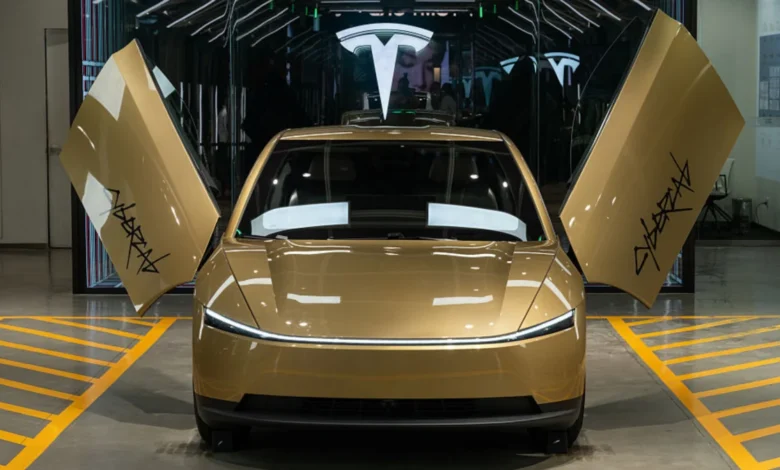
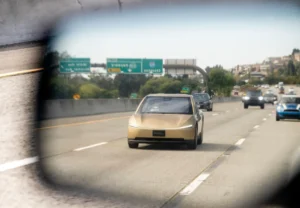
Tesla has officially initiated preorders for its highly anticipated Cybercab, marking the company’s first major push into a mass-market autonomous taxi. Retailing at an estimated $29,990, the compact two-seater features just over 20 cubic feet of storage and represents the realization of a timeline initially mapped out by CEO Elon Musk during the flashy "We, Robot" event in 2024. At the time, Musk pledged that production for the budget-friendly robotaxi would commence before 2027. However, the opening of preorders has not brought universal consensus regarding whether Musk has successfully fulfilled his bold prognostications, igniting a high-profile public dispute with prominent tech and automotive reviewer Marques Brownlee.
The clash between the Tesla chief executive and the digital creator has quickly evolved from lighthearted banter into a debate over semantics, delivery timelines, and the true definition of product availability. As consumers race to secure their places in line, the debate highlights the intricate challenges facing the autonomous vehicle industry, ranging from regulatory hurdles and geofencing limitations to unexpected ongoing operational costs that could alter the economic viability of private robotaxi ownership.
Chronology of the Bet: From "We, Robot" to Public Feud
The origins of the current dispute trace back to the fall of 2024, when Tesla hosted its high-profile "We, Robot" unveiling event. Amidst a fleet of futuristic prototype vehicles, Elon Musk outlined a vision for a driverless future anchored by the Cybercab. He made a definitive public commitment that the vehicle would hit a sub-$30,000 price point and enter production well ahead of the 2027 threshold.
Among the invited tech journalists and creators in attendance was Marques Brownlee, widely known for his comprehensive reviews of consumer electronics and electric vehicles. Skeptical of Tesla’s historically ambitious and frequently delayed rollout schedules—echoed by years of missed deadlines regarding full self-driving (FSD) capabilities and vehicle launches—Brownlee expressed outward doubt. The skepticism manifested in a public wager: Brownlee promised to shave his head if Musk managed to deliver the vehicle on time and at the promised price point.
Fast forward to the launch of preorders, and the interpretation of "delivery" and "availability" became the battleground. Musk took to social media to accuse Brownlee of being a "chicken" for allegedly attempting to back out of the bet as early-access preorders opened. Refusing to back down, Brownlee responded by putting his own capital on the line, officially placing a preorder for the Cybercab to test the system and call Musk’s bluff.
At the heart of their public feud lies a fundamental disagreement: Does an invite-only early sale phase constitute true public availability? Furthermore, critics and skeptics question whether Tesla can maintain its aggressive projected delivery schedules for initial customers, or if inevitable manufacturing and software delays will push widespread availability into 2027, thereby invalidating the strict parameters of Musk’s original promise.
Decoding the Purchase Agreement: Hidden Costs and Operational Restraints
While the headline-grabbing price tag of $29,990 has successfully captured the public imagination, a granular examination of Tesla’s official purchase agreement reveals a complex web of restrictions, recurring fees, and operational boundaries that significantly alter the ownership experience.
Most notably, the initial rollout of the Cybercab is restricted strictly to personal use. Buyers are legally barred from deploying their vehicles as commercial robotaxis to generate passive income when the cars are not in use—a capability that Musk had previously marketed as a primary economic benefit for future owners. This restriction effectively strips the vehicle of its intended shared-economy utility during the initial phase of deployment.
Compounding the financial calculation is the monthly operating fee required to maintain autonomous functionality. Tesla’s terms indicate that enabling the necessary autonomous driving software will carry a punishing subscription cost of $299 per month. For many consumers, an ongoing $299 monthly software fee is equivalent to financing a second vehicle, effectively doubling the ongoing cost of operating a car advertised as an affordable mobility solution.
Geofencing Hurdles and Regulatory Realities
In addition to financial constraints, early Cybercab owners will face severe geographical limitations. According to Tesla’s configuration documentation, the vehicles are currently "operable only within Tesla-enabled Robotaxi geofences." At launch, these digital perimeters are confined to a carefully selected handful of metropolitan areas across Texas and Florida, where regulatory frameworks are most accommodating to autonomous testing and commercial deployment.
The reliance on regulatory approval remains the single largest bottleneck for widespread autonomous vehicle adoption. Traditional automotive manufacturing operates on established federal safety standards and state-level registration processes, but autonomous fleets require localized mapping, geofencing permissions, and iterative safety validations from state and municipal transit authorities.
To his credit, Elon Musk has openly acknowledged these onerous restraints. The Tesla CEO has consistently assured stakeholders and preorder holders that the geofencing limitations are temporary. Musk has publicly promised that Cybercab features will expand nationwide as municipal and state regulatory bodies grant the necessary operational approvals. However, transport analysts note that the timeline for nationwide regulatory clearance remains entirely outside of Tesla’s direct control, introducing an unpredictable variable into the company’s expansion plans.
Broader Industry Implications and the Road Ahead
Regardless of whether Elon Musk or Marques Brownlee ultimately wins their playful wager, the debut of the Cybercab signifies a watershed moment for the automotive industry. The debate over whether early preorders fulfill a 2024 promise ultimately obscures a much larger, immutable reality: the transition toward autonomous transportation is accelerating at a pace few predicted a decade ago.
The emergence of a sub-$30,000 autonomous platform forces legacy automakers and competing tech firms to accelerate their own robotaxi and autonomous software roadmaps. While consumer enthusiasm is palpable, the early friction surrounding subscription fees, geofencing boundaries, and regulatory approval processes serves as a reality check for the industry. Transitioning from human-driven vehicles to a fully autonomous, software-defined mobility ecosystem will require navigating a labyrinth of legal, financial, and logistical hurdles.
As Tesla processes its initial wave of Cybercab preorders and works to clear regulatory hurdles outside of Texas and Florida, the automotive world is watching closely. The success or failure of this rollout will not only determine the outcome of a high-profile internet bet between a billionaire CEO and a tech reviewer, but it will also establish the baseline consumer expectations for the future of urban mobility.