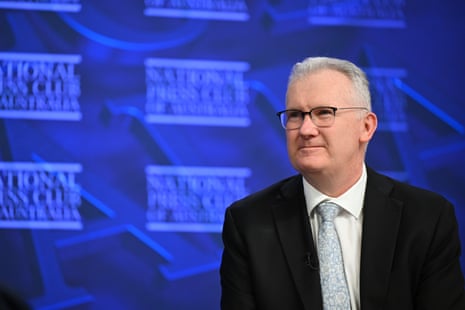
The Australian government has formally unveiled its long-awaited immigration strategy, a move that Home Affairs Minister Tony Burke contends is the result of meticulous policy development rather than political procrastination. Following the release of the comprehensive plan on Thursday, Mr. Burke faced rigorous questioning regarding the significant delay in the strategy’s rollout, which had been originally scheduled for a National Press Club address six weeks prior. The Minister defended the timeline, asserting that the complexity of the national visa system and the necessity of aligning immigration with broader economic pressures—most notably the nation’s ongoing housing supply crisis—demanded a cautious and methodical approach.
The government’s strategy attempts to thread a needle between maintaining necessary labor inflows and addressing public concern regarding the impact of high migration on housing affordability and infrastructure. Mr. Burke emphasized that while immigration is not the sole cause of the housing shortage, it remains a critical variable in the equation. He argued that the government’s priority has been to ensure a soft landing for the national economy, avoiding any disruption that could exacerbate current cost-of-living challenges.

Opposition leader Angus Taylor, however, has dismissed the government’s rationale, characterizing the delay as a failure of leadership and an inability to negotiate. Mr. Taylor asserted that the Coalition had established clear preconditions for bipartisan cooperation on immigration reform, which he claimed the government proved unable or unwilling to meet. The Opposition’s critique centers on the sheer volume of arrivals, with Mr. Taylor arguing that the government’s latest announcement fails to deliver meaningful cuts to migration numbers. According to the Opposition, immigration levels should be explicitly tethered to domestic housing capacity, infrastructure development, and the availability of essential public services—a standard they claim the current administration has abandoned in recent years.
Chronology of the Policy Rollout
The path to the current immigration plan has been marked by mounting public pressure and internal deliberation. In mid-2026, as housing vacancy rates reached record lows and rental stress intensified across major capital cities, the Labor government faced increasing criticism over its management of net overseas migration.
- Early August 2026: Initial reports indicated that the Home Affairs Minister was preparing a major policy address at the National Press Club to outline significant changes to the visa system, particularly concerning international students and temporary skilled migrants.
- Late August 2026: The scheduled address was postponed. The government cited the need for further consultation with industry stakeholders and internal cabinet reviews regarding the economic impact of potential caps.
- September 17, 2026: The government officially released its immigration policy framework. The document outlines a tiered approach to visa processing, with stricter requirements for student visas and a recalibration of regional labor mobility schemes.
- September 18, 2026: Following the release, key ministers, including Tony Burke and Minister for Employment Amanda Rishworth, engaged in a media cycle to defend the strategy against criticism from both sides of the political spectrum.
Economic Implications and the Migration Debate
The debate over immigration in Australia has transcended traditional partisan lines, increasingly viewed through the lens of economic sustainability. Proponents of the government’s plan argue that the nation’s economy relies heavily on migration to fill critical skill shortages in sectors like healthcare, construction, and agriculture. Conversely, critics argue that the rapid increase in population—driven by post-pandemic migration surges—has outpaced the supply of housing, leading to a structural inflation of living costs.

Minister for Employment Amanda Rishworth has countered the narrative that the proposed migration changes will harm food security or increase the cost of living. Addressing concerns from the agricultural sector, Ms. Rishworth stated that the government remains committed to the Pacific Australia Labour Mobility (PALM) scheme. She encouraged farmers and regional employers to leverage these existing pathways, arguing that the new system is designed to improve integrity and compliance rather than simply slash worker availability. The government maintains that by focusing on regional requirements and stricter visa oversight, they can balance the needs of primary producers with the necessity of stabilizing urban housing markets.
AUKUS and the Geopolitical Context
While domestic policy dominates the headlines, the government is also managing significant international commitments. The recent discourse surrounding the AUKUS nuclear submarine deal serves as a backdrop to the government’s broader national security agenda. Sir Stephen Lovegrove, the UK prime minister’s special representative on AUKUS, recently suggested that the intense opposition from regional adversaries is a primary indicator of the deal’s strategic success.
The AUKUS agreement, which carries a staggering projected cost of $368 billion through the mid-2050s, remains a cornerstone of Australia’s defense policy. Australian Ambassador to the United States, Greg Moriarty, has echoed sentiments that the regional buildup of nuclear-powered submarine capabilities by the People’s Liberation Army necessitates a robust, balanced response from Australia and its allies. Despite criticism regarding the slow pace of shipbuilding in both the United States and the United Kingdom, the Australian government continues to express confidence in the long-term viability of the program, viewing it as essential for maintaining a stable Indo-Pacific security architecture.
International Diplomacy and UN Aspirations
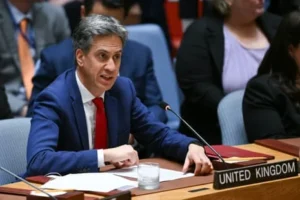
Prime Minister Anthony Albanese is set to depart for New York to lead Australia’s delegation at the United Nations General Assembly. This high-level summit represents a critical opportunity for the government to promote its commitment to multilateralism. The government has identified digital safety, climate change, and international security as the core pillars of its agenda.
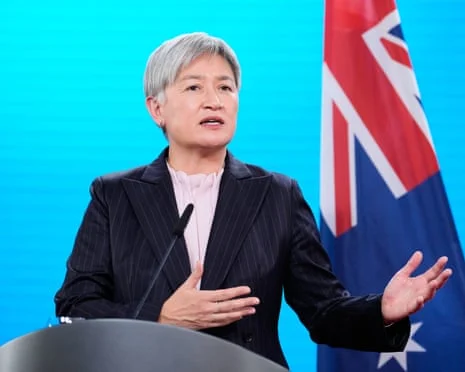
Foreign Affairs Minister Penny Wong has underscored the gravity of this mission, stating that sovereignty and peace are not guaranteed but must be actively maintained through global cooperation. Australia’s push for a seat on the UN Security Council for the 2029–2030 term is expected to be a focal point of these diplomatic efforts. While the vote is not scheduled until 2028, the government is utilizing this year’s assembly to intensify its lobbying efforts and solidify partnerships with key international players.
Digital Safety and Technology Regulation
Concurrent with its immigration and security agendas, the government is asserting its role as a global leader in digital regulation. Prime Minister Albanese is scheduled to meet with Apple’s executive chair, Tim Cook, at the company’s California headquarters. The meeting follows the Australian government’s implementation of "digital duty of care" reforms, which mandate that social media platforms protect minors from harmful content, such as material promoting eating disorders, misogyny, and criminal behavior.

The government has framed these laws as a world-first initiative, noting that Apple’s new parental control features were, in part, inspired by Australia’s regulatory environment. This legislative move, combined with the earlier ban on social media for children under 16, reflects a broader government strategy to position Australia as a jurisdiction where technology companies must adhere to stringent social safety standards.
Analysis of Policy Impact
The convergence of these policy areas—immigration reform, defense spending, international diplomacy, and digital regulation—reveals a government attempting to manage a complex domestic environment while navigating an increasingly volatile global landscape.
The immigration plan, in particular, will face intense scrutiny in the coming months as its practical applications are tested. If the government fails to demonstrate a tangible easing of housing pressures, it risks further alienation of voters in key demographics who are bearing the brunt of the cost-of-living crisis. Furthermore, the reliance on complex visa systems requires a high level of administrative efficiency; any technical or bureaucratic failures in the implementation of the new policy could lead to significant backlash from both business lobbyists and the public.

Ultimately, the Australian government’s current trajectory is one of balancing competing national interests. Whether this "soft landing" approach to the economy and security will prove effective remains to be seen. The coming months will likely see further legislative debates as the government attempts to translate its policy proposals into law, with the Opposition expected to continue its focus on the intersection of migration, housing, and national infrastructure. As the government navigates these challenges, the success of its broader agenda—from its UN ambitions to its digital safety reforms—will depend on its ability to maintain public confidence during a period of sustained economic transition.