Volkswagen Trademarks ID UP as the Name for Its Upcoming 20,000 Euro Entry Level Electric Vehicle

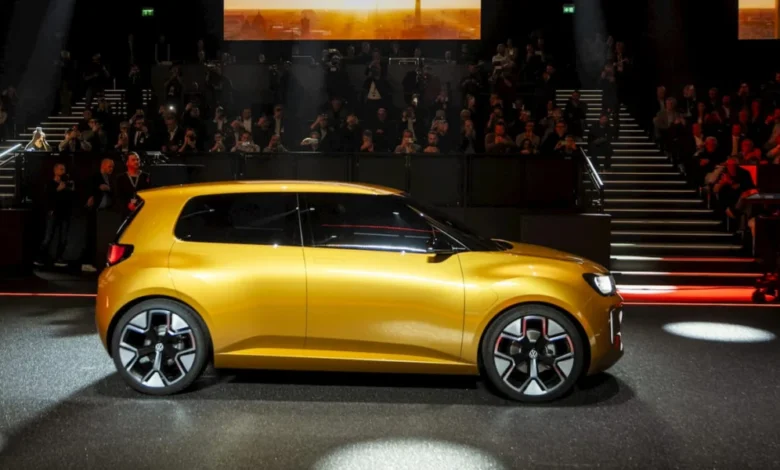
Volkswagen is advancing preparations for the introduction of its highly anticipated entry-level battery electric vehicle, an affordable city car targeting a base price of approximately €20,000 (roughly $22,000). Recent intellectual property filings indicate that the vehicle may shed its preliminary codenames in favor of a familiar, historic moniker. Patent documentation submitted to the European Union Intellectual Property Office (EUIPO) and the German Patent and Trade Mark Office (DPMA) points directly to the revival of a classic nameplate, signaling a strategic shift in Volkswagen’s nomenclature as the brand expands its electric vehicle portfolio deeper into the mass market.
The introduction of this sub-compact model represents a critical milestone for Europe’s largest automotive manufacturer. As traditional combustion-engine vehicle regulations tighten across Western markets and consumer demand pivots toward sustainable mobility, legacy automakers face intense pressure to bridge the affordability gap. For years, industry analysts have argued that widespread electric vehicle adoption cannot occur without compelling, sub-€25,000 options capable of competing directly with internal combustion alternatives. Volkswagen’s upcoming entry-level vehicle is designed to meet this exact market demand, positioning itself as the cornerstone of the company’s future volume sales strategy.
From Concept to Production: The Evolution of the ID. EVERY1

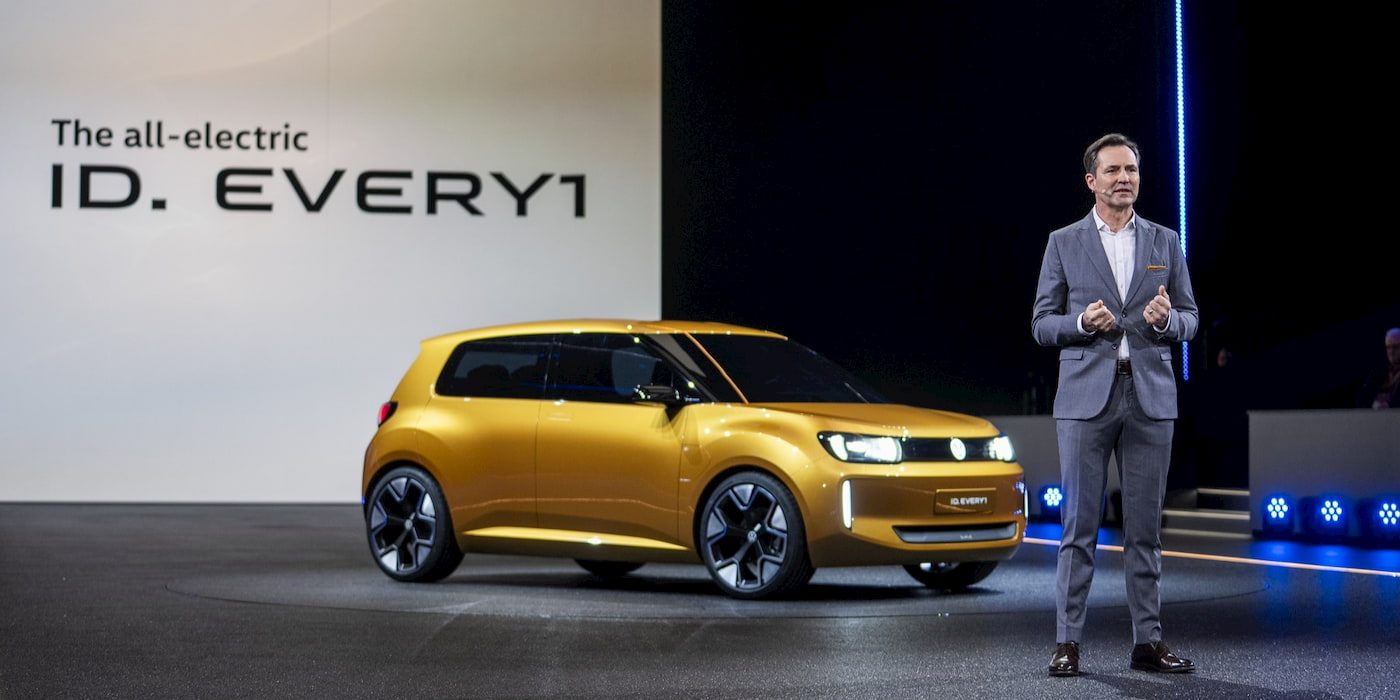
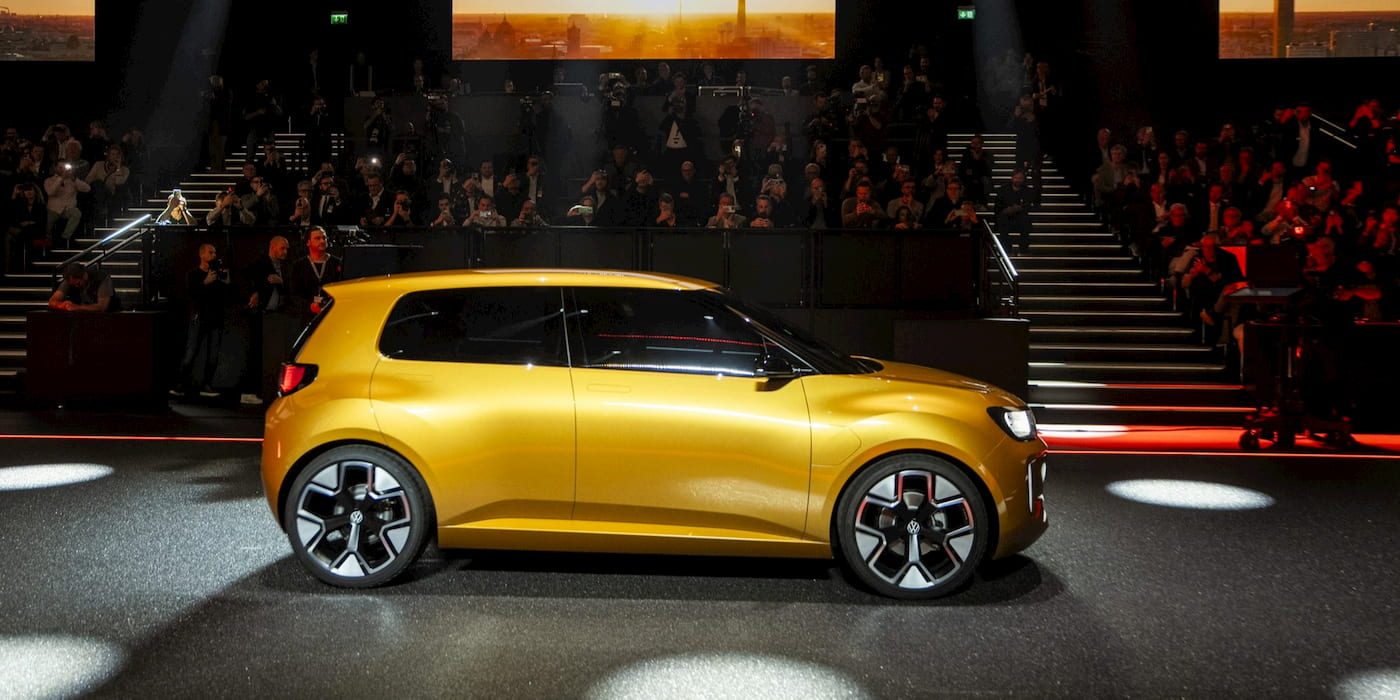
The journey toward a €20,000 electric vehicle has been protracted and complex, marked by shifting corporate strategies, battery cost fluctuations, and the necessity of forging strategic technological alliances. The foundation for this upcoming model was formally laid in March of last year, when Volkswagen brand CEO Thomas Schäfer unveiled the ID. EVERY1 concept car. At the time, Schäfer described the affordable urban EV as "the last piece of the puzzle" for the brand’s comprehensive electrification roadmap.
Following the initial design showcase, Volkswagen confirmed that the production iteration of the ID. EVERY1 would officially launch in 2027. This vehicle is slated to sit directly below the ID. Polo within the automaker’s growing Electric Urban Car Family. This dedicated family of compact electric vehicles also encompasses the ID. Cross, the Cupra Raval, and the Skoda Epiq. All of these models leverage Volkswagen Group’s advanced MEB+ platform, a forward-looking architecture specifically engineered to maximize interior space while reducing manufacturing overheads.
The broader deployment of Volkswagen’s low-cost electric vehicle strategy is already underway. In recent months, the company commenced order books for the lower-priced standard variants of the ID. Polo and ID. Cross, with starting figures set at €24,995 and €27,995, respectively. With series production of these MEB+ vehicles having begun earlier this summer, the initial market response has been robust. Volkswagen reported that the new low-cost EV lineup rapidly secured nearly 150,000 early orders, demonstrating strong consumer appetite for sensibly priced European electric transport. The upcoming €20,000 model will arrive shortly after these vehicles, rounding out the bottom of Volkswagen’s battery-electric hierarchy.
Unveiling the ID. UP Trademark

Recent administrative filings provide the strongest indication yet of how Volkswagen intends to market its most affordable vehicle. On October 22, official documentation surfaced from the EUIPO and DPMA revealing that Volkswagen had filed a trademark application for the name "ID. UP."
This trademark acquisition aligns seamlessly with previous industry reports suggesting that Volkswagen planned to resurrect the spiritual successor to the Up! city car. The original Volkswagen Up!, launched over a decade ago, enjoyed immense commercial success as a practical, no-nonsense city car available in both gasoline and short-lived all-electric variants. By transitioning the nomenclature to ID. UP, the German automaker is smoothly bridging its historical past with its electric future, gradually moving away from the purely numerical naming conventions (such as the ID.3, ID.4, and ID.5) that have defined the brand’s initial electric generation.
The ID. UP will serve as a direct spiritual descendant of the original urban runabout, albeit built upon a revolutionary, software-defined framework. Industry observers note that retaining a recognizable, friendly nameplate like "UP" offers significant marketing advantages over alphanumeric labels, particularly when trying to attract first-time EV buyers and budget-conscious urban commuters who prioritize simplicity and brand familiarity.
Technical Specifications, Battery Architecture, and Range
Developing a profitable electric vehicle with a €20,000 price tag requires extreme discipline in supply chain management and component sharing. Volkswagen has tackled this challenge by standardizing major structural elements across its entry-level portfolio. Like the ID. Polo, the ID. UP is expected to utilize a cost-effective 37 kWh Lithium Iron Phosphate (LFP) battery pack. LFP chemistry bypasses expensive raw materials like nickel and cobalt, making it an ideal choice for budget-oriented automotive applications.
In terms of performance, the ID. Polo equipped with the 37 kWh battery delivers a WLTP-certified driving range of up to 334 kilometers (approximately 207 miles). Given its smaller footprint and lighter curb weight, the ID. UP is projected to deliver comparable, if not slightly optimized, efficiency metrics. Volkswagen has officially stated that the vehicle will guarantee a minimum range of 250 kilometers (155 miles) under standard testing conditions, which is more than sufficient for typical daily urban and suburban commuting needs.
Propulsion will be handled by a newly developed 70 kW (94 horsepower) electric motor driving the front wheels. This setup will yield a modest, city-appropriate top speed of 130 km/h (80 mph), prioritizing efficiency and reliability over high-speed performance.
Dimensional analysis reveals that the production version of the ID. EVERY1—now seemingly designated as the ID. UP—will measure approximately 3,880 millimeters in length. This positions it neatly between the legacy internal combustion Up! (which measured 3,600 mm) and the larger ID. Polo (spanning 4,053 mm). Despite its remarkably compact exterior footprint, packaging efficiencies afforded by the dedicated MEB+ platform will allow the vehicle to comfortably accommodate four adult passengers while offering a surprisingly generous luggage compartment volume of 305 liters.
Pioneering Software-Defined Vehicle Architecture with Rivian
Beyond its accessible price point and efficient powertrain, the ID. UP will serve as a technological trailblazer for the wider Volkswagen Group. The vehicle is confirmed to be among the very first production models to utilize an advanced zonal, software-defined vehicle (SDV) architecture. This cutting-edge electronic framework is being codeveloped through Volkswagen’s high-profile joint venture with American EV startup Rivian, operating under the entity known as RV Tech.
The collaboration represents a crucial pivot for Volkswagen, whose proprietary software division, Cariad, previously encountered high-profile delays and developmental roadblocks. By partnering with Rivian, Volkswagen aims to fast-track its electronic architecture, centralizing vehicle controls and enabling seamless over-the-air (OTA) software updates.
Earlier this year, the RV Tech joint venture successfully concluded intensive winter testing of this new SDV architecture, deploying it on the ID. EVERY1 concept alongside reference vehicles from Audi and Scout. This testing phase validated the platform’s ability to support advanced infotainment solutions, sophisticated driver assistance systems, and highly automated driving features that can be continuously upgraded or expanded via remote software deployments long after the vehicle has left the dealership floor.

Broader Market Implications and Regional Availability
The rollout of the ID. UP is part of an aggressive product offensive that will see Volkswagen launch nine new vehicle models across various global markets by the end of 2027. This wave of introductions also includes the upcoming ID. Tiguan, scheduled for a 2027 market entry as the dedicated electric successor to the wildly popular ID.4 and European ID.5 crossovers.
However, the geographic availability of Volkswagen’s most affordable electric vehicle will remain restricted. While the automaker has indicated that the Rivian-derived SDV architecture will eventually find its way into electric vehicles across markets in the Western Hemisphere, industry insiders confirm that the €20,000 ID. UP is not currently slated for a commercial launch in the United States.
The decision underscores persistent regional differences in consumer preferences and regulatory pressures. In Europe, densely populated urban centers, narrow streets, high fuel taxes, and stringent municipal emissions zones create an insatiable demand for ultra-compact, highly efficient city cars. Conversely, the North American automotive landscape continues to heavily favor larger crossover utility vehicles, light trucks, and full-sized SUVs, where profit margins on smaller vehicles rarely justify the considerable homologation, safety certification, and distribution expenses.

As Volkswagen moves closer to the official 2027 launch window for the ID. UP, the automotive industry will be watching closely. Successfully delivering a profitable, technologically advanced, four-seat electric vehicle at a €20,000 price point would not only cement Volkswagen’s leadership in the European mass market but also provide a viable blueprint for legacy automakers striving to achieve true electric vehicle mass adoption.