Democracy Reaches Orbit: How NASA Astronauts Cast Their Ballots from the International Space Station During the 2026 Midterm Elections

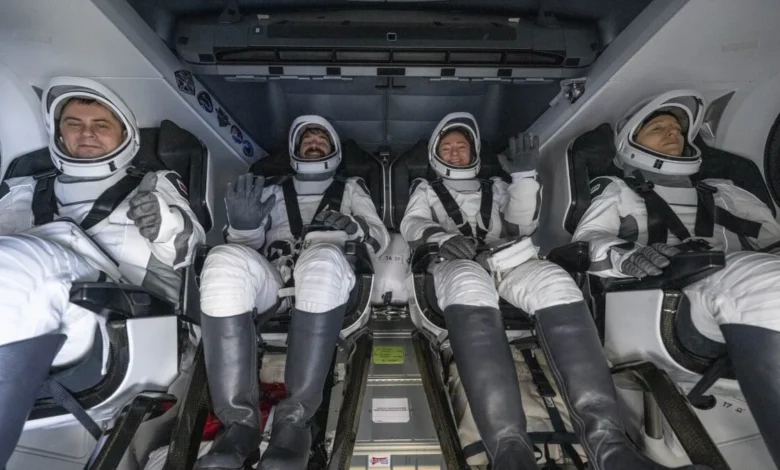
The democratic process successfully bridged the vast chasm between Earth and outer space this November, as American astronauts aboard the International Space Station (ISS) fulfilled their civic duties during the 2026 midterm elections. While millions of voters across the United States lined up at neighborhood schools, community centers, and municipal buildings, three NASA crew members participated in the democratic process from an orbiting laboratory traveling at roughly 17,500 miles per hour, some 250 miles above the surface of the planet.
The unique polling place utilized by NASA astronaut Anil Menon on Tuesday, November 3, 2026, was not a traditional booth draped in privacy curtains, but rather his own compact sleeping quarters aboard the orbital outpost. Menon shared a behind-the-scenes look at his orbital voting environment in a video posted to social media, detailing how he leveraged station technology to complete his civic responsibility. Alongside Menon, fellow NASA astronauts Jessica Watkins and Luke Delaney also cast their ballots from microgravity, ensuring that their absence from Earth due to scientific exploration did not strip them of their voting rights.
The Technological Journey of an Orbital Ballot
The logistics of casting a vote from low Earth orbit involve a sophisticated, highly secure relay of digital data traversing both space and terrestrial infrastructure. The process begins long before Election Day, with astronauts utilizing a Federal Post Card Application (FPCA) to request an absentee ballot while assigned to a spaceflight mission.
Once election officials process the request and provide an electronic ballot, the digital file is transmitted to the space station. Astronauts then complete their selections on a personal laptop floating in the microgravity environment. According to technical documentation provided by NASA, the completed electronic ballot must travel a remarkably complex path to ensure both absolute security and timely delivery to the proper county clerk.
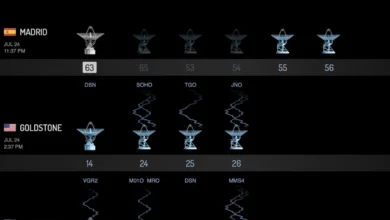
The data transmission initiates via NASA’s Near Space Network, a sophisticated communications architecture designed to manage continuous data flow between spacecraft and ground stations. The encrypted ballot file is beamed from the International Space Station to NASA’s Tracking and Data Relay Satellite System (TDRSS)—a constellation of geosynchronous communication satellites that act as intermediaries. From there, the signal is bounced down to a primary ground antenna facility located in New Mexico.
Upon reaching the terrestrial receiver, the data is securely routed to Mission Control at the Johnson Space Center in Houston, Texas. Finally, the file is forwarded to the appropriate county election office, which in Menon’s case is Harris County, Texas. NASA engineers and election authorities have repeatedly emphasized that the entire communication pipeline utilizes rigorous encryption protocols, ensuring that the ballot remains entirely confidential and accessible only to the individual astronaut and the designated county clerk.
A Three-Decade Tradition of Spacefaring Democracy
The ability of Americans to vote from space is not a recent technological innovation, but rather the culmination of legislative efforts and engineering adaptations that began nearly three decades ago. Prior to the late 1990s, astronauts who found themselves launched into orbit during an election cycle simply missed out on participating, as no legal or technical framework existed to accommodate them.
That paradigm shifted permanently in 1997 when the Texas Legislature—recognizing that the Johnson Space Center in Houston serves as the primary training and operational hub for the nation’s astronaut corps—passed a bill specifically clearing the way for space-based voting. Lawmakers created a legal mechanism that classified space as an extension of Texas for voting purposes, provided the astronaut was a registered voter in the state (which the vast majority are, given their ties to Houston).
Later that same year, NASA astronaut David Wolf became the historic first American to vote from space. Wolf cast his ballot while serving aboard the Russian space station Mir, establishing a precedent that would be refined and institutionalized with the subsequent construction and permanent habitation of the International Space Station. Over the ensuing decades, numerous astronauts have utilized the pipeline, turning orbital voting into a routine, albeit extraordinary, feature of long-duration spaceflight missions.
The Operational Realities of Life and Voting Aboard the ISS
Voting from the International Space Station highlights the unique intersection of extreme engineering and mundane administrative tasks. Life aboard the ISS requires strict adherence to packed schedules, ranging from complex biomedical experiments and maintenance spacewalks to routine daily exercise regimens designed to combat muscle atrophy and bone density loss in microgravity.
Finding time to review state propositions, judicial candidates, and local races requires the same deliberate time management as any other task on the station. Furthermore, the physical constraints of the spacecraft mean that privacy is at a premium. As Menon demonstrated in his shared broadcast, the personal sleeping quarters—often described as telephone-booth-sized compartments containing a sleeping bag strapped to the wall—frequently double as private offices for personal communications, administrative paperwork, and, on rare occasions, exercising one’s democratic rights.
While the environment is worlds away from a traditional precinct, the underlying legal weight of the ballot remains identical. The votes cast from the station carry the exact same validity as those submitted at physical ballot boxes across the United States.
Broader Implications for Future Space Exploration
As humanity looks toward an era of extended deep-space exploration, including sustained lunar outposts through the Artemis program and eventual crewed missions to Mars, the methods developed for space-based voting over the last 30 years will face new and unprecedented challenges.
While communication delays between the International Space Station and Earth are measured in fractions of a second, enabling near-instantaneous encrypted data transfers, future missions to the Martian surface will experience communication latencies ranging from several minutes to upwards of twenty minutes depending on the orbital positions of the two planets. Such delays will render real-time electronic communication and rapid administrative verification far more complex.
For now, however, the successful completion of voting by Menon, Watkins, and Delaney during the 2026 midterms serves as a reaffirmation of institutional resilience. It demonstrates that as human presence expands beyond the terrestrial cradle, fundamental civic traditions and constitutional rights can successfully adapt to the demands of the final frontier, ensuring that those who journey into the cosmos remain inextricably linked to the democratic societies they leave behind.