European Commission Unveils Strategic Overhaul of Emissions Trading System to Balance Industrial Competitiveness with 2040 Climate Targets

The European Commission has introduced a comprehensive set of proposals to recalibrate the European Union’s Emissions Trading System (ETS), signaling a strategic shift toward a more gradual reduction of carbon emissions from 2031 onwards. Presented on July 17, 2026, the long-awaited reform package seeks to align the bloc’s flagship climate policy with its ambitious goal of slashing greenhouse gas emissions by 90% by 2040, while simultaneously offering significant concessions to industrial sectors grappling with rising operational costs. The proposal, which must now undergo rigorous negotiations with EU member states and the European Parliament, has sparked a polarized debate between industrial advocates who welcome the "business-friendly" flexibility and environmental analysts who warn of a multi-billion-tonne surge in cumulative emissions.
The Evolution of Europe’s Carbon Market
Since its inception in 2005, the EU ETS has served as the primary instrument for reducing industrial pollution across the continent. Operating on a "cap and trade" principle, the system sets an absolute limit on the total amount of greenhouse gases that can be emitted by covered sectors, including power generation, heavy industry, and aviation. This cap is reduced annually, theoretically driving up the price of carbon and incentivizing companies to invest in cleaner technologies. As of 2026, the ETS covers approximately 40% of the European Union’s total emissions across 27 member states, plus Iceland, Liechtenstein, Norway, and specific sectors in Northern Ireland.
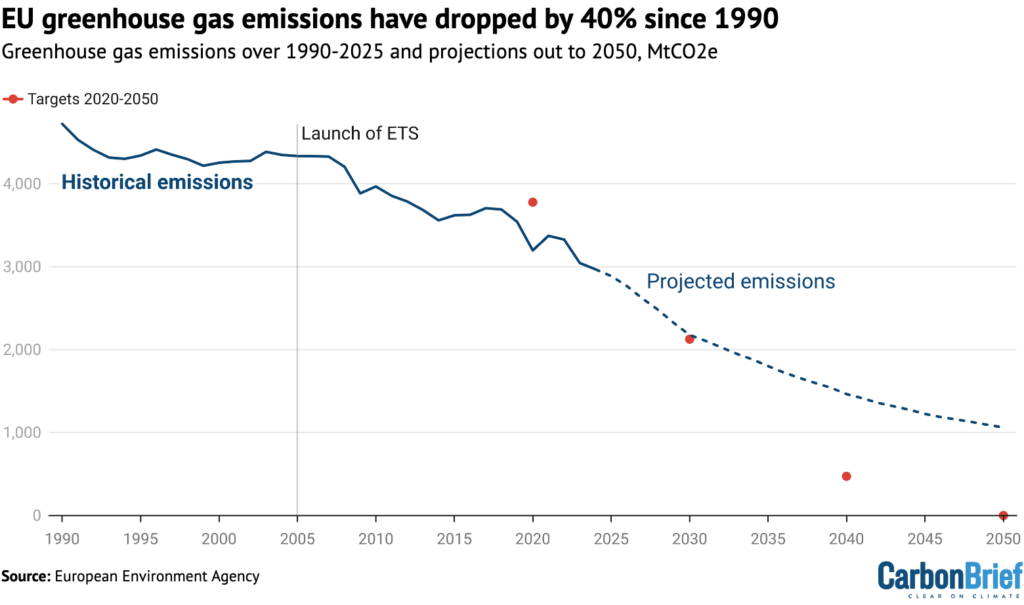
The success of the system is reflected in historical data: emissions within ETS-covered sectors have halved over the last two decades. Much of this progress has been driven by the power sector, which has aggressively transitioned away from coal in favor of renewables and natural gas. In 2025 alone, the auctioning of carbon allowances generated approximately €43 billion in revenue for EU member states, funds that are increasingly earmarked for climate-related investments. However, as the "low-hanging fruit" of decarbonization in the power sector is exhausted, the focus has shifted to "hard-to-abate" industries like steel, chemicals, and cement, where the cost of transition is substantially higher.
Strategic Delay: Extending Free Allowances and Slowing the Cap
The centerpiece of the Commission’s new proposal is a significant revision of the timeline for phasing out free emission allowances. Under previous agreements, these free permits—designed to prevent "carbon leakage," where companies relocate to regions with laxer environmental regulations—were scheduled to be entirely eliminated by 2034. The new proposal seeks to extend this deadline to 2038.
Starting in 2031, the Commission proposes that 80% of free allowances be reserved for companies that can demonstrate concrete investment plans for decarbonizing their European operations. The remaining 20% would be contingent on proof of achieved emissions reductions. Furthermore, the Commission has proposed reintroducing 15% of the free allocations that were previously set to be removed due to the implementation of the Carbon Border Adjustment Mechanism (CBAM). This move is intended to mitigate the economic shock for European manufacturers as they adjust to the new carbon tariff system on imports.

Crucially, the proposal alters the "Linear Reduction Factor"—the rate at which the overall emissions cap shrinks. While the cap currently drops by over 4% annually, the Commission recommends slowing this to 3.7% between 2031 and 2035, and further decelerating to just 1.7% from 2036 to 2040. EU Climate Commissioner Wopke Hoekstra defended the move as a "savvy" approach to industrial policy, arguing that it provides the necessary breathing room for businesses to modernize without facing existential financial risks.
Expansion of Scope: Aviation, Maritime, and Waste Incineration
While the proposal slows the pace of reduction for existing sectors, it simultaneously expands the reach of the ETS to encompass a broader range of activities. In a move that has drawn ire from the global airline industry, the Commission plans to include all flights departing from the European Economic Area (EEA) that land within 5,000 kilometers of central Europe. This would effectively bring a larger portion of international aviation under the EU’s carbon pricing umbrella, though it stops short of including long-haul flights to the United States or China to avoid escalating trade tensions. Additionally, private jets and "business flights" will be incorporated into the system for the first time, reflecting a growing political emphasis on "just transition" principles.
The maritime sector, which accounts for roughly 4% of EU emissions, will also see its obligations increased. The proposal suggests lowering the threshold for ship inclusion, bringing smaller vessels (between 400 and 5,000 tonnes) into the market. Perhaps most significantly for municipal governments, the waste incineration sector is slated for a gradual phase-in starting in 2031. Under the proposed schedule, waste-to-energy plants would need to cover 25% of their emissions with allowances in 2031, rising to 100% by 2034.
Carbon Removals and International Credits: A New Frontier
For the first time, the Commission has proposed a framework for integrating permanent carbon removals into the ETS. This includes technologies such as Direct Air Capture (DAC) and Bioenergy with Carbon Capture and Storage (BECCS). By allowing these removals to generate credits within the system, the Commission aims to provide a long-term investment signal for the nascent carbon-removal industry.
Furthermore, the proposal opens the door for the use of "high-integrity" international carbon credits starting in 2036. This aligns with the EU’s broader 2040 strategy, which allows up to 5% of its 90% reduction target to be met through global offsets. While proponents like Professor Ottmar Edenhofer of the Potsdam Institute for Climate Impact Research view this as a vital step toward creating a credible market for removal technologies, environmental groups like Climate Action Network (CAN) Europe warn that it could create "loopholes" that allow major polluters to delay actual emission cuts.
Financial Reallocation and Market Stability
To address concerns regarding the use of ETS revenues, the proposal introduces stricter mandates for member states. Currently, while countries are theoretically required to spend 100% of auction revenues on climate and energy projects, transparency has been lacking. The Commission reports that only about 5% of this money directly supports industrial decarbonization in sectors like steel and chemicals. The new proposal would mandate that 50% of all auction revenue—estimated to exceed €100 billion by 2030—be funneled specifically into clean-energy plans, industrial modernization, and waste management.
The proposal also seeks to reform the Market Stability Reserve (MSR), the mechanism used to prevent extreme price volatility. The Commission suggests reducing the rate at which allowances are withdrawn from the market when a surplus is detected, dropping from 24% to 12% starting in 2028. This change is intended to ensure that more permits remain available to industry, potentially suppressing sharp price spikes that could damage competitiveness.
Divergent Reactions: Industry vs. Environment
The reaction to the July 17 announcement has highlighted a deep rift in European climate politics. A coalition of ten countries, including Italy, Hungary, and Poland, had previously lobbied the Commission to treat the ETS as an "existential risk" to industry. For these nations, the proposed slowdown is a necessary correction. Conversely, a group of seven "ambitious" nations led by Spain and the Netherlands had urged the Commission to resist "gutting" the system, arguing that regulatory stability is the most effective stimulus for green investment.
Environmental NGOs have been scathing in their assessment. WWF and Carbon Market Watch estimate that the proposed changes would result in an additional 2 billion to 2.4 billion tonnes of CO2 being emitted into the atmosphere by 2050 compared to the previous trajectory. Michael Bloss, a prominent Member of the European Parliament for the Greens, characterized the plan as "climate vandalism," arguing that it shifts the burden of decarbonization onto other sectors like agriculture and transport, which are already struggling to meet their targets.

On the industrial side, reactions were mixed. The International Air Transport Association (IATA) expressed "deep frustration" over the expansion of aviation costs, while BusinessEurope raised concerns about the "bureaucratic complexity" of the new investment conditions for free allowances. Meanwhile, groups like WindEurope cautioned that the proposal might fail to adequately channel funds into the electrification of heavy industry.
Chronology and the Road Ahead
The path toward the final adoption of these reforms is expected to be contentious. The current timeline for the ETS reform and related policies is as follows:
- 2005: Launch of the EU ETS.
- 2019: Implementation of the Market Stability Reserve (MSR).
- 2024–2027: Current phase of the Linear Reduction Factor (4.3% reduction).
- January 2026: Start of the transitional phase for the Carbon Border Adjustment Mechanism (CBAM).
- July 17, 2026: Commission presents the new ETS reform proposal.
- Late 2026: Ireland, holding the EU Presidency, aims for a general agreement among member states.
- Q1 2027: Targeted final vote in the European Parliament.
- 2028: Expected launch of "ETS2," the separate system for buildings and road transport.
- 2031: Commencement of the new, slower cap reduction and conditional free allowances.
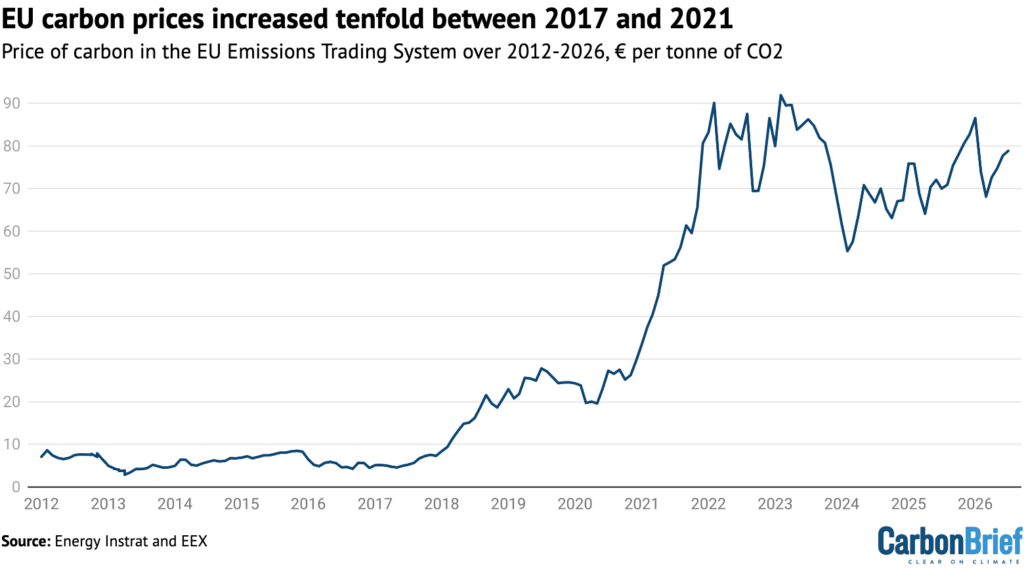
As negotiations begin, the central challenge for EU policymakers will be to maintain the integrity of the carbon price—which reached a historic peak of over €80 per tonne in recent years—while ensuring that the transition does not lead to deindustrialization. With the global race for green technology intensifying, the final shape of the EU ETS will determine whether Europe can remain a leader in climate policy while keeping its industrial base intact. The coming months of "trilogue" negotiations between the Commission, Parliament, and Council will be a defining moment for the European Green Deal and the continent’s path toward 2040.