Revolutionary mAxialtrode Implant Offers Unprecedented Precision in Mapping and Treating Neurological Disorders

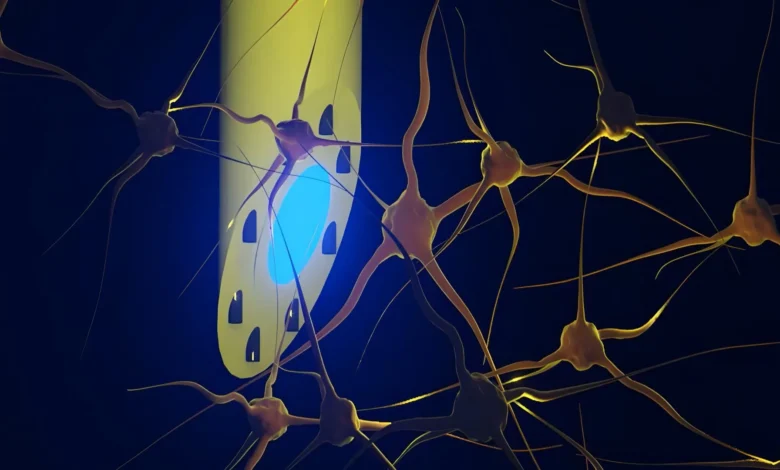
A groundbreaking advancement in neurotechnology has emerged from a multi-institutional collaboration, promising to transform how scientists study the complex architecture of the human brain. Researchers from the Technical University of Denmark (DTU), the University of Copenhagen, and University College London have unveiled the microfluidic Axialtrode, or mAxialtrode, a needle-thin, multifunctional brain implant capable of recording neural activity, delivering precise chemical interventions, and providing targeted stimulation along its entire length. The findings, published in the journal Advanced Science, represent a significant departure from conventional silicon-based or flat-ended optical fiber probes that have long dominated neuroscience research.
The Evolution of Neural Interface Technology
For decades, the study of the brain’s electrical and chemical signaling has been constrained by the physical limitations of existing hardware. Conventional deep-brain implants, typically crafted from rigid silicon or thick glass fibers, often function like a one-way street: they can monitor or stimulate only at the very tip of the device. This "distal tip" limitation forces researchers to choose between capturing data from a specific layer of the cerebral cortex or a deeper structure like the hippocampus, rarely allowing for a multi-layered, simultaneous analysis of neural communication.
Furthermore, the stiffness of traditional materials poses a clinical challenge. When a rigid probe is inserted into the soft, gelatinous tissue of the brain, it creates a mechanical mismatch. As the brain naturally shifts and pulsates within the skull, rigid silicon probes can cause micro-trauma, leading to chronic inflammation and the formation of glial scars—a reactive process that essentially walls off the implant and degrades the quality of electrical signals over time.
The mAxialtrode addresses these historical bottlenecks by utilizing a polymer-based, flexible fiber design. Developed by Postdoc Kunyang Sui and Associate Professor Christos Markos, the device is manufactured through a specialized thermal drawing process, where a larger polymer rod is heated and attenuated into an incredibly fine, flexible strand. This process creates a sophisticated structure: a central light-conducting core surrounded by eight microfluidic channels capable of transporting liquid medication or housing ultra-thin metallic filaments for electrical recording.
Chronology of the mAxialtrode Development
The development of the mAxialtrode is the culmination of years of collaborative effort across disciplines including photonics, materials science, and neurophysiology.
- Initial Conceptualization (2020-2021): Researchers at DTU began exploring the intersection of microfluidics and flexible fiber optics to overcome the "single-point" limitation of current optogenetic tools.
- Prototyping and Material Testing (2022): The team successfully engineered a polymer fiber that balanced structural integrity with extreme flexibility, ensuring the device could be implanted without causing significant tissue damage.
- In Vivo Validation (2023): The project moved to the University of Copenhagen and University College London, where the device was tested in living mice. This phase was critical to prove that the mAxialtrode could handle simultaneous tasks—light stimulation, chemical delivery, and electrical recording—without causing behavioral distress in the subjects.
- Publication and Peer Review (2024): The research was formalized in Advanced Science, detailing the device’s ability to maintain functional contact with multiple brain layers simultaneously.
Technical Specifications and Supporting Data
The mAxialtrode measures less than 0.5 millimeters in diameter, making it significantly less invasive than standard electrode arrays. The core of the device, which utilizes light to activate specific nerve cells (optogenetics), is complemented by the peripheral channels. These channels allow for the delivery of substances at depths spaced as far as three millimeters apart.
In the validation studies conducted on mice, the research team demonstrated that the device could effectively record electrical activity from the cerebral cortex and the hippocampus simultaneously. By using both blue and red light for stimulation, the team was able to map neural circuits with a level of resolution previously unattainable with single-fiber implants. Most importantly, the subjects showed no obvious signs of discomfort, confirming that the soft, flexible nature of the polymer reduces the mechanical friction that typically leads to rejection by the host tissue.
Perspectives from the Research Team
The development of the mAxialtrode was a strategic move to address the "crowding" of the brain in experimental settings. "Most current brain implants are based on hard materials such as silicon, which can irritate the brain and trigger inflammatory reactions," explains Kunyang Sui. By integrating multiple functionalities—stimulation, recording, and drug delivery—into one single, slender thread, the device allows for high-density data collection without the need to cluster multiple, larger electrodes in the same area of the brain.
Associate Professor Rune W. Berg and Associate Professor Rob C. Wykes, who led the neurophysiological validation, emphasized that the tool is particularly well-suited for studying epilepsy. Epilepsy involves complex, synchronized signaling that often spans multiple layers of the brain. The ability to monitor these layers while simultaneously injecting anti-epileptic medication or applying therapeutic electrical pulses at the exact site of a seizure provides a powerful new toolkit for clinical research.
Clinical Implications and Future Outlook
While the mAxialtrode is currently a research-grade instrument, its potential for human clinical application is vast. Epilepsy, which affects approximately 50 million people globally, often requires surgical intervention or lifelong medication that affects the entire body. A device that can monitor for the onset of a seizure and provide localized treatment directly to the affected neural circuit could reduce the side effects associated with systemic drugs and improve the quality of life for those with refractory epilepsy.
However, the path to clinical integration remains lengthy. Before the mAxialtrode can be considered for human trials, it must undergo rigorous biocompatibility testing to ensure the long-term stability of the polymer fibers within a human physiological environment. Regulatory agencies, such as the FDA or the European Medicines Agency, will require extensive data on the long-term durability of the microfluidic channels and the safety of the delivery systems.
Furthermore, the team is currently working to patent the specific manufacturing process, which is seen as a key step in scaling the technology for future commercial production. The ability to mass-produce these fibers with high precision will be essential if the device is to move from laboratory benches to hospital operating rooms.
Broader Impact on Neuroscience
The mAxialtrode stands as a symbol of the "multimodal" trend in modern neuroscience. The field is rapidly moving toward technologies that do not just observe the brain, but interact with it in real-time. By combining light, fluid, and electricity, researchers are beginning to treat the brain not as a static organ to be measured, but as a dynamic system that can be modulated.
Beyond epilepsy, the implications for neurodegenerative diseases and psychiatric disorders are significant. For example, research into memory loss or decision-making processes often requires long-term observation of how signals evolve across different brain regions. Because the mAxialtrode is less inflammatory than current implants, it may eventually allow for longer, more stable recording periods, providing the longitudinal data necessary to understand chronic conditions like Alzheimer’s disease or major depressive disorder.
As the scientific community watches the progression of this technology, the focus will remain on whether the device can maintain its performance over months or even years of implantation. If successful, the mAxialtrode may well become a standard instrument in the next generation of brain-machine interfaces, bridging the gap between basic neuroscience discovery and effective clinical therapy. For now, the successful implementation in animal models serves as a critical proof-of-concept, marking a promising milestone in the quest to decipher the complexities of the human brain.