Hubble Space Telescope Captures Mesmerizing Portrait of Messier 30 to Unravel Ancient Galactic History

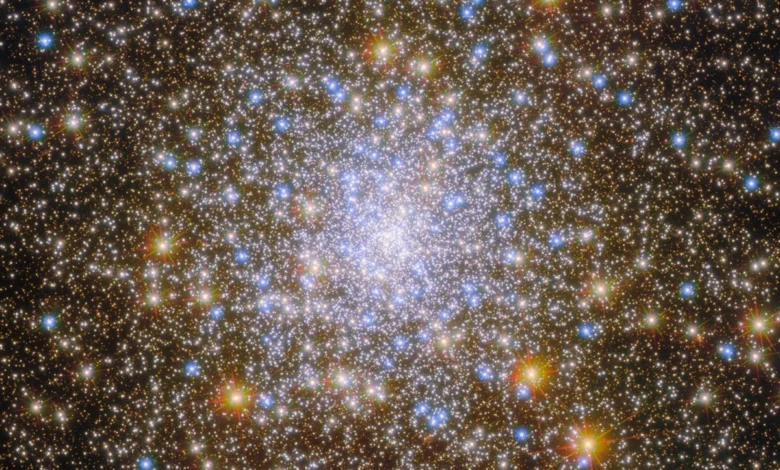
The NASA/ESA Hubble Space Telescope has released a breathtaking and scientifically significant image of the globular star cluster Messier 30, offering astronomers an unprecedented look into the evolutionary mechanics and historical chronology of the Milky Way. Unveiled to the public on November 5, 2026, the high-resolution visual masterpiece showcases a densely packed sphere of hundreds of thousands of stars, each serving as a microscopic data point in the broader narrative of cosmic evolution. Located approximately 27,500 light-years from Earth in the southern constellation of Capricornus, Messier 30—frequently referred to simply as M30—is more than a mere celestial spectacle. It functions as a cosmic laboratory, granting astrophysicists a window into epochs of the universe that predated the formation of our solar system by billions of years.
The recent image, credited to a collaborative effort between the European Space Agency (ESA), NASA, and principal investigators M. Libralato, G. Piotto, and A. Sarajedini, emphasizes the distinct stellar populations that inhabit the cluster. The visual data reveals a striking demographic divide among the stars: brilliant blue stars populate the dense, glowing core and scatter across the outer fringes, while older, cooler yellow stars dominate the vast expanses outside the central concentration. Additionally, a handful of prominent orange foreground stars, situated much closer to Earth along the same line of sight, loom larger and brighter in the frame, adding a sense of depth to the sweeping cosmic vista.
Historical Context and Discovery
The history of Messier 30 is deeply intertwined with the pioneering era of observational astronomy in the 18th century. The cluster was originally discovered and cataloged by the French astronomer Charles Messier in 1764. During this period, Messier was systematically surveying the night sky to compile a catalog of diffuse, non-moving celestial objects. His primary motivation was intensely practical rather than purely theoretical: he sought to prevent comet hunters from misidentifying stationary nebulae and star clusters as newly arrived comets, which were of paramount scientific interest at the time.
Messier described M30 as a nebula without stars, a limitation stemming from the relatively primitive optical capabilities of the telescopes available during his era. It was not until nearly a century later, with the advancement of larger aperture telescopes—most notably Lord Rosse’s Leviathan of Parsonstown in Ireland—that astronomers were able to successfully resolve the nebulous smudge into individual stars, identifying it as a globular cluster. Today, Messier’s catalog contains 110 objects, many of which remain cornerstone targets for modern professional and amateur astronomers alike.
Chronology of Scientific Understanding
To fully comprehend the significance of the latest Hubble observations, researchers trace a long timeline of discovery regarding globular clusters:
- 1764: Charles Messier discovers and catalogs M30, classifying it as a nebulous patch in the constellation Capricornus.
- Mid-to-Late 19th Century: Improvements in telescope technology allow astronomers to resolve M30 into distinct stellar points, confirming its nature as a gravitationally bound cluster of stars.
- 1918: Astronomer Harlow Shapley utilizes globular clusters, including M30, to map the spatial distribution of the Milky Way, fundamentally altering humanity’s understanding of our location within the galaxy.
- Late 20th Century: Spectroscopic analysis reveals that globular clusters are among the oldest objects in the universe, composed primarily of ancient, metal-poor stars.
- 1990–Present: The deployment and continuous operation of the Hubble Space Telescope provide ultra-sharp, deep-field imaging capabilities, enabling astronomers to study the internal kinematics, stellar populations, and core collapse phenomena of clusters like M30 with unprecedented precision.
- November 2026: NASA and ESA release the enriched, high-resolution portrait of M30, leveraging advanced archival processing and modern observational techniques to study galactic history.
Supporting Data and Stellar Demographics
Globular clusters like Messier 30 are massive, spherical collections of old stars tightly bound by gravity, orbiting the galactic core. M30 is estimated to be roughly 13 billion years old, making it almost as old as the universe itself, which is calculated to be approximately 13.8 billion years old. Because they formed during the nascent stages of galactic assembly, these ancient stellar nurseries contain invaluable chemical and physical signatures of the early cosmos.
The spatial distribution of stars within M30 visible in the Hubble image provides tangible evidence of a complex physical process known as core collapse. At some point in its distant past, M30 experienced a gravitational phenomenon where stars near the center transferred their kinetic energy to heavier stars, causing the core to contract dramatically. Today, M30 possesses one of the densest cores known among Milky Way globular clusters, packed so tightly that stars frequently interact or collide, leading to the formation of exotic stellar anomalies such as "blue stragglers"—young-looking, massive blue stars that form when two older stars merge.
The blue stars scattered prominently across the core in the Hubble image are prime examples of these evolved stellar remnants and interaction products, while the cooler yellow stars represent the aging population of standard low-mass stars that have steadily burned their nuclear fuel over billions of years.
Official Perspectives and Scientific Analysis
Astrophysicists specializing in stellar dynamics emphasize that imaging campaigns targeting clusters like Messier 30 are essential for testing theoretical models of stellar evolution. While space-based observatories like the James Webb Space Telescope (JWST) focus heavily on infrared signatures of the early universe and distant galaxy formation, optical and ultraviolet instruments like Hubble remain peerless in their ability to resolve crowded stellar fields with high spatial fidelity.
In statements regarding the ongoing utilization of the Hubble archive and targeted imaging campaigns, project scientists note that globular clusters serve as cosmic fossils. By analyzing the precise color, brightness, and distribution of stars within M30, researchers can reconstruct the star-formation history of the Milky Way’s halo. Furthermore, these observations help constrain estimates of the age of the universe independently of cosmological expansion rates, providing a crucial cross-check for modern cosmology.
Broader Impact and Implications for Future Research
The release of the M30 image arrives at a time when archival data mining and advanced image processing are unlocking new layers of information from decades-old missions. By combining historical observations with modern computational algorithms, astronomers can measure proper motions—the minuscule apparent movements of stars across the sky over years of observation—with astonishing accuracy. This kinematic data allows scientists to trace the exact trajectories of individual stars within the cluster, mapping out the gravitational potential of M30 down to the sub-stellar level.
As humanity continues to gaze deeper into the cosmos, the lessons learned from nearby laboratories like Messier 30 reverberate across multiple disciplines of space science. They inform our understanding of how galaxies coalesce, how massive star clusters survive the tidal stripping forces of galactic rotation, and how stellar evolution shapes the chemical enrichment of the interstellar medium. The glowing tableau captured by Hubble stands as a testament to both the enduring scientific utility of the telescope and the intricate, beautiful complexity of the ancient Milky Way.