
Key Us China Trade Talks Set Monday London
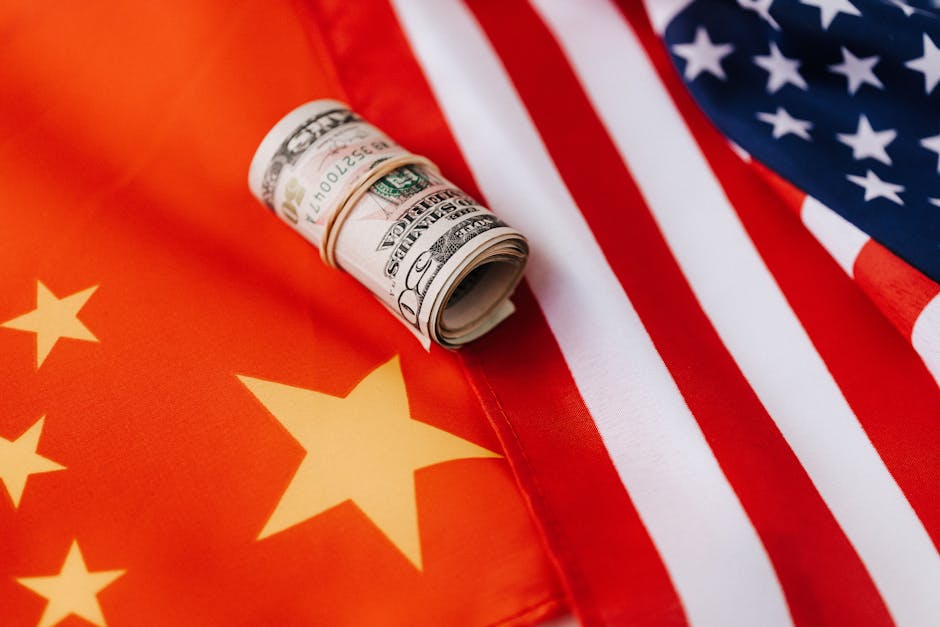
Key US-China Trade Talks Set for Monday in London: Navigating the Crucial Juncture
The world economy is poised on a knife’s edge as critical US-China trade talks are scheduled to commence on Monday in London. This high-stakes meeting represents a pivotal moment in the protracted trade dispute between the two global economic superpowers, with ramifications stretching far beyond bilateral relations, impacting supply chains, investment flows, and geopolitical stability. The agenda, while not publicly disclosed in its entirety, is understood to revolve around fundamental disagreements that have fueled the ongoing trade war, including intellectual property theft, market access, forced technology transfer, and the overall trade imbalance. Expectations are cautiously tempered, with analysts pointing to a complex web of interwoven interests that make a comprehensive resolution unlikely in a single session. However, any progress, however incremental, could signal a de-escalation and provide much-needed breathing room for a global economy grappling with uncertainty. The location itself, London, a neutral territory and a global financial hub, underscores the international significance of these discussions and the desire of both sides to engage in a less politically charged environment than previous venues.
The genesis of the current trade friction can be traced back to the Trump administration’s concerns over what it termed "unfair" trade practices by China. Accusations of rampant intellectual property (IP) theft, the forced transfer of technology from American companies operating in China, and the significant trade deficit favoring Beijing have been central to the US position. These concerns, while not entirely new, were amplified and translated into concrete policy actions, including the imposition of substantial tariffs on billions of dollars worth of Chinese goods. China, in turn, retaliated with its own tariffs on American imports, creating a tit-for-tat escalation that has disrupted global trade patterns and inflicted economic pain on both nations, as well as third-party economies reliant on their trade. The complexity of these issues is immense. Intellectual property protection in China has long been a concern for foreign businesses, with enforcement mechanisms often perceived as weak or biased. Similarly, the demand for Chinese companies to partner with local entities and share technology as a condition of market entry has been a significant point of contention. Addressing these deeply ingrained practices requires more than just a few days of negotiations; it necessitates a fundamental shift in economic policy and practice.
One of the primary objectives for the United States in these London talks is to secure concrete commitments from China regarding structural reforms. This includes a robust and enforceable framework for protecting intellectual property, a commitment to end forced technology transfer, and greater market access for American goods and services. The US has emphasized the need for verifiable actions, not just promises. This might involve provisions for independent audits, transparent dispute resolution mechanisms, and stricter penalties for IP infringement. The current US administration views these structural issues as foundational to a more balanced and equitable trading relationship. Without them, they argue, the trade deficit will persist, and American innovation will continue to be undermined. The challenge lies in convincing Beijing to implement changes that could be perceived as compromising its own industrial development strategy. China has consistently maintained that its economic policies are consistent with international norms and that it is committed to protecting IP. However, the implementation and enforcement of these laws have been a persistent source of friction.
For China, the agenda in London is likely to focus on the removal of existing tariffs and a more balanced approach to trade. Beijing has consistently argued that the US tariffs are protectionist and harmful to the global economy. They will be seeking a clear roadmap for the phased rollback of these measures, contingent on the progress made in addressing US concerns. China is also likely to push for a broader discussion on trade, potentially including issues related to currency manipulation, state subsidies, and other practices that they believe put their companies at a disadvantage in international markets. The "Made in China 2025" initiative, aimed at upgrading China’s manufacturing capabilities, has been a particular focus of US scrutiny, viewed by Washington as a state-led effort to dominate key industries and displace foreign competitors. Beijing views this as a legitimate national development strategy and is unlikely to cede significant ground on this front without substantial concessions from the US. The delicate dance between US demands for systemic change and China’s desire to maintain its economic trajectory will be a central theme of the negotiations.
The economic implications of these talks are profound. Global supply chains, meticulously constructed over decades, have been significantly disrupted by the trade war. Companies have been forced to re-evaluate their sourcing strategies, explore diversification, and absorb increased costs. Uncertainty surrounding future trade policies has dampened investment, both domestic and foreign. A positive outcome from the London talks, even if it doesn’t resolve every issue, could lead to a period of greater stability, allowing businesses to plan with more confidence. Conversely, a breakdown in negotiations could trigger further escalation, leading to more tariffs, increased economic volatility, and a deepening of the global economic slowdown. The International Monetary Fund (IMF) and the World Bank have both repeatedly warned about the negative impact of the trade war on global growth prospects, highlighting the interconnectedness of the global economy and the detrimental effects of protectionism. The London talks, therefore, are not just about bilateral trade figures; they are about shaping the future of global economic governance.
Beyond the direct economic impacts, the US-China trade dispute is intertwined with broader geopolitical tensions. The competition between the two powers extends to technological dominance, strategic influence, and ideological differences. The trade war has become a proxy battleground for these larger rivalries. Therefore, any progress in trade negotiations could have positive spillover effects on other areas of the US-China relationship, potentially leading to more constructive dialogue on issues such as climate change, cybersecurity, and regional security. However, it is also possible that the trade negotiations will be overshadowed by these larger geopolitical considerations, making a comprehensive resolution even more challenging. The emphasis on national security concerns by both sides, often masked within trade rhetoric, adds another layer of complexity. For example, US restrictions on Chinese technology companies like Huawei are framed as national security imperatives, but they have significant trade implications and are viewed by China as an attempt to stifle its technological advancement.
The role of the international community in these talks cannot be overstated. Many countries are caught in the crossfire, facing collateral damage from the trade war. International organizations such as the World Trade Organization (WTO) are struggling to provide a framework for resolution, given the direct bilateral nature of many of the disputes. However, the broader global economic consensus favors de-escalation and multilateral solutions. Any agreement reached in London will be closely scrutinized by other nations, and the precedent set could influence future trade relations globally. The G7, which previously met with a focus on global economic challenges, has seen the US-China trade dispute dominate discussions, highlighting the pervasive nature of this conflict. The London meeting offers an opportunity for a more focused, albeit bilateral, attempt to find common ground.
The specifics of the agenda and the potential for breakthroughs remain shrouded in secrecy. However, observers will be looking for indications of a willingness on both sides to compromise. For the US, this might mean a more flexible approach to certain demands, perhaps prioritizing key areas like IP protection. For China, it could involve a greater transparency in its economic practices and a more concrete commitment to market liberalization. The presence of high-level negotiators, including trade representatives and economic advisors, signals the seriousness with which both sides are approaching these discussions. The outcome of these London talks will undoubtedly shape the trajectory of global trade and economic relations for years to come, making this Monday’s discussions a critical juncture for the world economy. The long-term implications of these negotiations will be felt across various sectors, from manufacturing and agriculture to technology and finance, as businesses and governments worldwide seek to navigate the evolving landscape of international commerce.
