
Northern Irish Rioters Attack Police Second Night
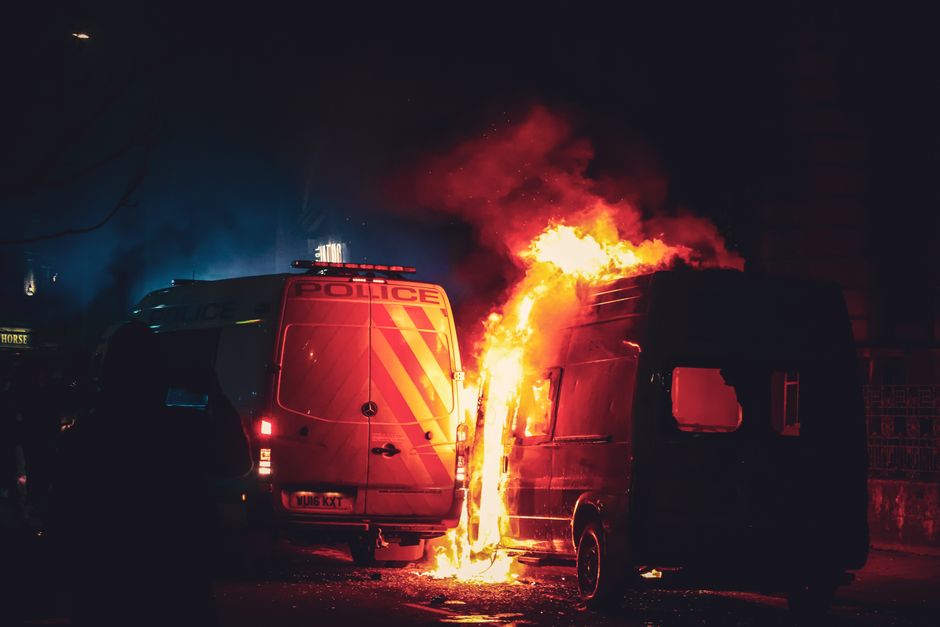
Northern Ireland Riots Escalate: Police Targeted for Second Consecutive Night Amidst Renewed Tensions
Following an initial night of unrest, rioters in Northern Ireland launched a renewed and intensified assault on police officers for a second consecutive night, signaling a significant escalation in sectarian tensions and a stark challenge to law enforcement. The disturbances, primarily concentrated in flashpoint areas with a history of division, saw increased hostility, projectile bombardment, and the deployment of more sophisticated tactics by those involved in the violence. This second night of rioting not only mirrored the events of the previous one but arguably surpassed them in terms of the scale of aggression and the evident determination of the participants to confront security forces. The underlying causes, while complex and multi-faceted, appear to be deeply rooted in long-standing political grievances, identity politics, and a palpable sense of historical injustice, amplified by contemporary political developments and social fragilities. The sustained nature of the violence raises critical questions about the effectiveness of existing policing strategies, the efficacy of community relations efforts, and the long-term prospects for peace and stability in the region. The repeated targeting of police officers underscores the deeply ingrained animosity directed towards the state and its representatives, highlighting the enduring legacy of conflict and the challenges of reconciliation.
The second night of rioting saw a dramatic surge in the number of individuals participating and the intensity of their actions. While the initial night’s disturbances were characterized by sporadic confrontations and the throwing of stones and bottles, the subsequent engagement witnessed a more organized and determined effort to overwhelm police lines. Reports indicate the use of petrol bombs in greater numbers, improvised explosive devices, and the erection of barricades designed to impede police movement and create chokepoints for attack. The geographical spread of the violence also appeared to broaden, extending to areas previously less affected, suggesting a potential ripple effect or pre-planned coordination. Police presence, though substantial, was stretched thin as officers attempted to contain multiple incidents simultaneously. The response from the police was largely defensive, focusing on crowd dispersal and the protection of property and personnel. However, the sheer volume and ferocity of the attacks necessitated the use of riot control measures, including plastic bullets and water cannon, in an effort to regain control of volatile situations. The visible injuries sustained by officers, as reported by police sources, are a stark testament to the dangerous environment they were forced to operate within. The psychological toll on these individuals, routinely subjected to such levels of aggression, is also a significant consideration. The economic cost, in terms of damaged public property and the disruption to local businesses, adds another layer to the unfolding crisis. The perception of the police as an occupying force, deeply embedded in the historical narrative of certain communities, continues to fuel this animosity, creating a cyclical pattern of mistrust and conflict.
The catalysts for these renewed outbreaks of violence are, as is often the case in Northern Ireland, intricate and deeply interwoven with the region’s complex political and social tapestry. While no single incident can be definitively pinpointed as the sole trigger, a confluence of factors appears to have contributed to the current unrest. Political discourse surrounding Brexit and its implications for the Northern Ireland Protocol has undoubtedly created a climate of heightened sensitivity and anxiety. The perceived erosion of Northern Ireland’s place within the United Kingdom, coupled with ongoing debates about identity and sovereignty, has served to inflame existing sectarian divides. Furthermore, the legacy of the Troubles, a period of intense ethno-nationalist conflict, continues to cast a long shadow. Grievances related to historical injustices, policing, and the perceived lack of accountability for past actions remain potent drivers of resentment. The ongoing absence of a fully functioning devolved government at Stormont further exacerbates the situation, leaving a vacuum in political leadership and a lack of effective channels for dialogue and conflict resolution. This political paralysis can create a fertile ground for extra-parliamentary action, with those feeling disenfranchised or unheard resorting to more direct and often violent means of expressing their discontent. The targeting of police, in this context, can be interpreted as a symbolic rejection of the state and its authority, a manifestation of deep-seated frustration with perceived political marginalization and a desire to assert an alternative vision of identity and belonging. The visual imagery of burning cars and confrontations with police officers acts as a potent symbol for some, resonating with historical narratives of struggle and resistance.
The demographics of those involved in the riots also provide a crucial lens through which to understand the phenomenon. While the narrative is often framed as a purely sectarian issue, it is important to acknowledge the complex interplay of age, socio-economic factors, and geographical location. Reports suggest a significant presence of younger individuals, some of whom may have no direct memory of the height of the Troubles but are deeply influenced by the prevailing political narratives and the lived experiences of older generations. Feelings of alienation, lack of opportunity, and a sense of being forgotten can contribute to a willingness to engage in disruptive and confrontational behavior. The urban environment, particularly in areas marked by historical division, often becomes a stage for these expressions of discontent. The physical proximity of communities with differing identities and political allegiances, coupled with a lack of meaningful inter-community engagement, can create an environment ripe for tension. The perceived lack of investment in certain disadvantaged communities, combined with a sense of cultural and political marginalization, can fuel a potent cocktail of anger and frustration. The romanticization of past struggles and a desire to reclaim a sense of pride and agency, even through destructive means, can also play a role. The online sphere, where narratives can be amplified and potentially radicalized, may also be a contributing factor in mobilizing individuals and shaping their perceptions of the conflict.
The international dimension, while perhaps not the primary driver, cannot be entirely discounted. The ongoing geopolitical shifts and the heightened focus on national identity and sovereignty in various parts of the world may inadvertently contribute to a more polarized environment in Northern Ireland. The debates surrounding the Northern Ireland Protocol, which have garnered international attention, have brought the region’s unique constitutional status to the forefront of global discussions. While this attention can sometimes be a positive force for engagement and de-escalation, it can also amplify existing tensions and provide fodder for those seeking to exploit divisions for their own agendas. The historical context of foreign involvement in Northern Ireland, during the Troubles, also creates a lingering sensitivity to external influences and interventions. Therefore, while the immediate causes of the riots are predominantly domestic, the broader international context can subtly influence the prevailing mood and the narratives that gain traction within affected communities. The global discourse around identity politics and cultural assertion, though originating elsewhere, can find fertile ground in regions with deeply entrenched historical divisions.
The response from political leaders on both sides of the political divide has been largely condemnatory of the violence, urging for calm and a return to peaceful means of resolving disputes. However, the effectiveness of these calls is often debated, with some arguing that they lack the necessary weight or are perceived as partisan by those involved in the unrest. The absence of a strong, united political front in Northern Ireland, due to the ongoing collapse of power-sharing arrangements, weakens the collective ability to address the underlying issues. The calls for dialogue and reconciliation are crucial, but they must be accompanied by concrete actions that address the root causes of alienation and frustration. This includes investment in communities, the promotion of genuine inter-community relations, and a commitment to resolving historical grievances through fair and equitable means. The role of the justice system in prosecuting those involved in the violence is also a critical component of restoring order and demonstrating accountability. However, the long-term solution lies not solely in punitive measures but in fostering an environment where such outbreaks of violence are rendered obsolete by addressing the fundamental socio-political and economic disparities that fuel them. The continuous cycle of condemnation and temporary de-escalation, without addressing the underlying drivers, will likely perpetuate the pattern of unrest. The need for proactive, long-term strategies that focus on reconciliation, economic development, and inclusive governance is paramount. The resilience of Northern Ireland’s peace process is continuously tested by such events, highlighting the ongoing fragility of the settlement and the persistent challenges of building a truly unified and peaceful society. The second night of rioting is a stark reminder that the work of peace is far from over and requires sustained effort and a willingness to confront uncomfortable truths.
