Radie Peat Announces Debut Solo Album No Human Tongue Can Tell and Releases Haunting New Single The Moon and Stars

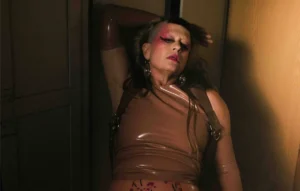
The Irish folk landscape, currently undergoing a radical resurgence in international popularity, is set to witness a significant milestone with the announcement of a debut solo project from Radie Peat. Best known as a core vocalist and multi-instrumentalist for the Mercury Prize-nominated quartet Lankum, Peat has confirmed that her long-gestating solo record, titled No Human Tongue Can Tell, is scheduled for a November 13 release via Rough Trade Records. The announcement coincides with the unveiling of her latest single, The Moon and Stars, a track that serves as both a reclamation of traditional folk tropes and a searing commentary on the historical female experience.
A Decade and a Half in the Making
The path to No Human Tongue Can Tell has been a deliberate and meticulous process, spanning approximately 15 years. Peat has described the album as a synthesis of inherited memory and personal artistic evolution. Influenced by the singular, self-contained production methods of Mike Oldfield—specifically his approach to the landmark 1973 album Tubular Bells—Peat set out to write, arrange, and perform every intersecting layer of the record herself. By limiting the process to her own instrumental capabilities and creative blind spots, she sought to create a sonic environment that felt deeply personal and idiosyncratic, unmoored from the collaborative dynamics that define her work with Lankum.
This project is not merely a collection of songs but an exploration of the "worldliness" embedded within traditional music. Peat notes that the material on the album acts as a vessel for centuries of human experience, binding the listener to the struggles and endurance of those who came before. The album’s thematic architecture is centered on the complexities of female existence, oscillating between the weight of historical suffering and the nuanced intricacies of romantic love.
Decoding The Moon and Stars
The release of The Moon and Stars offers a window into the thematic gravity of the forthcoming album. The track features Peat’s signature vocal intensity, applied to a reimagining of traditional lyrics. In a formal statement regarding the song’s origins, Peat elucidated the hidden, often suppressed narratives embedded in folk history.
"There are coded references to unwanted pregnancies and abortions within the song," Peat explained. "As well as references to rue, a herb which was used to cause miscarriage, I wanted to represent these experiences from the woman’s perspective—to connect us with her experience."
By bringing these historically obscured narratives to the forefront, Peat is engaging in a practice common among contemporary folk revivalists: utilizing traditional frameworks to address modern concerns or to rectify historical erasures. The song serves as a bridge between the archaic and the immediate, highlighting the persistent, often silent, struggles of women throughout history.
Chronology of the Solo Transition
The journey toward this debut began to manifest in the public sphere earlier this year. The chronology of the project’s rollout is as follows:
- July 2024: Peat releases her debut solo single, Still I Love Him, a poignant interpretation of a traditional love song. This served as the first formal indicator of her solo direction.
- October 2024: Official announcement of the debut album, No Human Tongue Can Tell, along with the tracklist and pre-order details.
- October 2024: Release of the second single, The Moon and Stars, accompanied by a music video.
- November 13, 2024: Scheduled release date for the full album via Rough Trade Records.
- November 2024–May 2027: Scheduled live tour dates across the UK, Ireland, and Europe.
The Tracklist and Artistic Scope
No Human Tongue Can Tell comprises nine tracks, reflecting a balance between instrumental depth and narrative-driven folk. The tracklist is as follows:
- Hares on the Mountain
- The Moon and Stars
- Willow Garden
- Luisne
- Same Old Man
- Dark Hore on The Wind
- Still I Love Him
- Bonnie Boy
- Cailín Deas
The inclusion of traditional songs like Hares on the Mountain and Willow Garden alongside original interpretations suggests a deep commitment to the canon of folk, while simultaneously challenging its rigid preservation.
Broader Context: The Lankum Phenomenon
Radie Peat’s transition into solo work arrives at a time when her primary ensemble, Lankum, is experiencing unprecedented cultural visibility. Since the 2023 release of their critically lauded album False Lankum, the band has moved from the fringes of the underground folk scene to mainstream critical acclaim, bolstered by a Mercury Prize nomination and an Ivor Novello nomination.
The band’s influence has recently transcended the concert stage. Their music has been integrated into major television and film soundtracks, including Netflix’s House of Guinness and the film The Immortal Man, the latest installment of the Peaky Blinders universe. This expansion of their audience—aided by their atmospheric, drone-heavy arrangements—has created a fertile environment for members of the group to pursue individual projects. Last year’s collaborative cover of The Specials’ Ghost Town, created for the dance production Specky Clark, further showcased the group’s ability to interpret non-folk material through their distinct, haunting lens.
Implications for the Folk Genre
The release of No Human Tongue Can Tell carries significant implications for the contemporary folk genre. In recent years, artists like Peat, The Unthanks, and Lankum have successfully argued that folk music is not a static museum piece but a living, breathing tradition that must evolve to remain relevant. By focusing on the "female struggle" and utilizing songs as vessels for collective memory, Peat is positioning the traditional ballad as a contemporary political tool.
The decision to record as a solo artist—taking full agency over every note and arrangement—is a departure from the collaborative, communal nature of Irish session music. It signifies a shift toward the "auteur" model in folk music, where the personal vision of the artist takes precedence over the preservation of an established arrangement.
Tour and Live Performance Outlook
As Peat prepares for her upcoming tour, the anticipation surrounding her live shows is high. The tour schedule reflects a strategic rollout across key cultural hubs in Europe:
- November 3, 2024: Union Chapel, London
- November 20, 2024: Vicar Street, Dublin
- January 31, 2027: Paradiso, Amsterdam
- February 1, 2027: La Trabendo, Paris
- May 19, 2027: The Barbican, London
The inclusion of major venues such as The Barbican and Vicar Street underscores the industry’s confidence in Peat’s ability to command a solo stage. The long-term nature of the tour schedule, reaching into 2027, suggests a carefully planned release strategy that allows the album to grow in the public consciousness over an extended period.
Summary of Impact
Radie Peat’s emergence as a solo artist serves as a testament to the depth of the current folk revival. By merging the archival impulse of traditional music with a modern, intersectional, and highly personal approach to production, Peat is carving out a space that is uniquely her own. No Human Tongue Can Tell stands to be one of the most significant releases in the genre this year, offering a bridge between the historical weight of the Irish folk tradition and the individualistic expression of contemporary songwriting.
As listeners digest the nuances of The Moon and Stars, the broader focus remains on the November release, which will ultimately reveal the full extent of Peat’s artistic vision. Whether she is reinterpreting a centuries-old ballad or channeling the anger and resilience of historical female figures, Peat remains a pivotal figure in the evolution of modern folk music.