Spain Claims Second FIFA World Cup Title in Thrilling Extra-Time Victory Over Argentina

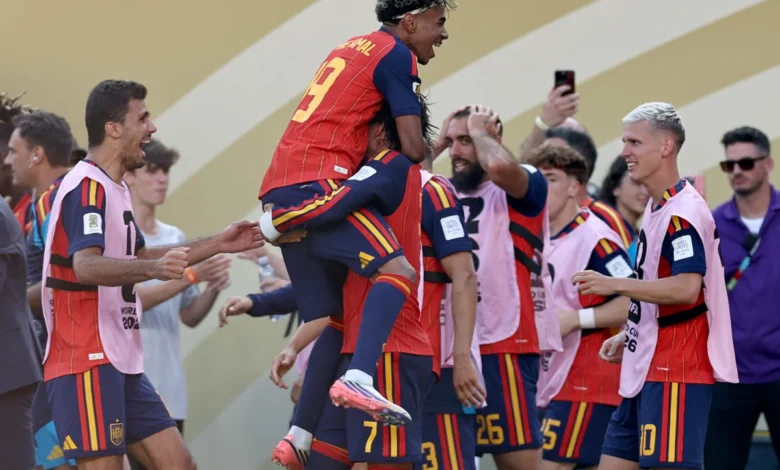
Spain has been crowned champions of the 2026 FIFA World Cup, securing their second-ever title in a nail-biting final against Argentina that was decided in extra time. The decisive moment came from Ferran Torres, who netted the sole goal of the match, a solitary strike that etched Spain’s name into footballing history once more. This triumphant victory, sealed with a 1-0 scoreline, echoes their previous World Cup triumph in 2010 when they also defeated the Netherlands by the same narrow margin.
The 2026 FIFA World Cup, a tournament that showcased an unprecedented level of global collaboration with co-hosts the United States, Mexico, and Canada, culminated on Sunday at the iconic MetLife Stadium in East Rutherford, New Jersey. The venue, home to NFL giants the New York Giants and New York Jets, transformed into a global footballing epicentre for the grand finale, drawing an immense crowd and captivating billions worldwide through broadcasts on Fox and Telemundo.
This historic win for Spain marks a significant achievement for the nation’s footballing legacy. Their previous World Cup conquest in 2010, often lauded for its tactical brilliance and defensive solidity, positioned them among the elite of international football. This latest victory not only reaffirms their status but also provides a new generation of Spanish talent with a moment of unparalleled glory. The journey to this final was undoubtedly arduous, with Spain navigating a challenging path through the knockout stages, demonstrating resilience and strategic prowess against some of the world’s best teams.
The final itself was a tense affair, a testament to the high stakes and the caliber of the two finalists. Both Spain and Argentina showcased their respective strengths, with intricate passing patterns from Spain met by the dynamic attacking flair of the Argentinians. The defensive lines on both sides were largely impenetrable for the majority of the regulation 90 minutes, underscoring the tactical discipline and individual brilliance on display. As the clock ticked down without a breakthrough, the tension mounted, inevitably leading the match into the added 30 minutes of extra time, a period where physical and mental fortitude are tested to their absolute limits.
Ferran Torres, the Spanish forward, emerged as the hero of the hour. His goal, a moment of individual brilliance or perhaps a well-executed team move, will be replayed and analyzed for years to come. The strike not only broke the deadlock but also inflicted heartbreak on an Argentinian side that had fought valiantly. The reaction from the Spanish bench and their supporters was one of unbridled joy, a cathartic release after a match that kept fans on the edge of their seats until the final whistle.
For Argentina, the defeat in the final represents a poignant moment, particularly for their talismanic captain, Lionel Messi. This World Cup final marked his third appearance on this ultimate stage, a rare feat that underscores his enduring presence at the pinnacle of the sport. Despite his immense contributions and legendary status, the ultimate prize of a World Cup title has eluded him in his final attempts. His journey through this tournament, like many before it, was one of immense passion and leadership, inspiring his teammates and captivating fans globally. Messi’s record of reaching three World Cup finals is a testament to his unparalleled longevity and consistent excellence, a statistic that will forever be etched in football lore, even in the shadow of this final defeat.
The 2026 FIFA World Cup was groundbreaking in its scope and scale. The co-hosting arrangement between the United States, Mexico, and Canada was a historic first, symbolizing a new era of international collaboration in sporting events. This tripartite hosting model aimed to leverage the vast infrastructure and diverse fan bases of these North American nations, promising an expansive and inclusive tournament experience. The logistical challenges of coordinating such a widespread event were significant, but the organizers largely succeeded in delivering a seamless and memorable World Cup.
Beyond the final, the tournament also saw other nations make their mark. The United States, as one of the principal hosts, reached the Round of 16, demonstrating considerable promise before their campaign was ultimately halted by a formidable Belgian side, who secured a convincing 4-1 victory. While the USMNT’s journey ended at this stage, their performance generated considerable enthusiasm and highlighted the growing strength of football within the nation, especially in the context of hosting the global showpiece. Mexico and Canada, also co-hosts, provided passionate support and showcased their national teams’ competitive spirit throughout the tournament.
The 2026 World Cup’s pioneering co-hosting model is likely to influence future FIFA tournaments. Looking ahead, the 2030 FIFA World Cup is set to further expand the concept of global hosting, with Morocco, Portugal, and Spain slated to be the host nations. This will not only be a multi-nation event but also a multi-continental one, with the opening three matches scheduled to take place in Uruguay, Argentina, and Paraguay. This ambitious plan underscores FIFA’s commitment to spreading the reach of the World Cup and engaging diverse regions of the globe, creating unique cultural and sporting narratives.
The choice of MetLife Stadium for the final was also a significant decision. This modern marvel of engineering, with a capacity of over 80,000, provided a spectacular backdrop for the climax of the tournament. Its designation as "New York New Jersey Stadium" for the event highlighted the metropolitan region’s embrace of the global sporting spectacle. The stadium’s state-of-the-art facilities and immersive atmosphere undoubtedly contributed to the grandeur of the occasion, offering an unparalleled experience for the tens of thousands of spectators in attendance and reinforcing the tournament’s global appeal.
The broadcast of the final on Fox and Telemundo ensured that audiences across the United States and beyond could witness this historic event. The dual-language coverage catered to the diverse demographics of the host nation and the wider global footballing community, maximizing viewership and engagement. The immense television audience reflects the enduring popularity and cultural significance of the FIFA World Cup, a tournament that transcends borders and unites people through the shared passion for the beautiful game.
The implications of Spain’s victory are manifold. For the Spanish football federation, it represents a validation of their long-term development strategies and a source of national pride. It will undoubtedly inspire a new generation of young footballers in Spain, eager to emulate the heroes of 2010 and now, 2026. The economic impact on Spain, though difficult to quantify precisely, will include increased tourism and a boost to national morale. For the sport itself, this World Cup has been a resounding success, showcasing thrilling football, groundbreaking hosting arrangements, and moments of individual and collective brilliance that will resonate for years to come. The tournament has further solidified football’s position as the world’s most beloved sport, a unifying force in an often-divided world. The echoes of Ferran Torres’s winning goal will reverberate through the annals of football, marking the 2026 FIFA World Cup as a tournament of historic triumphs and enduring memories.