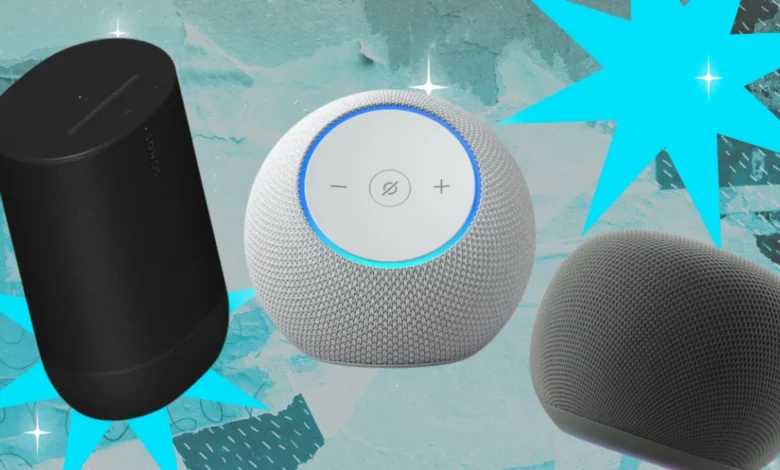
Smart speakers have evolved from simple novelty items into the central nervous systems of the modern household. As of September 2026, these devices serve as the primary interface for home automation, personal productivity, and high-fidelity audio consumption. With the rapid integration of advanced generative AI models into consumer hardware, the market has shifted from basic voice-command units to sophisticated, context-aware digital assistants. Selecting the right speaker now requires a strategic evaluation of one’s existing digital ecosystem, as interoperability remains the primary hurdle for seamless integration across competing platforms.
The current landscape of smart home technology is defined by three major pillars: Amazon’s Alexa-integrated hardware, the Google Home ecosystem powered by Gemini, and Apple’s privacy-centric HomePod line. Each platform offers distinct advantages in data processing, smart home protocol support, and hardware design. Furthermore, the emergence of the Matter connectivity standard has begun to alleviate some long-standing interoperability issues, though platform-specific "walled gardens" continue to influence consumer purchasing decisions significantly.
The Evolution of the Smart Home: A Chronological Perspective
The smart speaker market reached its initial maturity phase between 2014 and 2018, dominated by the original Amazon Echo and the subsequent introduction of the Google Home. At that time, functionality was largely restricted to simple timers, weather queries, and rudimentary music playback. By 2021, the focus shifted toward "whole-home" audio and the inclusion of screens, leading to the rise of smart displays.
The 2024–2026 period represents the "AI Renaissance" of smart speakers. Following the release of large language models like GPT-4o and Google’s Gemini, manufacturers pivoted to replace traditional, keyword-reliant voice assistants with conversational, reasoning-capable AI. This transition fundamentally changed the user experience, allowing for multi-turn conversations and the ability to process nuanced, multi-part requests that were previously impossible for legacy assistants to parse.
Amazon Echo Dot Max: The Universal Standard
For the average consumer, the Amazon Echo Dot Max stands as the most versatile entry point into smart home technology. Amazon has consistently maintained a lead in hardware accessibility, and the Echo Dot Max reflects a balance of affordability and technical capability.
Technically, the device is built to serve as a hub, supporting Wi-Fi 6E and Bluetooth 5.3, which ensures stable connections in increasingly crowded wireless environments. Crucially, it provides native support for Matter, Thread, and Zigbee, making it a "universal translator" for disparate smart home devices. Unlike more rigid systems, the Echo Dot Max is largely agnostic regarding the user’s mobile OS, functioning effectively with both Android and iOS environments.
The integration of the Alexa+ AI assistant allows the device to manage complex automation routines. For instance, a user can now trigger a sequence of events—such as adjusting the thermostat, dimming smart lights, and checking the security camera status—using a single, natural-language command. Industry analysts suggest that Amazon’s decision to maintain a mid-tier price point while upgrading internal sensors (including temperature and ambient light) is a deliberate move to secure its position as the foundational smart home brand.
Google Home and the Gemini Advantage
The 2026 iteration of the Google Home speaker represents a significant departure from the company’s previous hardware strategies. With a design aesthetic that prioritizes minimalist integration, the new Google Home is built explicitly to leverage the Gemini AI model.
The core value proposition of this device is its contextual awareness. Unlike previous generations that required precise syntax, the 2026 model utilizes Gemini to interpret intent. A user can ask, "What’s the weather like for my team’s game?" and the assistant, if provided with the necessary permissions, will cross-reference the user’s calendar, location data, and sports preferences to provide a tailored answer.

However, this high level of capability comes with a shift in the service model. While the hardware remains competitively priced at approximately $100, the full potential of its generative AI features is gated behind a Google Home Premium subscription. This move has sparked debate among consumer advocates, who argue that the hardware’s utility is artificially limited to drive recurring revenue. Despite this, the audio quality, driven by a 58mm internal driver, has received positive marks from independent reviewers, positioning it as a top-tier performer in the sub-$150 category even for those who opt out of the premium AI features.
Apple HomePod Mini: The Ecosystem Specialist
The Apple HomePod mini remains the definitive choice for users heavily invested in the Apple ecosystem. By design, the HomePod mini is not intended to be a universal hub in the same way as an Amazon Echo; rather, it is intended to be a seamless extension of the iPhone, Mac, and Apple TV experience.
The strength of the HomePod mini lies in its "computational audio" architecture, which uses internal processing to tune output based on the speaker’s placement in a room. While its physical footprint is small, the device achieves high levels of clarity in mid-to-high frequencies, outperforming many competitors of similar dimensions.
Functionally, the HomePod mini excels in privacy and integration. The ability for Siri to recognize the distinct voices of up to six family members allows for personalized responses, such as accessing specific calendars or iMessage accounts. Furthermore, the Handoff feature—allowing a user to transfer music from an iPhone by simply bringing the phone near the speaker—remains a benchmark for user interface design in consumer electronics. While the reliance on Siri can be a drawback for those who prefer more advanced LLM-based assistants, the HomePod mini’s stability and privacy-focused design continue to attract a loyal user base.
Sonos Move 2: Portability and High-Fidelity Audio
For users who prioritize audio fidelity over pure smart-assistant utility, the Sonos Move 2 represents the pinnacle of the portable smart speaker category. Unlike the stationary units produced by Amazon or Google, the Move 2 is designed with an IP56 dust and water-resistance rating, making it suitable for outdoor use.
The technical specifications of the Move 2 are impressive, featuring dual tweeters and a woofer that allow for true stereo sound. This is a significant differentiator, as most portable speakers in this class rely on mono output. The device supports both Sonos Voice Control and Amazon Alexa, offering a hybrid approach to smart functionality.
However, the Move 2 is categorized as a premium product. Its price point is significantly higher than the standard Echo or Google Home units, reflecting the cost of its robust build quality and superior acoustic engineering. It remains the ideal choice for audiophiles who want the convenience of a smart speaker without sacrificing the depth and clarity of high-end home audio.
Broader Implications and Future Outlook
The trajectory of the smart speaker market suggests that hardware will continue to become secondary to the underlying AI model. By the end of 2026, the competitive edge is no longer found in the speaker’s driver size or Bluetooth version, but in the intelligence of the assistant residing in the cloud.
Market data indicates that consumers are increasingly wary of data privacy, leading to a rise in demand for "local-first" processing, where basic commands are handled on-device rather than sent to external servers. Manufacturers that prioritize edge computing—performing data analysis on the speaker itself—are expected to capture a larger share of the market in the coming years.
As the industry moves toward 2027, the primary challenge for developers remains the "fragmentation of intent." With multiple AI models competing for dominance, the ability for these devices to communicate across platforms—facilitated by the ongoing adoption of the Matter standard—will likely be the single most important factor in the long-term success of the smart home. For now, consumers are advised to choose the device that aligns best with their existing digital life, whether that is the connectivity of Amazon, the intelligence of Google, or the seamless integration of Apple.