Beyond the Lithium Horizon: The Complex Engineering and Structural Realities of Global Grid-Scale Energy Storage

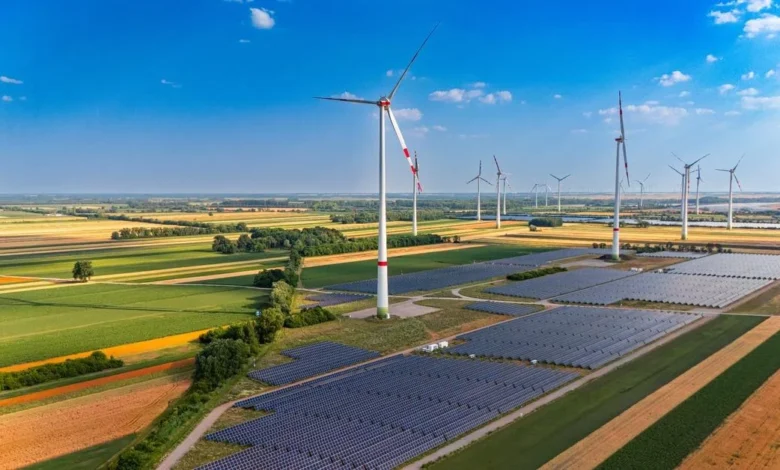
The global transition toward intermittent renewable energy sources such as solar and wind has fundamentally transformed modern power systems, positioning battery storage as the ultimate linchpin for grid reliability. Policymakers, investors, and climate advocates frequently frame battery technology as the missing piece of the energy puzzle, operating under the assumption that deploying sufficient storage capacity will instantly neutralize the challenges posed by a setting sun or an unexpected lull in the wind. While this conceptual framework is fundamentally sound, it remains incomplete. The primary engineering obstacle extends far beyond the raw storage of electricity; it lies in the grueling, multi-year endeavor to keep thousands of interconnected battery cells, sophisticated power electronics, complex cooling frameworks, and high-voltage electrical pathways functioning safely, efficiently, and predictably over decades of continuous operation.
Recent industry data underscores the breakneck pace of this technological expansion. According to global energy reports from organizations such as the International Energy Agency (IEA), approximately 108 gigawatts (GW) of new battery energy storage systems (BESS) were integrated worldwide in 2025 alone, representing a staggering 40 percent increase compared to the previous year. Plummeting battery pack prices over the past decade have catalyzed this deployment boom. However, the engineers, technicians, and project commissioners tasked with managing these billion-dollar assets routinely grapple with an array of operational headaches that rarely capture mainstream media headlines. These challenges range from fundamental laws of physics and regulatory paperwork to micro-electrical phenomena that only manifest after a site has endured years of real-world cycling.
The Multi-Day Deficit: Bridging the Gap Beyond Short-Duration Storage
To understand the physical limits of current battery storage, one must examine extreme weather scenarios, such as a cold, still week in January across northern Europe. During these periods, solar photovoltaic generation is virtually nonexistent due to short, overcast days, while high-pressure atmospheric systems stall regional wind turbine fleets into near-total inactivity. Grid planners in Germany refer to this phenomenon as a Dunkelflaute, or "dark doldrums," treating it not as an edge-case curiosity but as a critical baseline stress test for future power grids.
Present-day utility-scale battery installations are overwhelmingly optimized for short-duration discharge windows. Two-hour systems are commonplace, and four-hour systems are increasingly deployed to smooth out daily demand curves. This configuration is exceptionally well-suited for shifting peak midday solar production into evening electricity consumption peaks, or for bridging minor generation drops when localized weather fronts sweep across wind farms. However, these short-duration systems are fundamentally ill-equipped to handle multi-day or multi-week generation droughts.
Attempting to resolve a multi-day shortfall exclusively with lithium-ion batteries would require building astronomical storage capacities that would sit idle for the vast majority of the year. Financially, such an asset profile is nearly impossible to justify, as capital-intensive projects require consistent revenue streams rather than seasonal utilization. This economic reality drives intense global interest in long-duration energy storage (LDES) alternatives, including pumped hydro storage, compressed air energy storage (CAES), vanadium redox flow batteries, green hydrogen, and emerging chemical compositions such as iron-air batteries. None of these technologies serve as a universal drop-in replacement, each carrying unique trade-offs in efficiency, physical footprint, and capital expenditure. Seasonal variations exacerbate this complexity; higher-latitude solar installations experience massive output disparities between summer and winter, a temporal mismatch that modern electrical grids cannot yet bridge cost-effectively.
Thermodynamics and Parasitic Loads: Where Does the Energy Go?
A common misconception among non-specialists is that energy storage systems operate at near-perfect efficiency. In practice, a battery rarely returns all the electricity fed into it. The National Renewable Energy Laboratory (NREL) estimates that utility-scale lithium-ion storage systems typically achieve a round-trip efficiency (RTE) of roughly 85 percent. This means approximately 15 percent of the electrical energy injected during a full charge-and-discharge cycle is permanently lost, primarily converted into ambient heat. Alternative technologies vary widely; pumped hydro systems sit at comparable or slightly lower efficiency thresholds, whereas power-to-gas-to-power hydrogen systems frequently lose well beyond half of their original energy input during conversion cycles.
Beyond electrochemical conversion losses, operators must contend with significant parasitic auxiliary loads. Large-scale battery enclosures—often housed in climate-controlled shipping containers—require stringent thermal management to maintain cells within narrow, safe operating temperature windows. Consequently, cooling and heating systems operate continuously through blistering desert summers and freezing winter nights. When combined with inverter standby power draws, high-voltage transformer losses, battery management system (BMS) computing overhead, and facility security lighting, an underutilized storage asset can consume a substantial fraction of its stored energy merely keeping itself operational. In extreme climates, parasitic cooling loads represent one of the single largest ongoing operational expenditures for site owners.
Operational Stressors: Solar Versus Wind Integration
Warranty contracts and financial models typically describe battery degradation through simplified degradation curves based on defined cycle counts and chronological years. Actual field operations, however, subject storage assets to far more aggressive and unpredictable mechanical and chemical stress.
Solar-plus-storage facilities generally operate on a predictable, cyclical rhythm: absorbing solar generation through the middle of the day, dispatching power into the evening peak, and resting overnight. Wind energy generation, by contrast, is notoriously volatile. Output can fluctuate dramatically multiple times within a single afternoon. A battery deployed to smooth wind integration may spend its entire lifecycle subjected to rapid, erratic micro-cycles, lingering at intermediate states of charge before experiencing sudden spikes demanding maximum discharge rates.
Thermal stress compounds these degradation vectors. Lithium-ion cells degrade at accelerated rates when maintained at high states of charge for prolonged durations, particularly within warm enclosures. Consequently, operators in hot climates routinely observe capacity fade occurring significantly faster than initial financial projections anticipated, even when total cycle counts remain relatively low. To counteract this, modern engineering blueprints frequently incorporate "augmentation strategies"—pre-planned capital expenditures designed to integrate fresh battery racks every few years to maintain contracted nameplate capacity. If supply chain bottlenecks disrupt these replacement schedules, or if newer cell chemistries fail to integrate seamlessly with legacy hardware, project budgets face severe, unmodelled shortfalls.
Electrical Integrity and the Hidden Risks of High-Voltage DC Systems
While capacity fade and thermal management are widely discussed at industry conventions, maintenance logs reveal a host of hidden technical challenges that emerge after years of continuous site operation. Among the most critical is the slow degradation of insulation on the direct current (DC) side of large installations.
Modern utility-scale battery strings frequently operate at voltages exceeding 1,000 volts DC. At these elevated thresholds, even minor insulation imperfections demand immediate intervention to prevent catastrophic failures. The root causes are typically mundane: microscopic moisture ingress past cable glands, electrical connectors subjected to thousands of thermal expansion and contraction cycles, or condensation pooling inside enclosures during cold morning transitions. Over time, these environmental factors establish low-resistance leakage paths for current to ground.
Initially, these DC insulation faults manifest as subtle anomalies that fail to trigger immediate system trips. If left undetected, they escalate into chronic nuisance inverter shutdowns, localized electrical arcing, and severe safety hazards. This risk is amplified in DC-coupled solar-plus-storage architectures, where shared DC buses exponentially increase the number of physical connection points susceptible to degradation.
Mitigating these risks requires sophisticated, multi-layered monitoring infrastructure. Advanced insulation-monitoring devices continuously track system resistance to ground, while specialized DC leakage-current sensors detect abnormal residual currents flowing through unintended circuits. Standard alternating current (AC) residual current devices are frequently desensitized by steady-state DC fault currents, making dedicated DC monitoring mandatory. Early detection allows technicians to resolve issues at the low-cost component replacement stage rather than executing expensive, full-rack hardware swaps.
State of Charge Calibration and Thermal Anomalies
Lithium iron phosphate (LFP) chemistry has firmly established itself as the dominant technology for stationary grid storage, accounting for over 90 percent of new installations in 2025. While LFP offers superior safety profiles and thermal stability, it possesses a notoriously flat voltage discharge curve across the vast majority of its operational range. This characteristic, while advantageous for stabilizing grid voltage, presents severe diagnostic challenges for battery management systems attempting to estimate the exact state of charge (SoC) based on terminal voltage alone.
Consequently, BMS units rely heavily on current-counting algorithms to track energy flowing in and out of the cells. Over weeks of partial, irregular cycling, tiny measurement inaccuracies accumulate, causing the system’s calculated state of charge to drift away from reality. Operators may remain entirely unaware of this calibration drift until a high-demand evening peak arrives, whereupon the battery hits its lower safety voltage threshold prematurely—resulting in a missed grid dispatch and severe financial penalties. Periodic, mandatory full-charge recalibration cycles rectify this drift, but require taking the revenue-generating asset offline for hours at a time.
Furthermore, computational fluid dynamics models used during the thermal design phase of BESS containers are typically validated against average environmental conditions. Inside a fully packed physical enclosure, thermal gradients inevitably develop. Rack assemblies positioned directly adjacent access doors or situated at the extremities of HVAC ducting can operate several degrees warmer than internal modules. Over multi-year operating horizons, these localized thermal hot spots accelerate internal resistance growth and capacity loss, eventually dragging down the efficiency and output of entire electrical strings.
Regulatory Bottlenecks, Grid Queues, and Economic Realities
Beyond technical and engineering hurdles, the accelerated deployment of energy storage faces acute systemic bottlenecks. In numerous major energy markets worldwide, the most significant barrier to deployment is not technological maturity or manufacturing capacity, but prolonged delays within electrical grid interconnection queues. Renewable energy and storage developers frequently spend years navigating administrative backlogs as transmission system operators struggle to process connection studies at a pace matching private sector investment.
Local land-use permitting has grown increasingly contentious. Following a series of high-profile battery facility fires in various jurisdictions, municipal planning boards have instituted stringent setback requirements, mandatory emergency response protocols, and, in some cases, outright moratoriums on new approvals. Developers who initially assumed that permitting a stationary battery facility would encounter less resistance than a wind farm have frequently discovered the opposite.
Simultaneously, shifting market structures have redefined revenue models for storage assets. Energy storage facilities rarely rely on a single revenue stream, instead stacking value across energy arbitrage, capacity adequacy payments, and high-frequency ancillary grid services. In several regional markets, as the volume of newly commissioned batteries surged, the market clearing prices for fast-response frequency regulation collapsed rapidly. Project operators that relied heavily on these initial ancillary service revenues were forced to aggressively restructure their business models to survive.
Conclusion: Prioritizing Engineering Rigor Over Quick Fixes
As global climate policies push power grids toward unprecedented levels of renewable penetration, energy storage will undoubtedly remain central to the modern energy economy. While continued manufacturing scale and lower raw material costs will make battery hardware increasingly affordable, cheaper cells cannot single-handedly solve a multi-day generation drought, arrest moisture ingress in aged electrical connectors, or accelerate administrative grid connection queues. The storage installations that successfully deliver reliable performance over fifteen- to twenty-year operational lifespans will be those engineered with rigorous attention to unglamorous technical details long before the first performance metric is recorded.