Gorilla Habitats and Pristine Forest at Risk as the Democratic Republic of the Congo Opens Over Half of Its Land to Oil and Gas Drilling Bids

The Democratic Republic of the Congo (DRC) is currently at a critical environmental crossroads as its government moves forward with an aggressive expansion of the nation’s hydrocarbon sector. A recent report titled Forests to Frontlines: Oil Expansion Threats in the DRC, published by Earth Insight, reveals that the government has initiated an auctioning round for 52 new oil blocks. When combined with three previously awarded concessions, this expansion threatens to expose 64 percent of the country’s pristine tropical forests to industrial exploitation. This policy shift places the DRC’s vast biodiversity, its critical role in global climate regulation, and the livelihoods of millions of inhabitants in direct conflict with the demands of the global energy market.
A Chronology of Escalating Resource Extraction
The current crisis follows a trajectory of increasing pressure on the Congo Basin’s natural resources. In 2022, the DRC government launched a controversial initial auction covering 30 oil and gas blocks. At the time, the move drew widespread international condemnation from environmental advocacy groups, who warned that the concessions overlapped with some of the planet’s most sensitive ecosystems, including protected national parks and carbon-dense peatlands.
Despite the global outcry and the subsequent pressure for the DRC to pursue a "green" development pathway, the government has opted for a significant escalation in 2025. By adding 52 additional blocks to the existing portfolio, the state has effectively signaled that its economic strategy relies heavily on fossil fuel extraction. This expansion represents a departure from earlier commitments to biodiversity conservation, effectively widening the reach of oil concessions to cover more than 53 percent of the nation’s total landmass.
Ecological Significance and Global Climate Implications
The Congo Basin is frequently referred to as the "second lung" of the planet, following the Amazon. Its ecological significance cannot be overstated. The region acts as a massive carbon sink, sequestering gigatons of CO2 that would otherwise accelerate global temperature rise. Central to this is the Cuvette Centrale, the world’s largest tropical peatland complex. These peatlands are estimated to store roughly 30 gigatons of carbon—a quantity equivalent to three years of total global fossil fuel emissions.
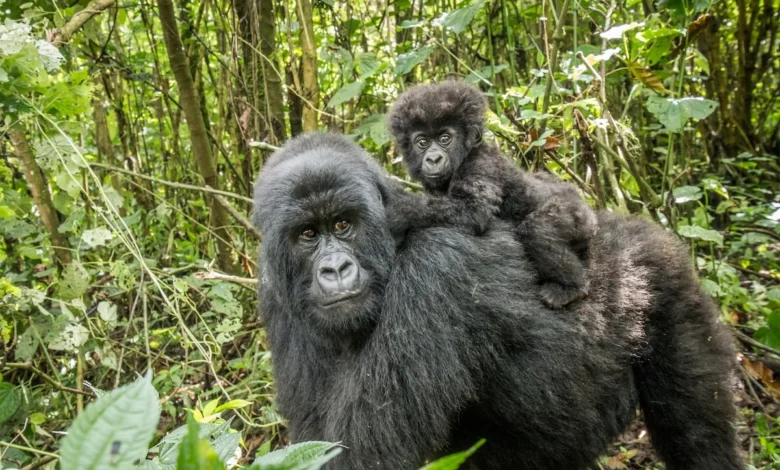
The proposed oil blocks overlap directly with 165.1 million acres of intact tropical forest. Beyond carbon sequestration, these areas serve as essential habitat for endangered species, including mountain gorillas, eastern lowland gorillas, bonobos, and forest elephants. The fragmentation of these habitats through road construction, seismic surveying, and industrial infrastructure associated with oil drilling risks causing irreversible damage to biodiversity that exists nowhere else on Earth.
Furthermore, the government’s recent initiative to establish the Kivu-Kinshasa Green Corridor—an ecological project designed to promote sustainable development—is now being undermined by its own policy. Reports indicate that 72 percent of this designated corridor now intersects with the new oil blocks, raising questions about the coherence of the government’s long-term environmental strategy.
The Socio-Economic Cost for Local Communities
The impact of this expansion extends far beyond the realm of ecology; it poses a profound threat to the 39 million people who reside within the auction zones. For many Indigenous and forest-based communities, the tropical forests and river systems of the Congo Basin are not merely natural resources, but the foundations of their cultural identity, spiritual life, and daily subsistence.
Pascal Mirindi, a campaign coordinator for Notre Terre Sans Pétrole, has been a vocal critic of the government’s approach. "Imagine: 39 million Congolese people and 64% of our forests could be directly affected by the awarding of these oil blocks," Mirindi stated. He highlighted the apparent contradiction between the government’s stated goals of sustainable development and the realities of the current auctioning process. By prioritizing oil extraction over the rights of its own citizens, critics argue the government is effectively "selling off the future" of the Congolese people for short-term economic gains that may never reach the rural populations most affected by environmental degradation.

Official Responses and Civil Society Opposition
The Earth Insight report, developed in partnership with the Coalition des Organisations de la Société Civile pour le Suivi des Reformes et de Action Publique (CORAP) and Rainforest Foundation UK, serves as a formal call to action. The organizations argue that the 2025 licensing round must be cancelled immediately to prevent an environmental catastrophe.
Anna Bebbington, an Earth Insight research manager, noted that the consequences of this development would be "devastating" not only for local land rights but for the global climate fight. Civil society organizations are calling for greater transparency in the decision-making process, demanding that the rights of Indigenous peoples be upheld in accordance with international law. They argue that the DRC should pivot toward international support models that prioritize climate resilience and sustainable forest management, rather than fossil fuel dependency.
Analytical Overview: The Conflict Between Development and Conservation
From a macroeconomic perspective, the DRC’s pursuit of oil is often framed by government officials as a necessary step toward poverty alleviation and national development. However, analysts point to the "resource curse"—a phenomenon where nations rich in natural resources often experience slower economic growth and higher levels of inequality than countries with fewer resources.
By investing in infrastructure for oil extraction in remote, ecologically fragile areas, the government risks incurring massive debt while locking the country into a fossil fuel-dependent economy that may become obsolete as the world transitions to renewable energy. The reliance on extractive industries often discourages the diversification of the economy and can lead to the displacement of traditional livelihoods, such as agriculture and sustainable forestry, which are more resilient over the long term.
Furthermore, the DRC’s international commitments under the Convention on Biological Diversity and the Paris Agreement are at risk. By actively degrading its most vital carbon sinks, the country undermines its leverage in international climate negotiations. The international community, particularly donor nations that provide aid to the DRC for conservation, now faces a difficult dilemma: how to support the Congolese people while ensuring that their funds are not being inadvertently offset by large-scale environmental destruction.
The Path Forward
As the auction process proceeds, the international spotlight remains fixed on the DRC. The consensus among environmental scientists is clear: the preservation of the Congo Basin is essential to maintaining global climate stability. Should the current trajectory continue, the resulting habitat loss and carbon release could offset decades of global conservation efforts.
The demands of civil society are focused on three core areas:
- The Cancellation of Licensing Rounds: Immediate cessation of all hydrocarbon expansion in ecologically sensitive areas.
- Respect for Land Rights: Ensuring that any future land-use decisions involve the free, prior, and informed consent of Indigenous and local communities.
- Alignment of International Finance: Ensuring that donor support is explicitly tied to the protection of biodiversity and the promotion of sustainable, non-extractive industries.
The government of the DRC now faces a pivotal decision. It can either proceed with an industrial model that risks the degradation of its most valuable natural heritage, or it can heed the calls of its own citizens and the international community to safeguard the Congo Basin. The outcome of this debate will not only determine the future of the mountain gorilla and the peatlands of the Cuvette Centrale but will serve as a bellwether for how the international community manages the tension between national economic sovereignty and the collective necessity of global climate action. As of late 2025, the situation remains fluid, with advocacy groups mobilizing to challenge the legality and ethics of the new concessions in both local and international forums. The survival of the Congo’s forests—and the people who depend on them—rests on the ability of the government to re-evaluate its reliance on oil in an era where environmental stewardship is increasingly recognized as the ultimate foundation of national security.