How a New Generation of Eco-Friendly Browsers is Turning Daily Web Traffic Into Real-World Ocean Conservation

As consumers increasingly seek ways to integrate sustainability into their daily routines without sacrificing convenience, the intersection of technology and environmental stewardship has expanded beyond household appliances and electric vehicles. Today, this movement encompasses the digital space. While individuals have long utilized applications to monitor domestic energy consumption, track local recycling programs, or calculate their carbon footprints, a new class of software is bringing ecological mindfulness to the tools people use every single day: the internet browser.
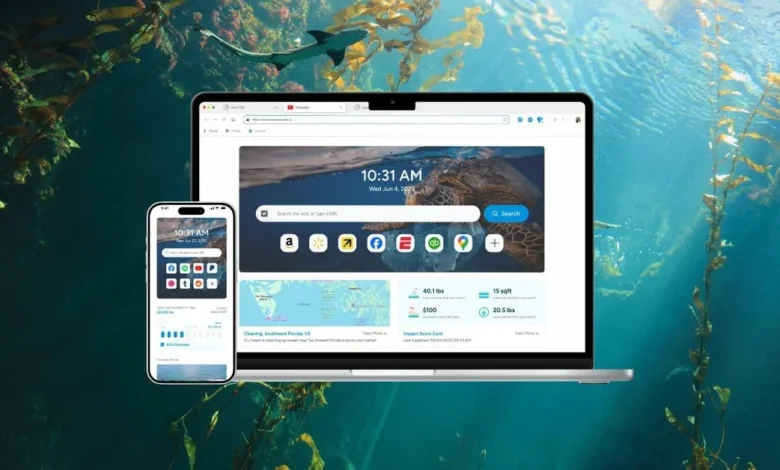
Among these emerging digital solutions is Wave Browser, an eco-friendly web browser built on the Chromium open-source framework. Designed to merge high-performance browsing with measurable environmental action, the platform addresses a growing demand for technology that aligns with personal values. By establishing a certified partnership with the global ocean cleanup organization 4ocean, Wave Browser has introduced a unique funding model that translates routine web searches and page views into financial support for physical waste removal operations across vulnerable marine and freshwater ecosystems.
The integration of environmental philanthropy into software design reflects a broader shift in consumer expectations. Modern digital consumers increasingly favor products that offer transparency, tangible impact, and seamless functionality. Rather than requiring users to adopt entirely new, cumbersome habits, the green browser concept operates quietly in the background, funding ecological restoration through the ordinary rhythms of work, study, and online entertainment.
The Mechanics of Digital Conservation: Understanding the Partnership with 4ocean
To understand how a software application can actively clean oceans and rivers, it is necessary to examine the operational framework governing Wave Browser and its environmental partner. 4ocean operates internationally, deploying professional cleanup crews, specialized vessels, booms, and heavy-duty collection equipment to areas heavily impacted by plastic pollution. These operations target critical accumulation zones, with frequent deployments in regions like Indonesia, the Dominican Republic, the coastlines of Florida, and Guatemala.
The economic engine driving this collaboration relies on browser monetization. A portion of the revenue generated through the browser’s operations—derived from standard digital channels such as sponsored content, search integrations, and partnered services—is directly allocated to 4ocean’s global cleanup funds. This financial backing enables the acquisition and maintenance of essential infrastructure required to haul massive quantities of discarded plastic, synthetic materials, and miscellaneous debris out of marine habitats.
Once the physical waste is harvested from the water, it enters a rigorous, multi-stage processing pipeline designed to maximize recovery and minimize landfill dependency:
- Manual and Mechanical Sorting: Recovered materials are systematically separated by cleanup crews according to polymer type, grade, and color, ensuring that recyclable fractions are isolated from non-recyclable refuse.
- Shredding: Suitable plastics are transported to processing facilities, where industrial-grade shredders reduce the bulk waste into manageable, uniform flakes.
- Washing: The shredded material undergoes an intensive cleansing process within specialized wash tanks, utilizing density separation to isolate floating plastics from sinking contaminants and residual organic matter.
- Drying and Repurposing: The cleaned flakes are thoroughly dried, bagged, and prepared for industrial integration, where they can be upcycled into durable goods, secondary products, or utilized in circular manufacturing supply chains.
By supporting this structured pipeline through everyday software usage, users contribute to an established industrial recycling loop. Crucially, this model avoids misleading claims that individual web searches equal precise weights of trash removed; instead, it establishes an institutional funding stream that underwrites large-scale, continuous environmental labor.
Tracking Accountability: The Live Impact Tracker and Public Milestones
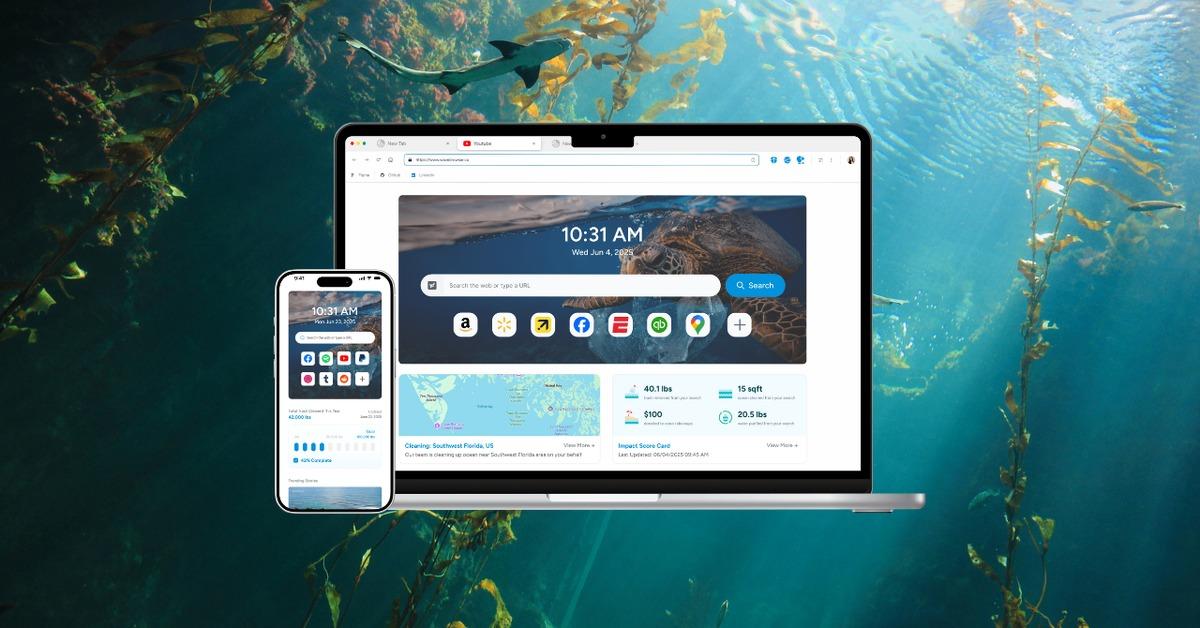
In the realm of corporate sustainability and green marketing, transparency remains a central concern for discerning consumers. Skepticism surrounding greenwashing has prompted digital initiatives to adopt rigorous accountability measures. Wave Browser addresses this demand through its Live Impact Tracker, a publicly accessible dashboard embedded directly on the browser’s homepage.
The tracker provides real-time visibility into the collective progress being made toward the company’s ambitious environmental targets. Specifically, Wave Browser has committed to funding the removal of 300,000 pounds of plastic and trash from oceans, rivers, and coastlines by 2028, establishing an annual benchmark of 100,000 pounds.
To maintain editorial and operational integrity, the platform pairs its digital dashboard with periodic progress reports published across official blog channels and social media profiles. These updates detail specific recovery categories, active cleanup locations, and completed operational events. For instance, official figures released as of late September 2026 confirmed that cumulative cleanup contributions had reached 133,402 pounds of removed waste. This systematic documentation provides researchers, journalists, and everyday users with verifiable metrics, setting a high standard for corporate transparency in the eco-software sector.
Balancing Environmental Mission with Core Browser Performance
An eco-friendly mission, while compelling, is rarely sufficient to drive long-term software adoption if the underlying product fails to meet technical standards. A web browser must perform reliably across complex operating systems, ensure robust data security, and deliver seamless multitasking capabilities to compete in a crowded market dominated by legacy tech giants.
Built upon the Chromium open-source project—the foundational technology powering several of the world’s most widely used browsers—Wave Browser inherits deep website compatibility and rapid rendering speeds. This architectural choice ensures that modern web applications, streaming services, and enterprise tools function without friction.
To cater to diverse user workflows across Windows, macOS, Android, and iOS, the browser incorporates a comprehensive suite of native features divided into four functional pillars:
Organization and Navigation
- Bookmarks, Browsing History, and Reading Lists: Traditional organizational utilities that allow users to save preferred sites, trace previous navigation paths, and curate articles for later consumption.
- Integrated Password Management: A secure vault system that safely stores usernames and auto-fills login credentials, eliminating the operational friction of manual password recall.
- Instant Web Page Translation: One-click translation capabilities that convert foreign-language content into the user’s native tongue in real time.
Privacy and Security
- Granular Privacy Controls: Advanced settings empowering users to manage cookies, site-specific permissions, and background tracking data with precision.
- Incognito Mode: A private browsing environment that purges local history, cache files, and session cookies immediately upon closing the designated tab.
- Built-in Ad and Tracker Blocking: Native filtering tools designed to mitigate intrusive advertising, suppress third-party tracking scripts, and accelerate page load times on supported platforms.
Performance and Multitasking
- Memory and Energy Saver Modes: Resource-optimization tools that intelligently suspend background tabs to reclaim RAM and minimize battery drain during mobile or laptop use.
- Side-by-Side Screen Layouts: A window-snapping utility that divides a single browser window into dual workspaces, facilitating product comparisons, academic research, and parallel documentation.
- Picture-in-Picture Video: A floating, resizable media player that detaches video content from its host webpage, enabling uninterrupted viewing while navigating other tabs.
Productivity and Everyday Utilities
- App Sidebar: A docked side panel providing instant shortcuts to messaging platforms (such as WhatsApp and Messenger) and streaming services without cluttering open tabs.
- Integrated Notes and Scratchpads: Built-in drafting tools and checklist creators for capturing transient thoughts or organizing daily tasks without opening external applications.
- Amazon Price Tracking: Automated monitoring utilities that track historical price fluctuations on e-commerce items, alerting users to optimal purchasing windows.
- File Conversion Tools: Native file transformation utilities capable of converting images, documents, and media formats directly within the browser interface.
- Package Tracking Integration: Centralized shipment monitoring connecting major logistics networks—including FedEx, UPS, USPS, DHL, Amazon, and OnTrac—to keep users informed of deliveries without visiting individual courier sites.
Independent Validation, Security, and Market Reception
As digital privacy and software safety face heightened scrutiny, third-party validations serve as vital benchmarks for consumer trust. Wave Browser has undergone rigorous evaluations by independent cybersecurity and software auditing bodies to verify its operational integrity.
Notably, the application is listed within AppEsteem’s Certified Apps database. This certification indicates that the software has passed stringent technical reviews confirming transparent installation pathways, clear user control options, and a straightforward, unhindered removal process. For privacy-conscious consumers, this independent verification offers reassurance regarding the software’s adherence to ethical consumer software guidelines.
Furthermore, Wave Browser has achieved significant recognition within the open-source developer community, earning the SourceForge Leader Award for three consecutive seasons (Winter, Spring, and Summer 2026). The Summer 2026 distinction placed the software among the top 5% of more than 100,000 reviewed projects on SourceForge within both the Web Browsers and Eco-Friendly Web Browsers categories. This sustained acclaim reflects consistently positive user feedback, stable performance updates, and reliable technical support over an extended period.
Market adoption metrics further illustrate the platform’s trajectory. By September 2026, cumulative downloads for Wave Browser across macOS and Windows platforms surpassed 25 million installations, signaling a substantial and growing user base interested in alternative, socially conscious digital utilities.
Contextualizing Digital Sustainability Within Broader Ecological Habits
While adopting an eco-friendly web browser represents a novel and effortless way to support global cleanup initiatives, environmental advocates emphasize that digital conservation functions best as a complementary practice rather than a standalone solution. Realizing a sustainable lifestyle requires a multifaceted approach that addresses physical consumption, waste management, and civic engagement.
The impact of tools like Wave Browser is most meaningful when paired with established, conscious habits in the physical world:
- Minimizing Single-Use Plastics: Replacing disposable items—such as bottled water, plastic shopping bags, and single-use utensils—with durable, reusable alternatives made from stainless steel, glass, or bamboo.
- Embracing Reuse and Repair: Extending the lifecycle of manufactured goods by repairing household appliances, mending textiles, sourcing secondhand goods, and repurposing items prior to disposal.
- Practicing Rigorous Waste Sorting: Adhering strictly to local municipal recycling and composting guidelines to minimize material contamination, thereby ensuring that recoverable commodities are successfully processed rather than diverted to regional landfills.
- Supporting Circular Business Models: Patronage of enterprises that utilize minimal or post-consumer recycled packaging, operate refill stations, or design products with end-of-life recycling and durability in mind.
- Engaging in Civic Advocacy: Supporting municipal policy measures aimed at upgrading local waste management infrastructure, expanding community recycling programs, and enforcing extended producer responsibility frameworks that hold manufacturers accountable for product packaging.
Broader Implications for the Tech Industry
The rise of platforms like Wave Browser highlights an evolving paradigm in the software industry. Historically, digital efficiency was measured strictly in terms of processing speed, memory consumption, and user interface design. Today, developers and consumers alike are beginning to evaluate software through an ethical lens, asking how digital infrastructure interacts with the physical world.
By embedding quantifiable ecological philanthropy directly into the economic model of a standard web browser, developers have demonstrated that commercial software can serve a dual purpose. As digital traffic continues to account for a significant share of global resource utilization and economic activity, models that transform routine browsing into tangible real-world restoration offer a compelling blueprint for the future.
For users seeking to harmonize their digital habits with their environmental values, the availability of certified, high-performance green browsers provides a practical option. Backed by verifiable metrics, independent security certifications, and measurable partnerships with organizations like 4ocean, these tools prove that meaningful environmental action can begin with something as simple as opening a tab.
Related posts: