Tesla Brings Cybercab to China for Static Display While Clarifying No Immediate Commercial Intent

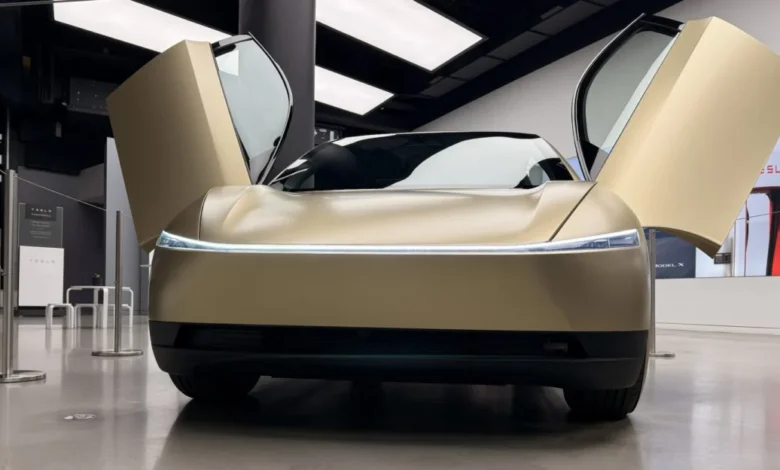
Tesla has officially brought its highly anticipated autonomous vehicle, the Cybercab, to mainland China for its first-ever public exhibition in the country. The futuristic, two-seater vehicle, notable for its complete lack of a steering wheel and pedals, has been placed on static display in high-traffic retail spaces in Beijing and Shanghai. However, the American electric vehicle manufacturer has gone to great lengths to emphasize that the exhibition is strictly educational and promotional rather than a precursor to a commercial launch.
In official statements released by Tesla China, the company made it unequivocally clear that the showcase does not involve selling the Cybercab in the Chinese automotive market, nor does it signal any impending rollout of a driverless ride-hailing service in the region. This carefully calibrated messaging highlights the complex regulatory, competitive, and technological hurdles Tesla faces as it attempts to position its autonomous vision in the world’s most advanced and fiercely contested robotaxi market.
Exhibition Details and Schedule
The Cybercab tour marks a milestone for Tesla’s public relations and product marketing strategy in Asia. The vehicle made its debut appearance on September 17, giving Chinese consumers and tech enthusiasts a rare chance to view the vehicle up close without traveling abroad.
According to Tesla’s regional schedule, the vehicle is slated for a two-city itinerary:
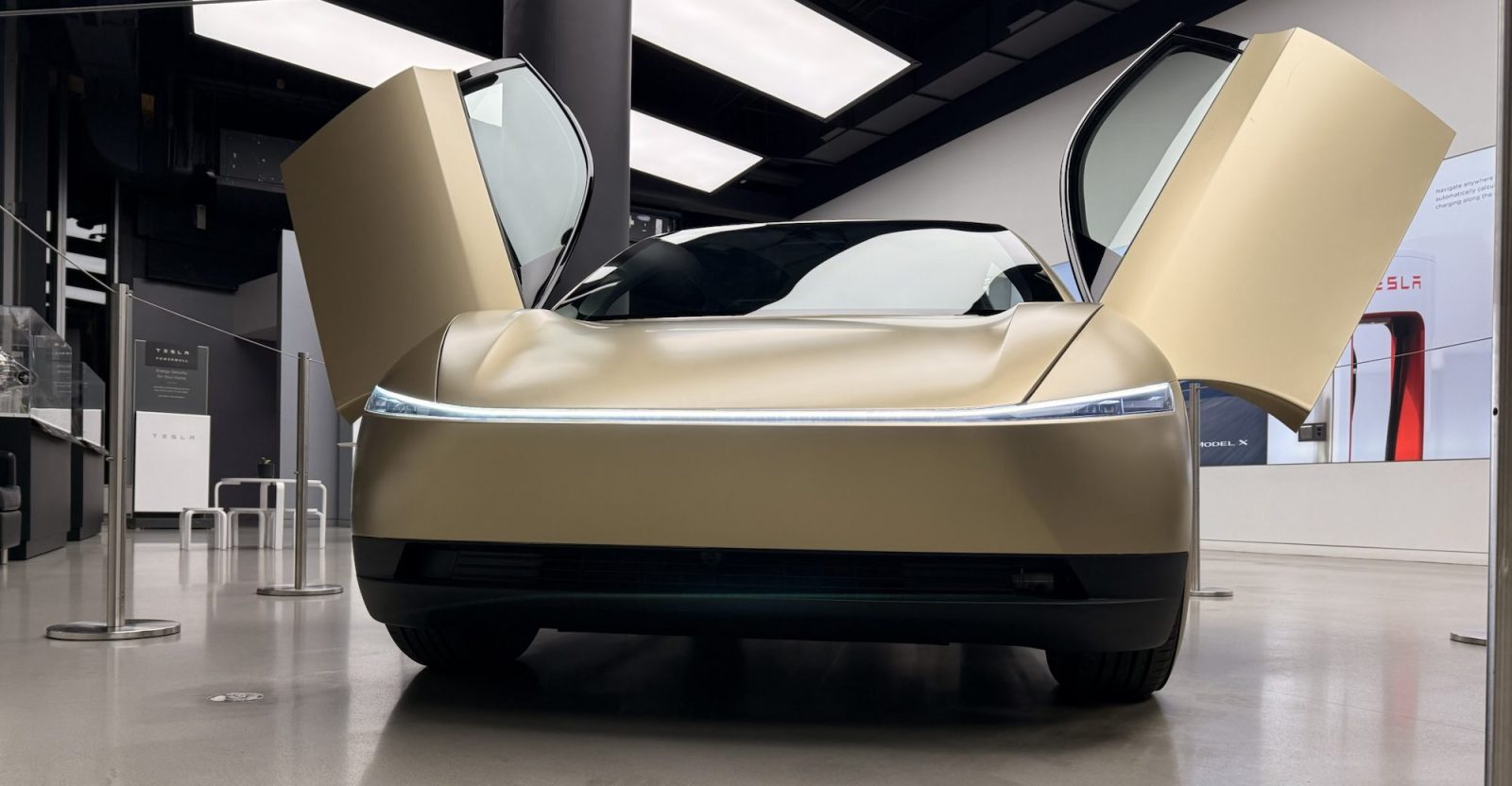
- Beijing: The Cybercab is stationed at Tesla’s flagship Huamao experience store, where it will remain on display through September 27.
- Shanghai: The vehicle will also occupy the LG1 north hall of the upscale HKRI Taikoo Hui shopping center through September 21.
By placing the vehicle inside prominent luxury retail hubs, Tesla is aiming to draw heavy foot traffic, spark conversations around its design philosophy, and generate consumer interest in its broader ecosystem—chiefly driving showroom inquiries toward commercially available models like the Model Y and Model 3.
Navigating Strict Regulatory Frameworks
Tesla’s explicit disclaimers regarding the non-commercial nature of the exhibition are rooted in hard regulatory realities. The Cybercab’s radical design philosophy—featuring a cabin stripped of traditional manual driver controls such as a steering wheel, accelerator, and brake pedals—places it outside the current legal frameworks for consumer vehicle registration in numerous global jurisdictions, including both the United States and China.
Under current Chinese motor vehicle safety standards, automobiles intended for consumer sale must satisfy rigorous compliance mandates that assume human driver intervention capabilities. Because the Cybercab cannot be legally registered to individual buyers under these existing parameters, a consumer walking into the Beijing Huamao store cannot place an order for the vehicle.
Furthermore, the prospect of operating an autonomous, driverless commercial fleet faces an even steeper regulatory wall. While Tesla introduced a limited, supervised version of its Full Self-Driving (FSD) software suite in China, the company has yet to secure the necessary local governmental approvals to operate unsupervised, fully driverless commercial robotaxi networks within Chinese metropolitan areas.
China’s Mature Robotaxi Landscape
Tesla’s arrival with a non-operational, static prototype highlights a stark contrast between its own autonomous deployment timeline and the hyper-advanced state of China’s domestic autonomous driving sector. While Tesla uses mall displays to gauge public interest in its design concepts, homegrown Chinese competitors have scaled commercial operations to an industrial level.

For several years, Chinese technology giants and specialized mobility startups have operated fully commercialized, paid robotaxi services with zero safety drivers behind the wheel. Key players dominating this space include:
- Baidu’s Apollo Go: Operating at massive scale across multiple Tier-1 and Tier-2 Chinese cities, completing millions of commercial driverless passenger trips.
- Pony.ai: Backed by major automotive conglomerates, offering commercialized autonomous mobility services in designated urban zones.
- WeRide: Deploying fleets of autonomous passenger vehicles, robobuses, and street sweepers in domestic and international markets.
This dynamic places Tesla in an unusual position: entering the world’s most sophisticated and heavily saturated market for autonomous ride-hailing with a concept vehicle that it can neither sell to consumers nor deploy as a commercial service. Industry analysts note that while Tesla commands substantial brand cachet in China, local competitors have established deep technical moats, regulatory compliance pathways, and consumer trust through years of live testing and public deployment.
Strategic Implications for Tesla in Asia
The decision to tour the Cybercab through Beijing and Shanghai serves multiple strategic objectives for Tesla, even in the absence of an imminent product launch.
First, the exhibition serves as a powerful marketing funnel. As EV price competition intensifies in China—driven by aggressive discounting and rapid technological rollouts from domestic manufacturers like BYD, NIO, and Xpeng—Tesla must continuously refresh its brand appeal. By showcasing its futuristic technology, Tesla draws curious consumers into showrooms, leveraging the Cybercab’s allure to boost sales of its core production vehicles.
Second, the tour acts as a testing ground for public sentiment regarding Tesla’s vision of autonomous transport. By observing how consumers interact with and react to a cabin devoid of manual controls, Tesla can gather valuable qualitative feedback on user acceptance of interior space layouts and autonomous interface designs.

Finally, the exhibition underscores the growing divergence between Tesla’s domestic strategy in the United States and its international playbook. In the US, Tesla has focused its initial autonomous deployment efforts on favorable regulatory environments in states like Texas and Florida. However, replicating this approach in international markets—particularly in tightly regulated economies with advanced domestic alternatives—will require navigating intricate approval processes and proving safety metrics that meet or exceed stringent local standards.
As the Cybercab concludes its exhibition run in Shanghai later this month, it leaves behind a clear message: while Tesla’s autonomous future is generating global headlines, bridging the gap between futuristic design concepts and commercial reality in China will require overcoming significant regulatory and competitive hurdles.