Rebuilding Public Trust in Higher Education Through Fiscal Discipline and Affordable Access


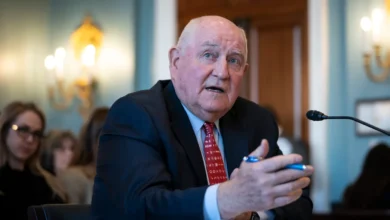
Every fall, millions of American parents and caregivers make extraordinary sacrifices to send a child to college, working overtime, postponing retirement, and assuming significant debt under the belief that a degree remains the primary vehicle for social mobility. However, as tuition rates have outpaced inflation for decades, a growing chasm has formed between the perceived value of higher education and its actual cost. Suresh Garimella, president of the University of Arizona, argues that universities must move beyond defensive marketing and toward a model of radical financial transparency and operational efficiency to regain the trust of the American public.
The Erosion of Public Confidence
The skepticism surrounding higher education is not merely a product of rising costs but a reflection of a perceived lack of stewardship. For years, university leadership has relied on aggregate data—such as the well-documented "college wage premium"—to justify tuition hikes. While the economic data holds true, showing that college graduates earn substantially more over their lifetimes than their non-degree-holding counterparts, this argument has lost its persuasive power.
Families are no longer satisfied with broad economic justifications. They are increasingly questioning the administrative bloat that often accompanies tuition increases. When institutions scrutinize the financial capacity of households for aid packages more rigorously than they scrutinize their own internal budgets, the relationship between the student and the university shifts from a partnership to a transactional burden. According to a recent Gallup poll, confidence in higher education has reached record lows, with only 36% of Americans expressing "a great deal" or "quite a lot" of confidence in the sector, down from 57% in 2015.
A Chronology of Institutional Restraint
The push for affordability is not a theoretical exercise for leaders like Garimella, whose career has been defined by a consistent policy of tuition freezes. His approach, honed over 14 years in senior administrative roles at Purdue University, the University of Vermont, and now the University of Arizona, serves as a case study in institutional change.
- 2013: Purdue University implements a tuition freeze, a policy that remains in effect today, marking over a decade of flat tuition rates for students.
- 2019-2024: During his tenure at the University of Vermont, Garimella oversaw five consecutive years of frozen tuition and mandatory fees, prioritizing student access over revenue maximization.
- 2022-2025: Upon arriving at the University of Arizona, Garimella faced a $177 million budget deficit. Instead of opting for tuition hikes, the administration initiated a multi-year effort to restructure the university’s financial foundation, successfully keeping resident undergraduate tuition flat for three consecutive years.
These outcomes were not the result of a decrease in the cost of providing education, but rather the result of "intentionally different choices," according to Garimella. By prioritizing fiscal discipline, universities can demonstrate that tuition increases are not an inevitable outcome of inflation, but a policy choice that can be mitigated through rigorous management.
Operational Efficiency and Structural Reform
The University of Arizona’s recent financial turnaround highlights the potential for public universities to operate more like lean, efficient organizations. To bridge the $177 million gap, the university implemented a series of structural reforms:
- Administrative Consolidation: The university reduced administrative spending by more than 20%, dissolving inefficient, redundant units that had accumulated over time.
- Leadership Downsizing: A comprehensive audit of leadership roles led to a significant reduction in the number of vice president positions, streamlining the chain of command to three key offices.
- Academic Innovation: The university introduced accelerated three-year degree programs in high-demand fields like medicine and veterinary science. These programs address critical workforce shortages while effectively reducing the total cost of attendance for students by cutting a year off the traditional timeline.
- Strategic Partnerships: By expanding flexible online learning modules and strengthening transfer pathways with community colleges, the university has made education more accessible to non-traditional and working-class students, decoupling the quality of the degree from the physical overhead of a traditional four-year residency.
The Role of Flagship Universities
A common critique in the higher education debate is that the conversation is dominated by elite, private, and highly selective institutions. While these schools provide an invaluable service, they educate only a small percentage of the total American student body. The weight of ensuring national accessibility rests squarely on the shoulders of flagship public universities.
Unlike private institutions, which rely heavily on endowments and high-tuition models, public universities are designed to provide "excellence at scale." Their mission is not to be exclusive, but to be accessible to the masses. When a public university fails to control costs, it undermines the state’s economic competitiveness. A degree from a flagship public institution is, in effect, a public good—a down payment on a state’s future workforce, innovation capacity, and civic stability.
Implications for Policy and Funding
The current model of funding higher education requires a recalibration. If institutions demonstrate the ability to operate with fiscal discipline and achieve measurable outcomes, state legislatures have a stronger mandate to increase funding. This is not a "subsidy" for the university, but a strategic investment in the state’s human capital.
However, the burden of proof remains on the university. Before a university president can request more taxpayer dollars or ask families to increase their financial commitment, they must be able to answer a fundamental question: "What have we done to deserve this investment?"
This requires a fundamental shift in how universities measure success. Institutions should be evaluated based on the opportunities they create for students—through internships, experiential learning, and career readiness—rather than simply the number of students enrolled or the prestige of their research rankings.
Looking Toward the Future
The path forward for higher education is one of transformation. As the global economy becomes increasingly volatile, the ability to adapt is paramount. This includes leveraging philanthropic contributions to fund internships and study-abroad programs for low-income students, ensuring that financial status is not a barrier to high-impact educational experiences.
The skepticism currently directed at universities is a signal that the status quo is unsustainable. For public universities to thrive in the coming decades, they must abandon the reliance on messaging campaigns and focus on the substantive work of reducing costs and improving efficiency. When a university can show that it is treating every tuition dollar with the same care a family uses to balance its own checkbook, trust will be earned naturally.
As higher education enters a new, more scrutinized era, the institutions that will succeed are those that prioritize the student over the bureaucracy. By making the difficult, necessary choices to streamline operations and freeze unnecessary costs, university leaders can restore the promise of the American degree, ensuring that it remains a tool for advancement rather than a source of lifelong financial strain. The challenge is significant, but the necessity of an educated, adaptable, and debt-burden-free workforce makes it a critical imperative for the nation’s future.