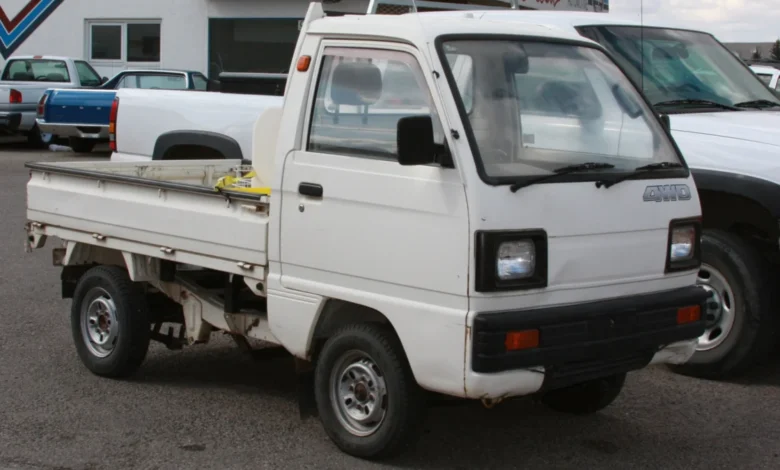
The fascination with Japanese kei trucks—a class of ultra-compact, lightweight commercial vehicles—has transformed from a niche interest among JDM (Japanese Domestic Market) enthusiasts into a genuine automotive phenomenon across the United States. In 2023 alone, approximately 7,500 of these diminutive vehicles were imported into the country, marking a significant uptick in demand. These trucks, characterized by their small engines, boxy proportions, and extreme utility, offer a stark contrast to the modern American pickup, which has trended toward massive dimensions and high-end luxury features over the last three decades. However, as the popularity of these vehicles surges, prospective buyers are increasingly confronting a complex web of federal regulations, state-level registration barriers, and logistical challenges that complicate the path from Japanese auction block to American driveway.
The Origins and Evolution of the Kei Class
The term "kei" is derived from the Japanese word "keijidōsha," which translates to "light automobile." This vehicle classification was established by the Japanese government in 1949 to facilitate the growth of the country’s automotive industry during the post-war recovery period. To qualify as a kei vehicle, the government imposed strict limitations on dimensions and engine displacement. Originally restricted to 150cc, the regulations evolved over time, eventually settling on a maximum engine size of 660cc and a physical footprint no larger than 133.9 inches in length and 58.3 inches in width.
These specifications were designed to encourage the use of small, fuel-efficient vehicles that could navigate Japan’s narrow, congested urban streets. By the 1980s and 1990s, the kei truck segment had matured, producing iconic models such as the Honda Acty, Suzuki Carry, Daihatsu Hijet, Subaru Sambar, and Mitsubishi Minicab. These vehicles were engineered for maximum durability, often featuring cab-over designs that maximized cargo space within the limited length requirements.
The 25-Year Rule and Importation Mechanics
The primary engine driving the importation of these trucks into the United States is the Federal Motor Vehicle Safety Standards (FMVSS) exemption. Under current U.S. federal law, vehicles that are at least 25 years old from the month of manufacture are exempt from meeting modern EPA and Department of Transportation (DOT) safety and emissions standards. This legal "window" has opened the door for a wave of 1990s-era Japanese hardware to enter the U.S. market legally.
The process of importing a kei truck involves significant logistical coordination. Buyers typically engage with specialized import brokers who navigate the complex documentation required by U.S. Customs and Border Protection (CBP). The cost structure for these vehicles is multifaceted: while a well-maintained kei truck in Japan might sell at auction for between $4,500 and $10,000, the final landed cost in the United States often increases significantly due to ocean freight, customs clearance fees, broker commissions, and inland transport costs. Prospective owners are frequently advised to prepare for a total investment that can easily exceed the original purchase price by several thousand dollars.
Regulatory Fragmentation: The State-by-State Dilemma
While federal law allows the importation of these vehicles, the authority to license and register them for public road use rests with individual states. This has created a patchwork of legality that often leaves owners in a state of confusion. Because kei trucks were never designed to meet U.S. safety standards—such as airbag requirements, crumple zone specifications, or side-impact protections—many state departments of motor vehicles (DMVs) view them as "non-conforming" vehicles.
California represents the most restrictive environment in the country. The California Air Resources Board (CARB) maintains some of the most stringent emissions regulations in the world, and kei trucks generally cannot pass the state’s rigorous biennial smog checks or emissions compliance standards. Consequently, most imported kei trucks are barred from road registration in the state.
Other states have implemented varying degrees of restriction. In jurisdictions like Wyoming and Arkansas, kei trucks may be registered, but they are often prohibited from operating on interstate highways due to their limited top speeds and perceived vulnerability in high-speed traffic. In states like Georgia and Rhode Island, recent legislative crackdowns have seen some previously registered trucks lose their legal standing, as local transport authorities have re-evaluated the safety implications of allowing these low-speed, lightweight vehicles to intermingle with modern SUVs and heavy-duty trucks on public roads.
Practical Implications and Maintenance Hurdles
Beyond the legal landscape, owners must contend with the realities of operating a vehicle designed for a different continent and a different era. The mechanical simplicity of a 1990s kei truck is a significant benefit; they are often lauded by DIY mechanics for being easy to service and maintain. However, the lack of a formal parts supply chain in the U.S. is a persistent issue. Unlike a Ford Maverick or a Chevrolet Colorado, where replacement parts can be found at any local auto parts retailer, kei truck owners must often source components from overseas.
"The challenge isn’t the reliability—these engines are famously robust," says one industry observer familiar with the JDM import scene. "The challenge is the wait time. If you need a specialized sensor, a unique gasket, or a body panel, you are at the mercy of international shipping times and the availability of salvage parts in Japan."
Furthermore, the physical limitations of the vehicles must be considered. These trucks are not designed for sustained highway travel. Their small engines, typically pushing less than 50 horsepower, struggle to maintain speeds of 65 mph or higher. Prolonged high-speed operation puts immense strain on the drivetrain, leading to accelerated wear and tear. This is why many advocates for the platform suggest that kei trucks are best suited for "last-mile" delivery, agricultural use on private land, or hobbyist collections, rather than as primary commuter vehicles.
The Market Response and Alternatives
The rise of the kei truck has not gone unnoticed by the mainstream automotive industry. The current consumer interest highlights a genuine demand for small, utilitarian trucks that have largely vanished from the North American market. In response to this trend, some analysts suggest that the popularity of the kei truck is a form of consumer feedback to major manufacturers.
"When you see 7,500 people go through the headache of importing a 25-year-old vehicle from across the ocean, it’s a clear signal that there is a segment of the population that finds modern pickups too large and too expensive," says a market analyst. "While the kei truck fills a specific niche, it also highlights the ‘size creep’ of modern trucks."
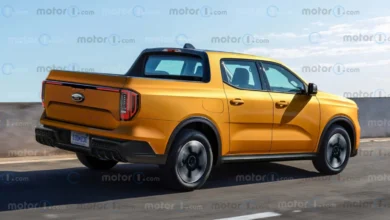
For buyers who require a small, capable, and road-legal vehicle without the legal uncertainty of a JDM import, manufacturers have begun to offer domestic alternatives. The Ford Maverick, for example, offers a modern unibody construction, full warranty coverage, and the ability to travel at highway speeds comfortably, all while maintaining a relatively small footprint compared to full-size trucks. While it lacks the "novelty" and the sub-$10,000 price tag of a vintage kei truck, it provides a functional solution for those who require a light-duty pickup for work or daily errands.
Conclusion: Weighing the Risks
For the dedicated enthusiast, a kei truck remains a rewarding, charming, and highly functional piece of automotive history. Their ability to navigate tight spaces and carry significant payloads relative to their size is unrivaled. However, the transition from a novel idea to a daily driver requires a sober assessment of one’s local laws and mechanical patience.
Before committing to a purchase, prospective owners are strongly advised to perform a thorough check of their state’s specific registration requirements. Understanding that a vehicle is "federalized" under the 25-year rule is not a guarantee of road legality. Furthermore, buyers should have a clear plan for maintenance and be prepared for the realities of operating a vehicle that was never intended for American highway speeds. For those who can navigate these hurdles, the kei truck offers a unique motoring experience, but for the average driver, the logistical and regulatory complexities suggest that more conventional, domestically supported options may ultimately provide better long-term utility.