The Slate Auto Electric Truck Debate: Can an Ultra-Affordable Back-to-Basics EV Succeed in a Market Dominated by Established Rivals?

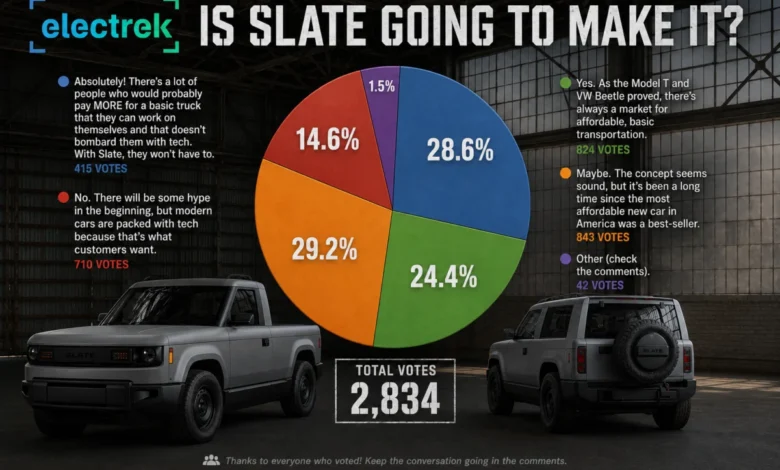
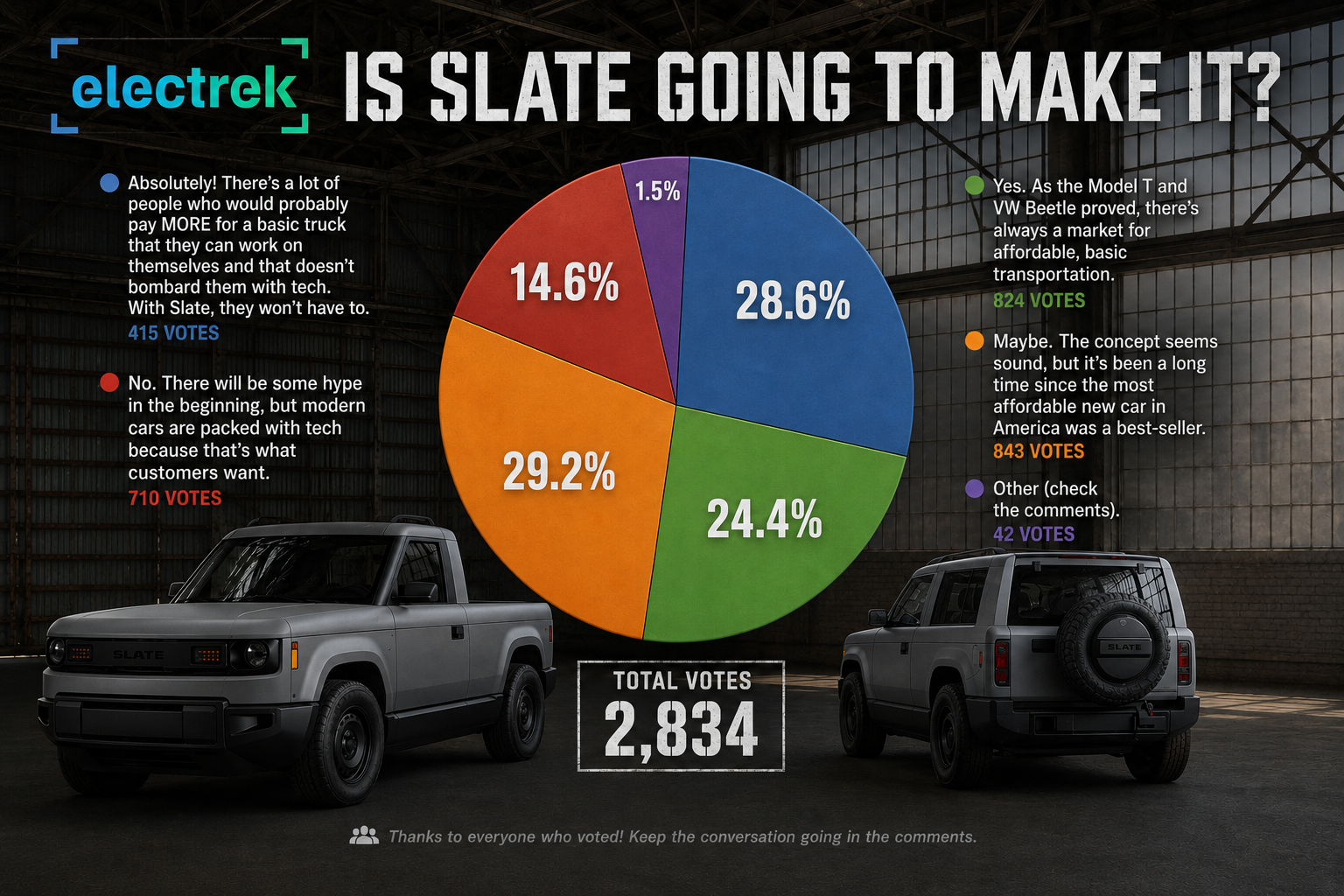
The emergence of Slate Auto, a startup electric vehicle manufacturer backed by Amazon founder Jeff Bezos, has sparked a significant debate within the automotive industry regarding the viability of low-cost, modular transportation. Following the recent reveal of Slate’s official pricing, which positions the entry-level electric pickup at a disruptive $24,950, industry analysts and consumers alike are questioning whether a "back-to-basics" approach can survive in a United States market traditionally dominated by oversized, high-tech, and high-margin vehicles. A comprehensive survey of nearly 3,000 automotive enthusiasts and potential buyers conducted by Electrek reveals a deeply divided public, with a slight majority expressing skepticism about the brand’s ability to compete against established legacy automakers, particularly Ford.
The core of the skepticism lies not in the vehicle’s electric drivetrain, but in the value proposition it offers when compared to existing internal combustion engine (ICE) and hybrid alternatives. While the Slate truck is being marketed as one of the most affordable new vehicles available in the United States, the survey results indicate that price alone may not be enough to secure market share. Of the 2,792 respondents, approximately 55.6% (1,553 votes) categorized their outlook as "maybe" or "no" regarding the truck’s success, while 44.4% (1,239 votes) remained optimistic, citing the "absolute" potential of the brand. This narrow margin highlights a critical tension in the current EV transition: the trade-off between affordability and the comprehensive ownership experience provided by legacy manufacturers.
The Evolution of Slate Auto and the Compact Truck Renaissance
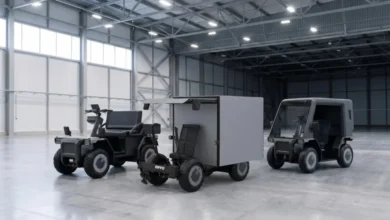
The timeline of Slate Auto’s rise reflects a broader shift in the electric vehicle sector, moving away from luxury "halo" cars toward utilitarian solutions. The brand first gained significant national attention in late 2024 following reports of substantial investment from Jeff Bezos, positioning it as a potential rival to Tesla’s long-promised but yet-to-materialize affordable compact car. By early April 2025, Slate Auto broke cover with its first production-ready prototype, emphasizing a modular design philosophy that allows owners to swap body panels and interior components.

This "blank slate" approach was designed to appeal to a younger, more urban demographic—those who historically favored vehicles like the Scion brand or the original compact trucks of the 1980s and 90s. The official pricing announcement on April 22, 2025, confirmed a base price of $24,950 plus destination charges. This price point was intentionally set to undercut the average transaction price of a new electric vehicle in the U.S., which hovered near $55,000 in early 2025. However, the announcement coincided with a period of aggressive discounting by legacy automakers, complicating Slate’s entry into the market.
Comparative Analysis: Slate Auto vs. the Ford Maverick
The primary obstacle for Slate Auto appears to be the Ford Maverick, a vehicle that has single-handedly revitalized the compact truck segment in North America. Commenters and survey participants frequently pointed to the Maverick as the benchmark for value. With Ford’s "A-Plan for Everyone" pricing and various regional incentives, a brand-new Maverick can often be purchased for approximately $25,000.
The comparison reveals several structural disadvantages for the Slate startup. While the Slate truck offers the environmental benefits of a zero-emission powertrain, the Maverick provides a more conventional ownership package. This includes a fully integrated infotainment system, standard safety features, and, perhaps most importantly, a nationwide network of thousands of Ford dealerships. For many buyers, the assurance of having a factory-trained technician within a 20-mile radius outweighs the novelty of a modular electric platform.
Furthermore, the physical dimensions and utility of the two vehicles have come under scrutiny. Critics note that the Slate truck is significantly smaller than the Maverick, potentially alienating buyers who require a "true" truck bed for work or recreation. As noted by industry observers, the Maverick launched with a $20,000 starting price in 2021, setting a high bar for what constitutes a "good deal" in the compact segment. For Slate to compete, it must prove that its modularity and electric efficiency offer more real-world value than the established utility of the Ford platform.
The Modular Philosophy: Innovation or Economic Burden?
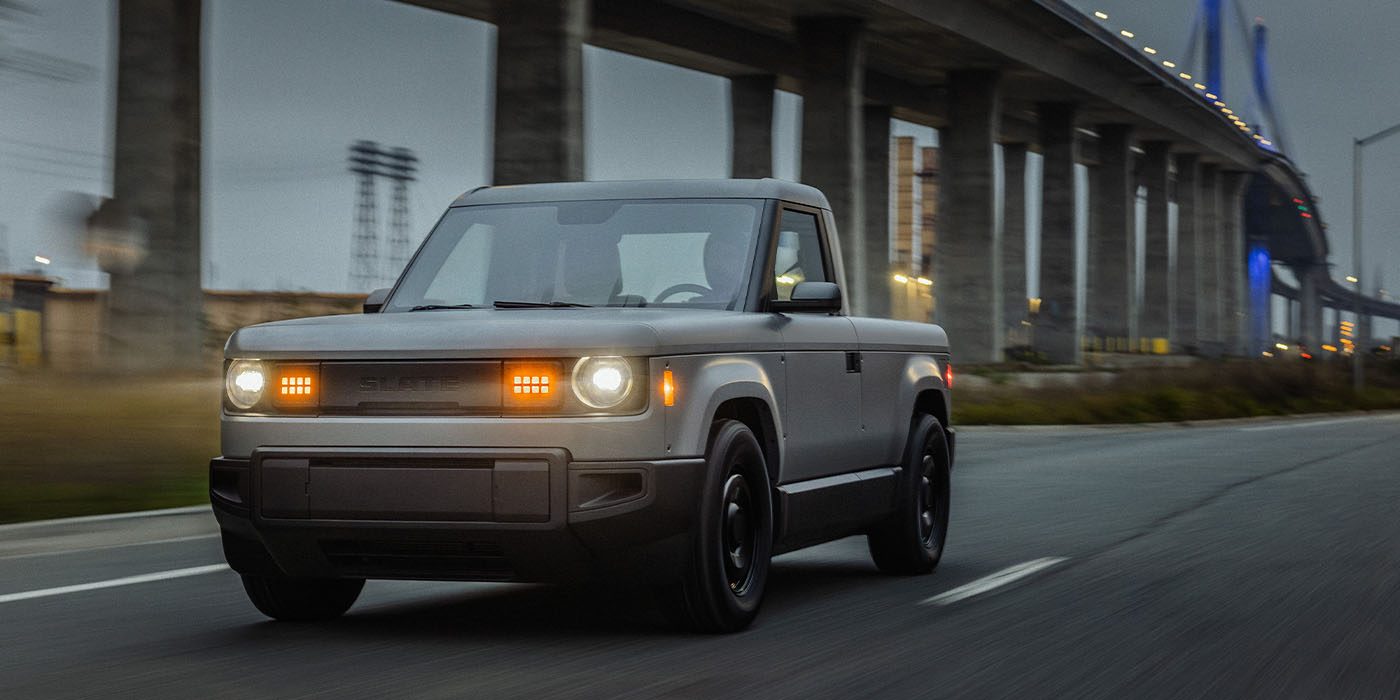
Slate Auto’s most distinctive feature is its modularity. The company offers a wide array of customization options, ranging from "blank" utility configurations for commercial fleets to specialized hatchback conversion kits for lifestyle users. However, this modularity has proven to be a double-edged sword in terms of consumer perception.
Early feedback from pre-order holders suggests that the cost of these accessories may undermine the vehicle’s low starting price. One notable case involved a potential buyer who canceled a pre-order after discovering the cost of the hatchback conversion kit. The sentiment among many skeptics is that while the "base" truck is affordable, a functional version equipped with necessary modern amenities—such as a spare tire or specialized storage—quickly approaches the price of more established, larger vehicles.
There is a growing concern that Slate may be "nickel and diming" its customers. In a market where consumers are used to bundled trim levels that include a suite of features, the "pay-for-what-you-need" model can feel like a hidden expense. Nevertheless, proponents of the brand argue that this open-source nature will foster a vibrant aftermarket community, similar to the culture surrounding the Jeep Wrangler or the Mazda Miata, where owners take pride in personalizing their vehicles over time.
Commercial Viability and the Fleet Market Strategy
Despite the mixed reactions from individual consumers, there is a strong consensus that Slate Auto could find significant success in the commercial and fleet sectors. The history of Rivian’s partnership with Amazon serves as a viable blueprint for Slate. By securing high-profile contracts with delivery services, municipal governments, or urban utility providers, Slate could establish a steady revenue stream and prove the reliability of its platform before attempting to dominate the retail market.
For a commercial buyer, the "back-to-basics" nature of the Slate truck is an advantage rather than a drawback. A low-tech vehicle has fewer components that can fail, potentially leading to lower long-term maintenance costs. In an urban environment, the smaller footprint of the Slate truck is ideal for navigating tight streets and limited parking, making it a superior choice for "last-mile" delivery services compared to full-sized electric pickups like the Ford F-150 Lightning or the Chevrolet Silverado EV.
The challenge for Slate in the fleet sector will be infrastructure. Large-scale commercial operations require robust service agreements and guaranteed uptime. If Slate cannot provide a convincing plan for nationwide service and parts distribution, commercial managers may opt to stay with legacy brands that offer established fleet management programs.
Market Implications and the Future of Affordable EVs
The success or failure of Slate Auto will likely serve as a bellwether for the future of the American EV market. For years, the trend in the automotive industry has been toward "tech for tech’s sake," with manufacturers adding increasingly complex software, massive touchscreens, and autonomous driving features that drive up the final MSRP. Slate’s attempt to strip away these layers of complexity is a direct challenge to the industry’s current trajectory.
If Slate manages to secure a foothold, it will send a clear message to Detroit and Silicon Valley: there is a substantial market for simple, affordable, and functional electric transportation. It could force other manufacturers to reconsider their pricing strategies and prioritize efficiency over luxury. Conversely, if Slate fails to gain traction, it may reinforce the belief that American buyers are unwilling to compromise on size and high-end features, regardless of the price.

The survey of 3,000 Electrek readers suggests that the "eyes of the world" are on Slate Auto. The high level of engagement—unusual for a startup survey—indicates that there is a deep-seated desire for an affordable EV, even if there are doubts about Slate’s specific execution. As the company moves toward full-scale production in 2026, the focus will shift from pricing and prototypes to real-world performance and reliability.
Conclusion: A High-Stakes Gamble on Simplicity
Slate Auto stands at a crossroads. Backed by the immense resources of Jeff Bezos and a clear vision for modular transportation, the company has successfully captured the public’s imagination. However, the reality of the US automotive market is unforgiving. Competing against a titan like Ford requires more than just a low price; it requires a comprehensive ecosystem of service, utility, and brand trust.
The mixed results of the recent consumer survey reflect a pragmatic American public. While there is a clear appetite for a $25,000 electric truck, that appetite is tempered by the need for a vehicle that can perform as a daily driver without the "startup tax" of limited service and expensive accessories. Whether Slate becomes the "Scion of EVs" or follows the path of other failed automotive startups will depend on its ability to turn its "blank slate" into a finished product that offers undeniable value in the face of stiff competition. For now, the industry remains in a state of cautious observation, waiting to see if a billionaire’s backing can truly change the way America drives.