Understanding the Cosmic Balance: The Science, History, and Global Significance of Earth’s Equinoxes

Twice a year, the planet Earth reaches a precise geometric milestone in its endless orbit around the Sun, an astronomical event known as the equinox. Occurring annually in March and September, this celestial transition marks the exact moment when the center of the solar disc crosses the plane of Earth’s equator. For civilizations past and present, the equinox has served as a fundamental marker of time, seasonal change, and Earth’s dynamic relationship with the solar system. While modern society relies on digital calendars to track these occurrences, ancient peoples built elaborate stone observatories to chart the phenomenon, underscoring its deep historical and cultural importance to humanity.
Main Facts and Mechanics of the Equinox
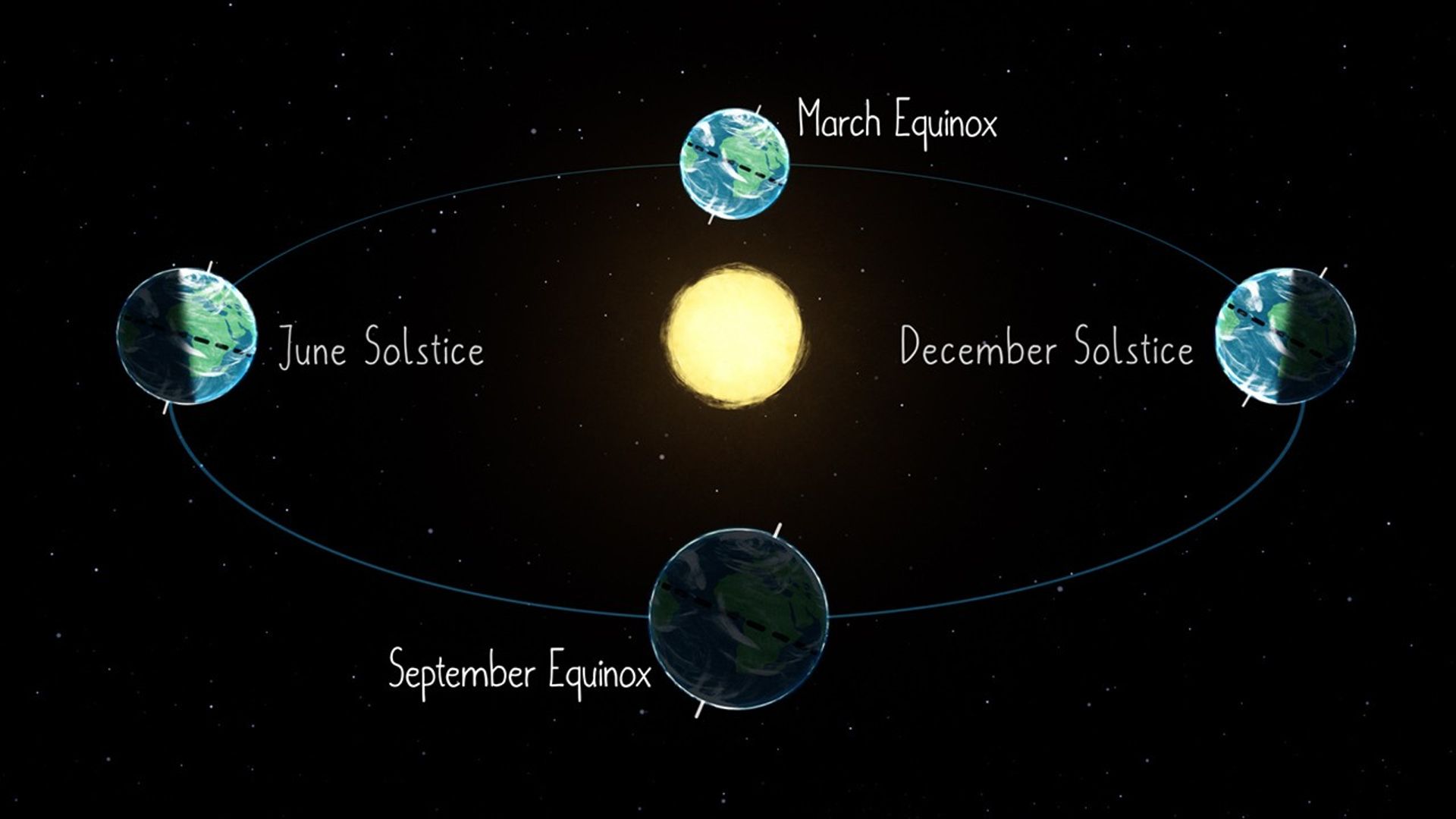
The mechanics of an equinox are rooted in Earth’s axial tilt. Our planet rotates on an axis that is tilted at approximately 23.4 degrees relative to its orbital plane around the Sun. As Earth journeys through space, this tilt remains fixed in orientation relative to the stars, causing different hemispheres to receive varying intensities of sunlight throughout the year.
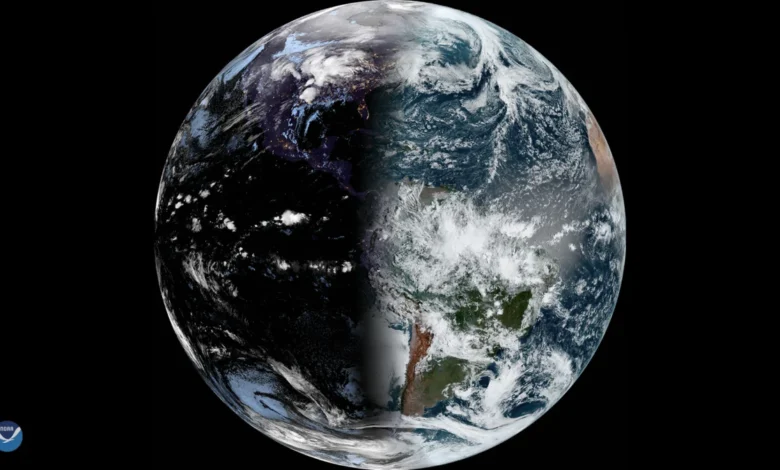
However, during the equinoxes—which fall on March 20 and September 23 in the year 2026—neither the Northern nor the Southern Hemisphere is tilted toward or away from the Sun. Instead, the tilt is perpendicular to the incoming solar rays. At this exact juncture, the Sun is positioned directly above the Earth’s equator at noon.
This alignment results in both the North and South Poles being simultaneously touched by the edge of sunlight, a rare occurrence unique to these two periods. Furthermore, the Sun shines equally on both the Northern and Southern Hemispheres. Following the March equinox, the apparent path of the Sun in the sky shifts progressively northward each day until the June solstice, after which it reverses course. The reverse happens in September, when the Sun crosses the equatorial plane southward, continuing its journey until the December solstice before heading north once again. Because of this directional shift, astronomers frequently refer to the March equinox as the northward equinox and the September equinox as the southward equinox.
Chronology and Precise Timings for 2026
Tracking celestial mechanics requires pinpoint precision. For the year 2026, astronomical data provided by institutions such as NASA and the Jet Propulsion Laboratory outline exact schedules for these transit events.
The northward (March) equinox is slated to occur on March 20, 2026, at precisely 14:46 Coordinated Universal Time (UTC), which translates to 7:46 AM Eastern Daylight Time (EDT). This moment signals the astronomical beginning of spring in the Northern Hemisphere and autumn in the Southern Hemisphere.
Months later, the southward (September) equinox will take place on September 23, 2026, at 00:05 UTC. For observers in North America, this corresponds to the evening of September 22, 2026, at 5:05 PM Pacific Daylight Time (PDT). This event triggers the onset of autumn in the Northern Hemisphere and the arrival of spring in the Southern Hemisphere.

These dates are not static; due to the leap-year cycle and the slight discrepancy between our calendar year (365 days) and the tropical year (approximately 365.2422 days), the exact hour and date of the equinox shift slightly each year.
The Myth of Equal Day and Night
The term “equinox” derives from the Latin words aequus (equal) and nox (night), perpetuating the long-held belief that day and night are of precisely equal length on this day. While this concept is intuitively appealing and nearly accurate, it is technically a misconception.
In reality, the length of day and night on the equinox is not a perfect 12-hour split, and the actual date when day and night are closest to equal depends entirely on an observer’s latitude. Two primary physical factors complicate this celestial arithmetic: the nature of the Sun as an extended light source rather than a single point, and the optical properties of Earth’s atmosphere.
First, sunrise and sunset are defined by the appearance and disappearance of the Sun’s upper limb, or edge, rather than its exact geometric center. Second, Earth’s atmosphere acts as a lens, refracting sunlight. As the Sun sits near the horizon, atmospheric refraction bends its light upward, allowing observers to see the solar disc several minutes before it has geometrically crossed the horizon, and similarly delaying its disappearance at sunset. This atmospheric lensing effect adds several minutes of daylight to every single day on Earth, preventing a literal, split-second equality of day and night during the equinox. Nevertheless, the duration comes remarkably close, varying by only a matter of minutes depending on geographic location.
Historical Context and Ancient Astronomical Tracking
Long before the advent of modern astronomy, early human societies mastered the art of tracking equinoxes. Anthropological and archaeological findings reveal that observing the equinox was one of the earliest complex skills in humanity’s scientific toolkit.
Ancient peoples constructed sophisticated monuments—such as the pyramid of El Castillo at Chichén Itzá in Mexico, alignment stones at Stonehenge in the United Kingdom, and the temples of Angkor Wat in Cambodia—specifically to interact with the light of the equinox. At Chichén Itzá, the positioning of the sun during the spring and autumn equinoxes casts a shadow that serpentines down the pyramid’s staircase, symbolizing the return of the feathered serpent god.
These ancient structures served practical purposes beyond ritual and religion. By charting the equinoxes and solstices, agrarian societies could accurately predict seasonal changes, determine optimal planting and harvesting schedules, and manage food stores effectively. While solstices marked the absolute extremes of the solar year—the longest and shortest days—the equinoxes provided essential benchmarks of balance and transitional equilibrium.
Supporting Data and Hemispheric Impacts
The societal and environmental impacts of the equinox are deeply tied to the hemisphere in which one resides. The word itself carries entirely different seasonal connotations depending on latitude and geography.
For populations in the Northern Hemisphere, the March equinox represents a hopeful transition. It signals longer daylight hours, moderating temperatures, and the biological awakening of spring. Conversely, for those in the Southern Hemisphere, the exact same moment heralds the arrival of the autumnal equinox—bringing shorter days, dropping temperatures, and preparations for the cooler, darker months of the year.
By September, these roles flip entirely. The Southern Hemisphere welcomes its vernal equinox and the promise of summer, while the Northern Hemisphere confronts the onset of fall, characterized by brisk winds, falling leaves, and a steady contraction of daylight hours.
Beyond biology and meteorology, these shifts impact global energy consumption, agriculture, transportation logistics, and even satellite operations. High-altitude satellites, for instance, must navigate solar eclipse seasons during equinox periods when Earth passes directly between the spacecraft and the Sun, temporarily disrupting solar power generation and thermal balances.
Official Insights and Scientific Perspectives
Astronomers and science educators emphasize that studying events like the equinox remains vital for fostering public engagement with space science. Experts from organizations like NASA note that public curiosity peaks during equinoxes and solstices, offering prime educational opportunities to explain orbital mechanics, axial tilt, and climate science.
Furthermore, climatologists point out that while the equinox marks the astronomical transition of seasons, local weather patterns often lag behind the solar calendar. This meteorological lag occurs because oceans and landmasses absorb and retain solar heat, meaning the hottest and coldest days of the year typically occur weeks or months after the corresponding solstices and equinoxes.
Broader Implications and Modern Relevance
In contemporary times, the equinox retains cultural resonance while serving as a reminder of humanity’s place within a vast, predictable solar system. Modern satellite networks continuously monitor Earth’s radiation budget, tracking how solar energy distribution shifts across the globe during these critical orbital phases.
As climate patterns shift and humanity looks deeper into space for long-term exploration, understanding Earth’s baseline orbital dynamics—anchored by milestones like the equinox—provides critical context for modeling planetary atmospheres, both on our home world and across distant exoplanets. The equinox endures not only as a calendar event or a cultural marker, but as a foundational heartbeat of Earth’s clockwork journey through space.