
White House Aide Calls Los Angeles Anti Ice Protests An Insurrection
White House Aide Labels Los Angeles Anti-ICE Protests an Insurrection: A Deep Dive into the Rhetoric and Reality
A recent, strongly worded statement from a White House aide, labeling protests against U.S. Immigration and Customs Enforcement (ICE) in Los Angeles as an "insurrection," has ignited a firestorm of debate, drawing sharp distinctions between legitimate dissent and what the administration perceives as a dangerous challenge to state authority. This assertion, particularly given the context of a city that has historically been a hub for immigrant rights activism, necessitates a thorough examination of the events, the language used, and the broader implications for political discourse surrounding immigration enforcement and civil liberties in the United States. The aide’s pronouncements are not isolated incidents but rather reflect a consistent rhetorical strategy employed by certain factions of the government to delegitimize and criminalize protest movements, particularly those advocating for the rights of marginalized communities.
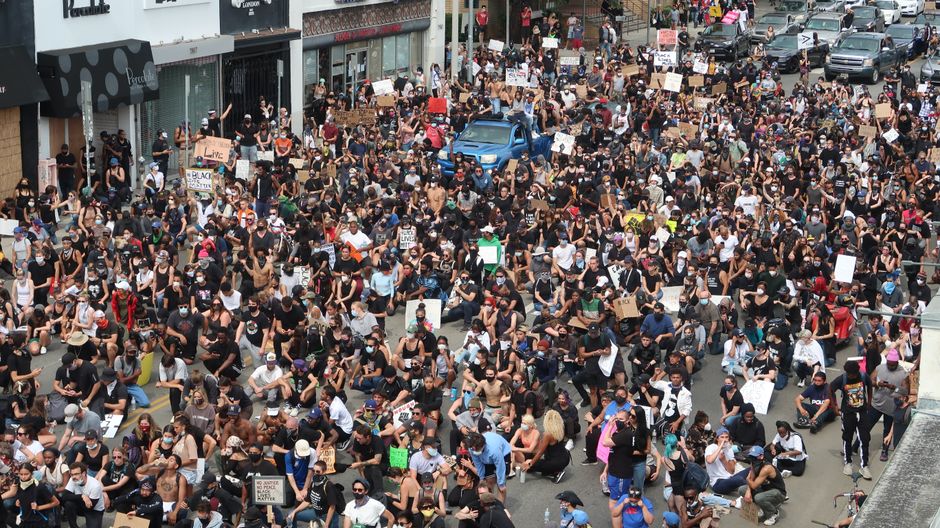
The protests in question, while met with such a severe descriptor from the White House, were characterized by participants and observers on the ground as primarily non-violent demonstrations. These events typically involved rallying outside ICE facilities, holding signs, chanting slogans, and engaging in organized marches. The core demands of these protesters generally center on the abolition or significant reform of ICE, critiques of immigration detention policies, and opposition to deportations. While the specific actions and the intensity of the demonstrations can vary, labeling them as "insurrection" fundamentally alters the public perception of these gatherings, aligning them with acts of violent rebellion against governmental structures. This escalation of language carries significant weight, implying a threat to national security and justifying a more robust, potentially forceful, response from law enforcement and federal agencies.
The term "insurrection" itself is loaded with historical and political connotations. It typically refers to a violent uprising or revolt against an established government or authority. Applying this label to largely peaceful protests, even those that may involve civil disobedience or minor property damage (which, it is important to note, are not consistently or widely reported as the defining characteristics of these specific Los Angeles demonstrations), suggests a deliberate attempt to frame the movement as a direct threat to the very fabric of American democracy. This is a potent rhetorical tool, designed to evoke fear and galvanize opposition to the protesters’ cause by associating them with extremism. The objective is often to shift the narrative away from the substance of their grievances – the human rights concerns, the critiques of immigration policy, the family separations – and towards a portrayal of them as enemies of the state.
The choice of Los Angeles as the backdrop for such a strong denouncement is also noteworthy. Los Angeles County is home to a vast and diverse immigrant population, and it has long been a center of advocacy for immigrant rights. The city has also, at various times, sought to position itself as a sanctuary city, creating a complex and often tense relationship between local governance and federal immigration enforcement. The White House aide’s statement, therefore, can be interpreted as an attempt to exert federal pressure on a locality perceived as being out of step with the administration’s immigration enforcement priorities. It signals a willingness to confront local jurisdictions that have adopted policies aimed at shielding undocumented immigrants from federal scrutiny.
Understanding the context of these protests requires acknowledging the long-standing criticisms leveled against ICE. Since its inception in 2003, ICE has been a frequent target of human rights organizations, legal scholars, and community advocates. Concerns have been raised about the conditions in detention centers, the fairness of deportation proceedings, the impact of enforcement tactics on families and communities, and the broader humanitarian consequences of current immigration policies. Protests against ICE are, therefore, not spontaneous outbursts but rather the culmination of years of activism, research, and advocacy aimed at highlighting perceived injustices within the immigration system.
The use of the term "insurrection" by a White House aide also raises critical questions about freedom of speech and the right to protest in the United States. The First Amendment to the Constitution protects the right of the people peaceably to assemble, and to petition the Government for a redress of grievances. While this right is not absolute and can be subject to certain limitations, particularly when it involves violence or incitement, the application of the term "insurrection" to what are generally understood as non-violent protests risks chilling legitimate forms of dissent. It creates a climate where individuals might self-censor for fear of being labeled as insurrectionists, thereby undermining democratic discourse and the ability of citizens to hold their government accountable.
Furthermore, the rhetoric employed by the White House aide can have tangible consequences. It can influence public opinion, making it more difficult for immigration reform advocates to gain traction. It can also embolden law enforcement agencies to adopt more aggressive tactics in dealing with protesters, potentially leading to increased confrontations and a higher risk of violence. The classification of a protest as an "insurrection" can also be used to justify increased surveillance, arrests, and even prosecution of participants, casting a shadow over their future opportunities and reputations.
The broader implications of this kind of rhetoric extend to the national conversation surrounding immigration. By framing those who oppose current immigration policies as insurrectionists, the administration attempts to paint a picture of a united populace that supports stringent enforcement and to portray any opposition as radical or un-American. This binary approach simplifies complex issues and discourages nuanced discussions about the root causes of migration, the economic and social contributions of immigrants, and the ethical considerations of immigration enforcement. It is a tactic that seeks to polarize the debate further, making common ground and compromise increasingly elusive.
The effectiveness of such rhetoric in swaying public opinion is a subject of ongoing analysis. While it may resonate with a segment of the population already predisposed to a harsher immigration stance, it can also alienate others who value civil liberties and are concerned about human rights. The sustained effort to label protests as insurrectionary may, over time, lead to a normalization of this extreme language, further degrading the quality of political discourse and making it more difficult to engage in constructive dialogue about pressing societal issues.
To counter this narrative, it is crucial to provide accurate and nuanced reporting on the nature of these protests, emphasizing the grievances of the participants and the broader context of immigration policy. Understanding that protests are a fundamental mechanism of democratic societies for expressing dissent and advocating for change is essential. Differentiating between peaceful assembly and acts of violence or sedition is paramount. The distinction is not merely semantic; it has profound implications for how movements are perceived, how they are treated by authorities, and ultimately, how societal issues are addressed.
In conclusion, the White House aide’s declaration of the Los Angeles anti-ICE protests as an "insurrection" is a significant rhetorical move with far-reaching consequences. It represents an attempt to delegitimize a movement by employing charged language that implies a violent threat to governmental authority. This framing, particularly in a city with a strong history of immigrant advocacy, highlights ongoing tensions between federal enforcement priorities and local approaches to immigration. The pervasive use of such escalating rhetoric risks chilling legitimate dissent, polarizing public opinion, and hindering constructive dialogue on critical immigration issues. A thorough understanding of the protests, the historical context of ICE criticism, and the constitutional rights of citizens to assemble and express their grievances is vital to deconstructing this charged political narrative and fostering a more informed and equitable debate. The ongoing discourse surrounding these events underscores the critical need for precision in language when discussing political activism and the enduring importance of safeguarding the right to peaceful protest as a cornerstone of democratic society.
