Dead Kennedys Guitarist East Bay Ray Diagnosed with Parkinson’s Disease as Band Prepares for West Coast Tour

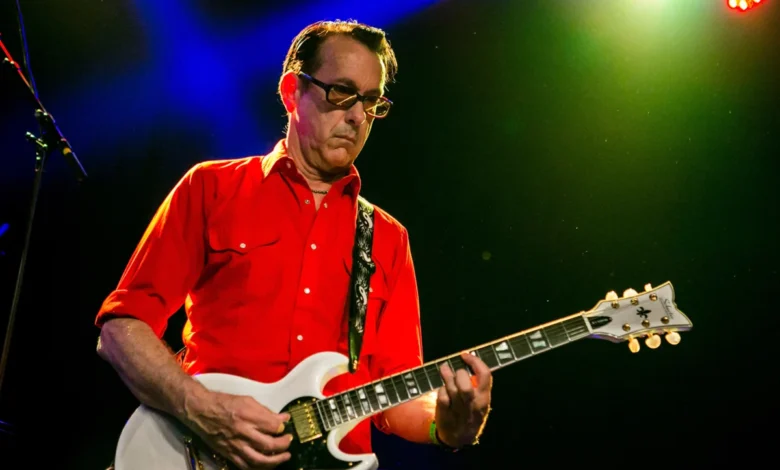
The punk rock community has been met with sobering news regarding one of its most enduring architects. East Bay Ray, the pioneering lead guitarist and co-founder of the legendary San Francisco punk band Dead Kennedys, has been diagnosed with Parkinson’s disease. The announcement was made public by the band’s management team through an official statement distributed across their social media platforms, capturing the attention of fans and music historians alike who have followed the guitarist’s decades-long career.
Despite the progressive neurological diagnosis, the band’s management relayed a message of resilience directly from the musician. According to the announcement, Ray intends to continue performing and touring alongside the Dead Kennedys for as long as his physical health and capabilities allow. Furthermore, the guitarist expressed his profound appreciation to the global fan base for their unwavering support throughout his career and into this new, challenging chapter of his life.
The disclosure arrives at a critical juncture for the band, which currently has a series of West Coast tour dates lined up. The itinerary is slated to kick off on October 6 at the Showbox at the Market in Seattle, Washington, before winding down on October 11 at the Riverside Municipal Auditorium in Riverside, California. While the band has confirmed that Ray’s participation in these upcoming live performances remains contingent upon his day-to-day health, the mere possibility of his presence on stage underscores his enduring dedication to the craft and the legacy he helped forge more than four decades ago.
A Historical Overview of the Dead Kennedys and East Bay Ray’s Legacy
To understand the cultural weight of this announcement, one must examine the foundational history of the Dead Kennedys. Formed in San Francisco in 1978, the band quickly established themselves as a formidable force in the burgeoning American hardcore punk movement. Characterized by a potent blend of surf rock guitar riffs, jazz-inflected rhythms, and fiercely satirical, politically charged lyricism, the group stood apart from their contemporaries on both sides of the Atlantic.
East Bay Ray—born Raymond John Pepperell—played an instrumental role in shaping this signature sound. His guitar work was defined by jagged, atmospheric textures, heavy use of vibrato, and a distinct melodic sensibility that cut through the raw aggression typical of late-1970s punk. Songs like "Holiday in Cambodia," "California Über Alles," and "Nazi Punks Fuck Off" relied heavily on Ray’s intricate yet aggressive fretwork, cementing his status as one of the most innovative guitarists of the punk era.
The band originally dissolved in 1986 following internal artistic disagreements and legal battles over songwriting royalties and the use of the band’s name. However, the legacy of the Dead Kennedys continued to loom large, heavily influencing subsequent generations of punk, alternative, and grunge musicians, including bands like Green Day, Nirvana, and the Offspring.
In 2001, East Bay Ray, alongside original bassist Klaus Flouride and former drummer D.H. Peligro, resurrected the Dead Kennedys, enlisting a succession of vocalists to fill the void left by original frontman Jello Biafra, who declined to participate in the reunion and maintained a contentious legal and personal relationship with his former bandmates. Ron "Skip" Greer has occupied the role of lead vocalist since 2008, maintaining the band’s active status on the live circuit. Over the years, the lineup has experienced inevitable shifts, notably with the passing of longtime drummer D.H. Peligro in October 2022, after which Steve Wilson assumed percussion duties.
Understanding Parkinson’s Disease and Its Implications for Musicianship
Parkinson’s disease is a progressive, neurodegenerative disorder that primarily affects the motor system. It occurs when dopamine-producing neurons in a specific area of the brain—known as the substantia nigra—begin to die or become impaired. Dopamine is a chemical messenger responsible for sending signals that plan and coordinate smooth, controlled muscle movement.
As dopamine levels drop, individuals typically experience cardinal motor symptoms, including tremors at rest, muscle rigidity or stiffness, bradykinesia (slowness of movement), and postural instability. While the severity and progression of Parkinson’s vary significantly from person to person, the physical manifestations present profound challenges for anyone, let alone a professional instrumentalist whose livelihood depends on fine motor skills, hand-eye coordination, and physical stamina.
For a lead guitarist, the symptoms associated with Parkinson’s—such as finger dexterity loss, muscle stiffness in the hands and arms, and fatigue—can severely impact technical execution. Despite these formidable clinical realities, medical advancements, physical therapy, and pharmacological management have increasingly allowed individuals with Parkinson’s to maintain a high quality of life and continue pursuing meaningful professional and personal endeavors for years following a diagnosis.
Ray’s explicit desire to continue performing speaks to the therapeutic and psychological value of music for artists dealing with neurodegenerative conditions. Numerous studies in neurological rehabilitation have demonstrated that rhythmic auditory stimulation and musical performance can help engage alternative neural pathways, sometimes temporarily bypassing motor deficits associated with Parkinson’s.
A Troubling Year for the Extended Dead Kennedys Family
The news of East Bay Ray’s diagnosis compounds a remarkably difficult year for the broader historical ecosystem of the Dead Kennedys. Earlier this year, founding and former lead singer Jello Biafra suffered a stroke, adding another wave of concern for fans of the band’s classic era.
Biafra’s medical event was publicly detailed on his official Facebook page in May, offering fans a transparent update on his recovery trajectory. According to those statements, Biafra made encouraging progress in the wake of the stroke. Updates noted that his speech had largely returned to full capacity and that his cognitive faculties remained entirely intact, with representatives remarking that cognitively, "it’s like the stroke never happened."
While Biafra’s cognitive recovery has been robust, the physical impacts of the stroke were more stubborn, particularly regarding the left side of his body, which remained weak. Nonetheless, reports indicated that ongoing rehabilitation was yielding positive results, bringing a measure of relief to the punk community that watched two of its most iconic figures face major health battles within the span of a single year.
Industry Reactions and Broader Cultural Impact
News of East Bay Ray’s diagnosis reverberated immediately across independent music circles, drawing expressions of solidarity from fans, peer musicians, and industry commentators. Throughout the punk rock underground, Ray has long been regarded as an unsung hero of guitar composition, possessing an instantly recognizable tone that helped define the aesthetic framework of West Coast hardcore.
Cultural analysts point out that the aging demographic of first-wave punk icons brings with it inevitable health challenges, forcing a reflective moment within a genre historically obsessed with youth, rebellion, and mortality. When musicians who emerged in the crucible of the late 1970s face chronic illness, it serves as a stark reminder of the passage of time, yet artists like Ray—by choosing transparency and continued engagement—reframe the narrative around aging in rock and roll.
Looking Ahead: The West Coast Tour and Beyond
As the Dead Kennedys prepare to take the stage for their upcoming West Coast dates, all eyes will be on the band’s performances in Seattle, Portland, California, and surrounding markets. Ticket holders and promoters are approaching the shows with a mixture of excitement and cautious understanding regarding the physical realities of the tour.
Management has emphasized that communication regarding Ray’s participation will remain transparent as the tour dates approach and health assessments are made. Whether or not Ray is able to complete every date on the scheduled run, his legacy as a defining architect of punk guitar is already firmly secured in the annals of music history.
For now, the punk icon’s resolute stance—prioritizing performance, connection with his audience, and creative expression in the face of a progressive illness—cements his reputation not only as a trailblazing musician, but as a resilient figure determined to play out his chapters on his own terms.