NASA Convene Expert Working Group to Address Decompression Sickness, Venous Thromboembolism, and PFO Risks for Artemis Lunar Missions

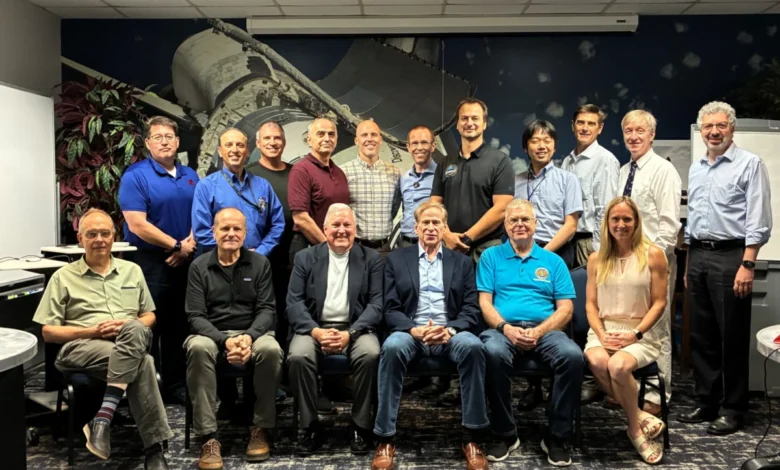
As NASA prepares to return humans to the lunar surface through the ambitious Artemis program, the agency is facing complex physiological challenges unique to deep-space exploration. Among the most critical concerns are the health risks associated with extravehicular activity (EVA), commonly known as spacewalks. To address these physiological hurdles, a specialized working group was convened to evaluate the latest data concerning decompression sickness, in-flight venous thromboembolism, and the physiological implications of a patent foramen ovale. Led by human systems standards integrator Kim Lowe, the panel released a comprehensive framework aimed at updating safety protocols, refining prebreathe testing procedures, and evaluating potential risk mitigation interventions such as patent foramen ovale closure for astronauts slated for lunar and deep-space missions.
The formation of this expert panel marks a pivotal step in NASA’s ongoing efforts to safeguard astronaut health as mission durations extend beyond low-Earth orbit. While decades of operational experience aboard the International Space Station have provided extensive data on human adaptation to microgravity, the Artemis program introduces distinct operational variables. These include frequent, high-pressure spacewalks on the lunar surface, exposure to unmitigated galactic cosmic radiation, and the logistical constraints of emergency medical evacuation from the Moon. Consequently, NASA has prioritized a rigorous, data-driven reassessment of decompression sickness and related cardiovascular risks to establish robust human-rating standards for future flight crews.
Background Context and Physiological Challenges
Decompression sickness, historically known as "the bends," occurs when dissolved gases—primarily nitrogen—come out of solution and form bubbles in body tissues and bloodstream as ambient pressure decreases. This phenomenon is a primary hazard during spacewalks, where astronauts transition from the higher-pressure environment of a spacecraft habitat to the significantly lower operating pressure of an extravehicular mobility unit or spacesuit. To mitigate this risk, astronauts undergo prebreathe protocols, breathing pure oxygen for a specified duration prior to a spacewalk to purge nitrogen from their bodies. However, as Artemis mission profiles demand longer and more frequent surface excursions, optimizing these prebreathe procedures without compromising mission efficiency has become a critical engineering and medical priority.
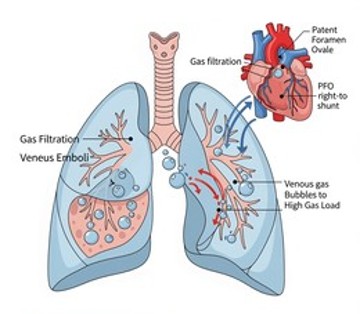
Compounding the DCS risk are specific cardiovascular anatomical variations, most notably the patent foramen ovale. A patent foramen ovale is a common congenital heart defect where the flap between the right and left atria fails to close completely after birth. While generally benign in terrestrial environments, a patent foramen ovale can allow microbubbles—which might otherwise be filtered out by the pulmonary circulation—to bypass the lungs and enter the arterial system. In the context of aerospace medicine, this creates a potential pathway for paradoxical arterial gas embolisms, significantly elevating the risk of severe decompression sickness or neurological complications during or after high-altitude and spaceflight operations.
Furthermore, the working group examined the incidence and risk factors associated with venous thromboembolism during spaceflight. Venous thromboembolism, encompassing deep vein thrombosis and pulmonary embolism, represents a severe medical emergency. The microgravity environment induces significant fluid shifts toward the upper body, alters vascular hemodynamics, and can trigger hypercoagulable states in susceptible individuals. When combined with the physiological stress of lunar gravity transitions and potential dehydration during grueling spacewalks, the risk profile for venous thromboembolism demands proactive clinical surveillance and stringent operational safeguards.
Chronology of Assessments and Safety Standards
The recent findings and recommendations issued under the direction of Kim Lowe do not exist in a vacuum; rather, they represent the culmination of a multi-year, systematic review of aerospace medicine literature and operational data. The evolutionary timeline of these safety protocols highlights NASA’s iterative approach to mitigating physiological risks:
In September 2024, NASA published a foundational document titled Assessment of Patent Foramen Pvale (PFO) as Related to Decompression Sickness (DCS) in the Spaceflight Environment and During Ground Testing, designated as NASA/SP-20240010473. This report synthesized existing clinical data, altitude chamber testing results, and historical flight data to quantify the specific threat posed by patent foramen ovale during extravehicular activities.
Building upon this baseline, the agency convened the NASA Risk of Venous Thromboembolism in Spaceflight Working Group, which culminated in the release of an updated assessment report, NASA/SP-20260005258/REV1, in April 2026. This panel focused heavily on the hematological and vascular changes experienced by crew members during long-duration missions, establishing new diagnostic criteria and monitoring protocols to detect early signs of clotting disorders before they manifest as acute clinical events.
Concurrently, NASA’s aeronautics and human research panels reviewed and updated the official DCS prevention standards integrated into NASA-STD-3001 Volume 2, Human Factors, Habitability, and Environmental Health, specifically under Revision F (NASA-STD-3001 Vol 2 Rev F). This standard serves as the mandatory technical baseline for all human spaceflight hardware, mission operations, and medical protocols. The recent expert working group synthesized the outcomes of the 2024 PFO assessment, the April 2026 VTE risk report, and the revised DCS standards, creating a cohesive, unified framework with a specialized focus on proactive clinical interventions, including the potential requirement or recommendation for patent foramen ovale screening and prophylactic closure for select crew members.
Supporting Data and Medical Evaluations
The integration of these diverse medical disciplines is supported by extensive empirical data gathered from decades of human spaceflight and specialized ground-based analog studies. Altitude chamber tests conducted at the Johnson Space Center and other specialized laboratories have modeled the exact pressure differentials astronauts will experience when exiting lunar landers. These simulations provide critical biometric data on venous gas emboli formation, heart rate variability, and cerebral perfusion pressures under varying prebreathe regimens.
Medical data reviewed by the expert panel indicate that while routine prebreathe protocols successfully reduce the overall incidence of decompression sickness, individual physiological variability remains a significant confounding factor. Factors such as baseline hydration levels, body fat percentage, physical exertion rates during spacewalks, and undetected patent foramen ovale status can dramatically alter an astronaut’s susceptibility to DCS symptoms. By incorporating advanced cardiac imaging techniques—including specialized transesophageal and transthoracic echocardiography—into pre-flight astronaut physical evaluations, flight surgeons can now identify structural anomalies with unprecedented precision.
Official Responses and Working Group Scope
While specific operational mandates resulting from the working group are strictly governed by NASA’s internal flight readiness review boards, aerospace medicine specialists and human systems integrators have emphasized the necessity of these proactive measures. The primary objective of assembling this multi-disciplinary panel was to bridge the gap between theoretical medical research and operational mission execution.
Representatives from the NASA Human Research Program and the Flight Medicine Clinic have consistently maintained that crew safety must scale proportionally with the complexity and distance of exploration missions. Unlike missions to the International Space Station, where emergency medical evacuation to terrestrial hospitals can be executed within hours, Artemis crews operating in lunar orbit or on the lunar surface will face communication delays and multi-day return windows. Consequently, preventative medicine and onboard risk mitigation take on paramount importance. The working group’s recommendations provide flight surgeons with definitive clinical guidelines to determine astronaut flight readiness, manage waiver processes for individuals with minor anatomical variants, and tailor prebreathe timelines to individual physiological profiles.
Broader Impact and Implications for Commercial Spaceflight
The implications of NASA’s rigorous updated standards extend far beyond government-sponsored lunar missions, influencing the broader commercial spaceflight industry as well. As private aerospace companies accelerate their own orbital, lunar, and suborbital tourism programs, establishing standardized medical baselines for decompression sickness prevention and cardiovascular screening becomes essential for the entire sector.
By openly publishing technical standards such as NASA-STD-3001 and releasing comprehensive special publication reports on venous thromboembolism and patent foramen ovale risks, NASA provides a vital public safety blueprint for commercial providers. Private operators navigating the complexities of human physiology in high-altitude environments can leverage these validated findings to protect commercial astronauts and spaceflight participants.
As the Artemis program progresses toward crewed lunar surface landings, the implementation of these enhanced medical standards will play a decisive role in mission success. By systematically addressing the physiological vulnerabilities associated with decompression sickness, venous thromboembolism, and cardiac anomalies, NASA is establishing a new benchmark for occupational health in extreme environments, ensuring that the explorers of tomorrow are equipped with the highest level of medical protection as humanity extends its footprint into deep space.