The James Webb Space Telescope has uncovered mysterious Little Red Dots that may be the smoking gun for primordial black holes from the dawn of time

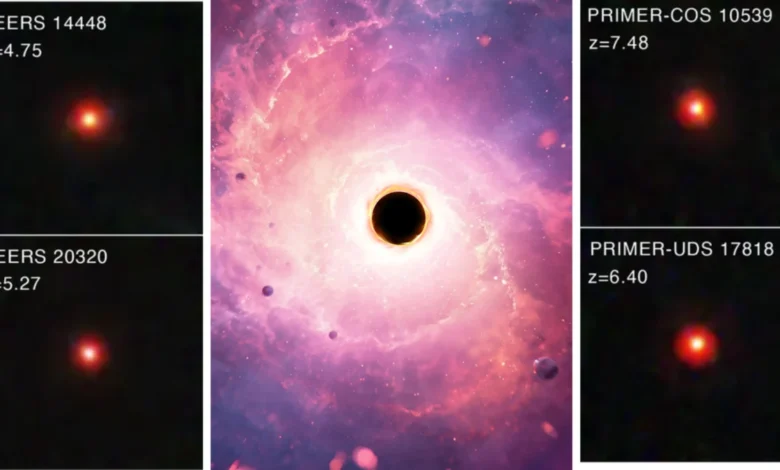
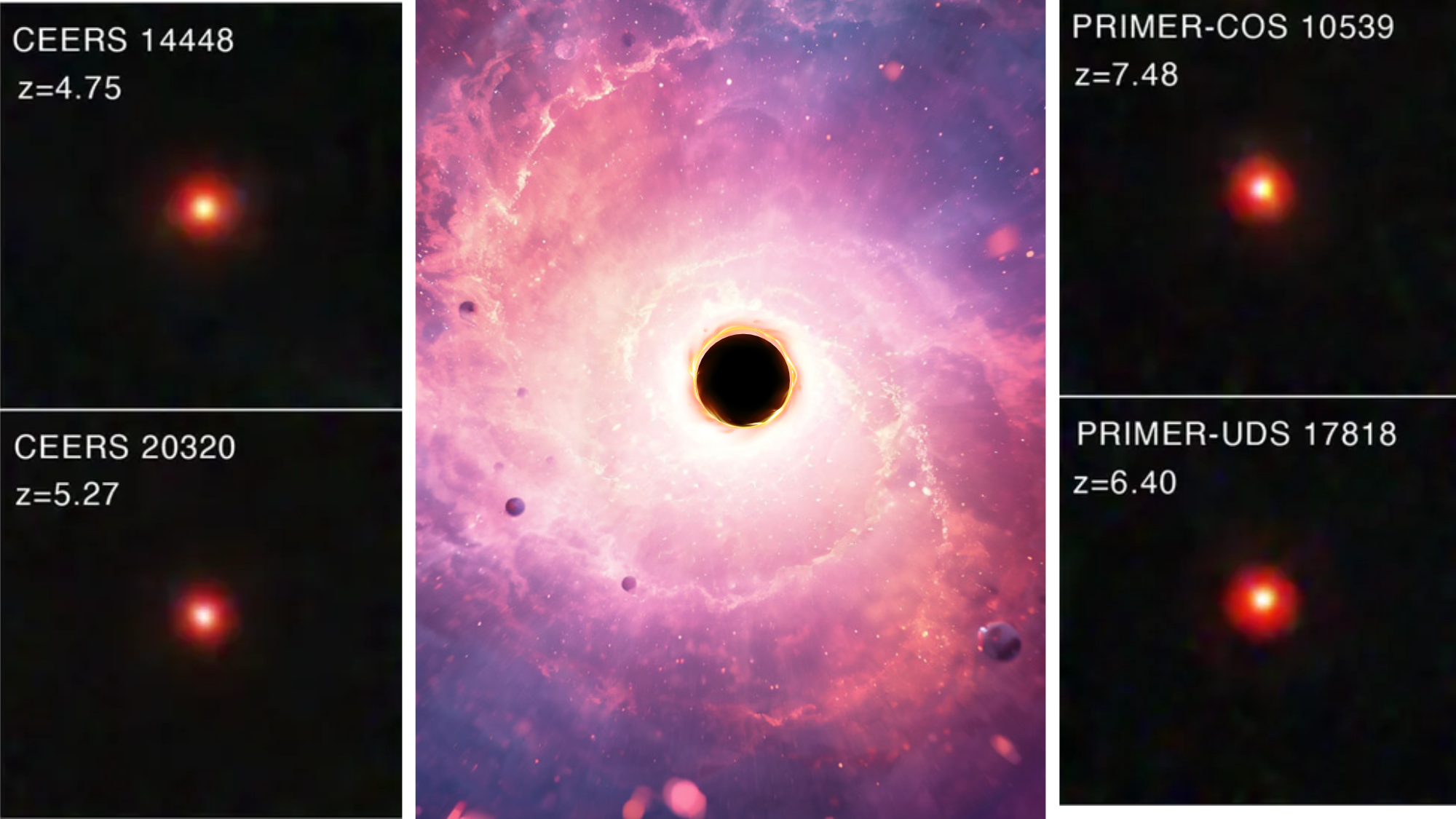
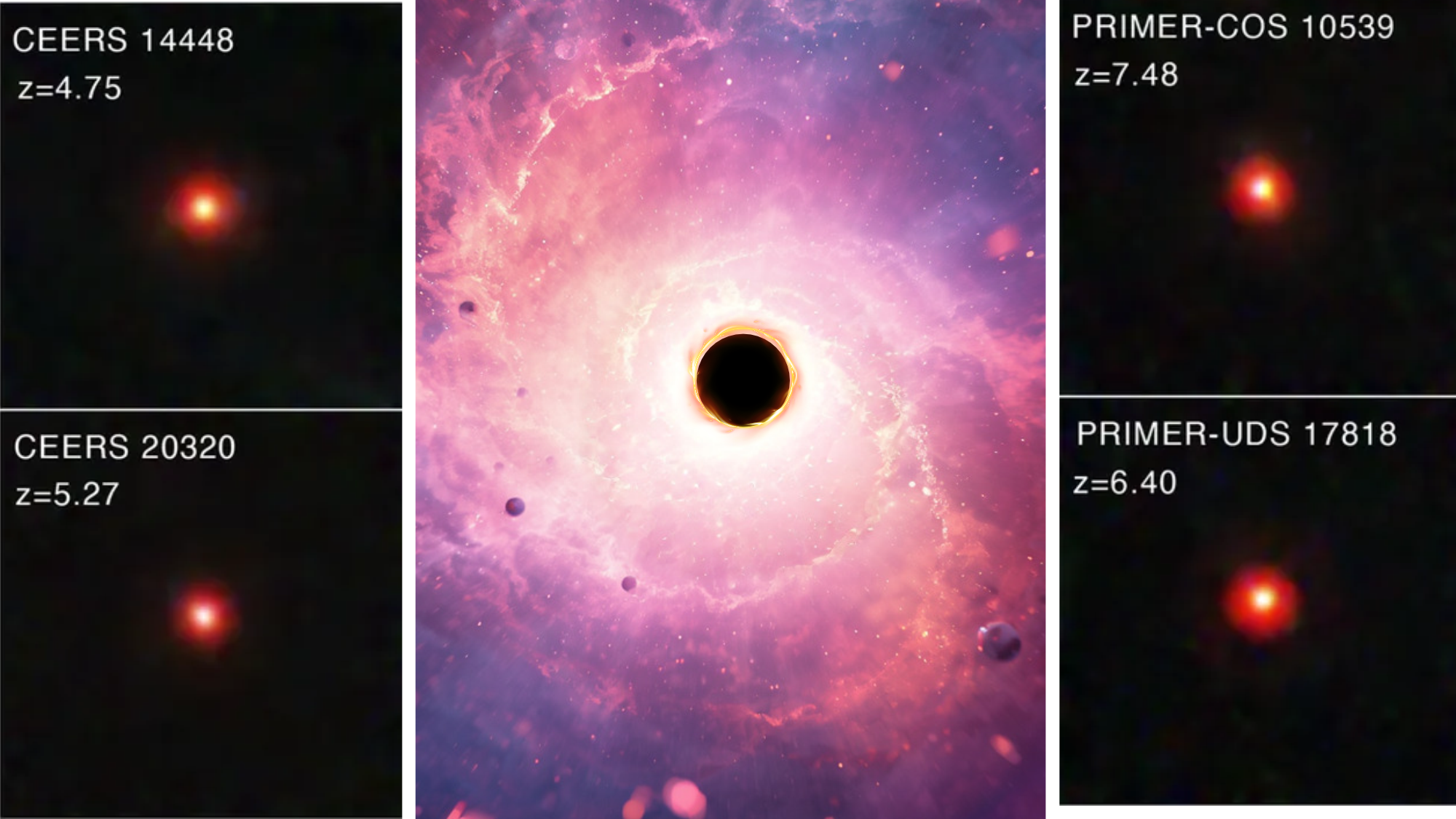
The emergence of the James Webb Space Telescope (JWST) has fundamentally altered our comprehension of the nascent universe, challenging long-standing cosmological models that dictate how quickly galaxies and supermassive black holes should form. Among the most perplexing discoveries made by the $10 billion observatory are the so-called "Little Red Dots"—compact, intensely red objects found in the early universe that appear to vanish or evolve significantly before the cosmos reached the age of two billion years. New research, recently published in the journal Physical Review Letters, suggests these enigmatic entities may not be traditional galaxies at all, but rather the visible signatures of primordial black holes (PBHs). Unlike their stellar-mass counterparts, which emerge from the gravitational collapse of dying stars, these objects are hypothesized to have formed during the chaotic, high-density fluctuations of the Big Bang itself.
A Chronology of Cosmic Discovery
The history of primordial black hole theory dates back to the 1970s, when theoretical physicist Stephen Hawking and others proposed that the extreme conditions of the early universe could have triggered the gravitational collapse of dense pockets of matter. According to this framework, these black holes would have predated the first stars, the synthesis of heavy elements, and the formation of the large-scale structures that define our current cosmic epoch. For decades, the existence of PBHs remained purely speculative, as they lacked observational evidence.
The narrative shifted significantly with the deployment of the JWST in late 2021. As the telescope began its deep-field surveys, it identified a population of compact, red-tinted objects—the Little Red Dots—residing in the universe as it existed roughly 700 million years after the Big Bang. Initially, astronomers classified these as small, dust-obscured galaxies. However, their physical properties, specifically their extreme luminosity combined with their compact size, defied conventional galactic evolution models. By late 2024 and early 2025, researchers began to cross-reference these observations with theoretical models of the early universe, positing that the "redness" was not merely dust, but a signature of active accretion onto massive, ancient black holes.
The Case of Abell 2744-QSO1
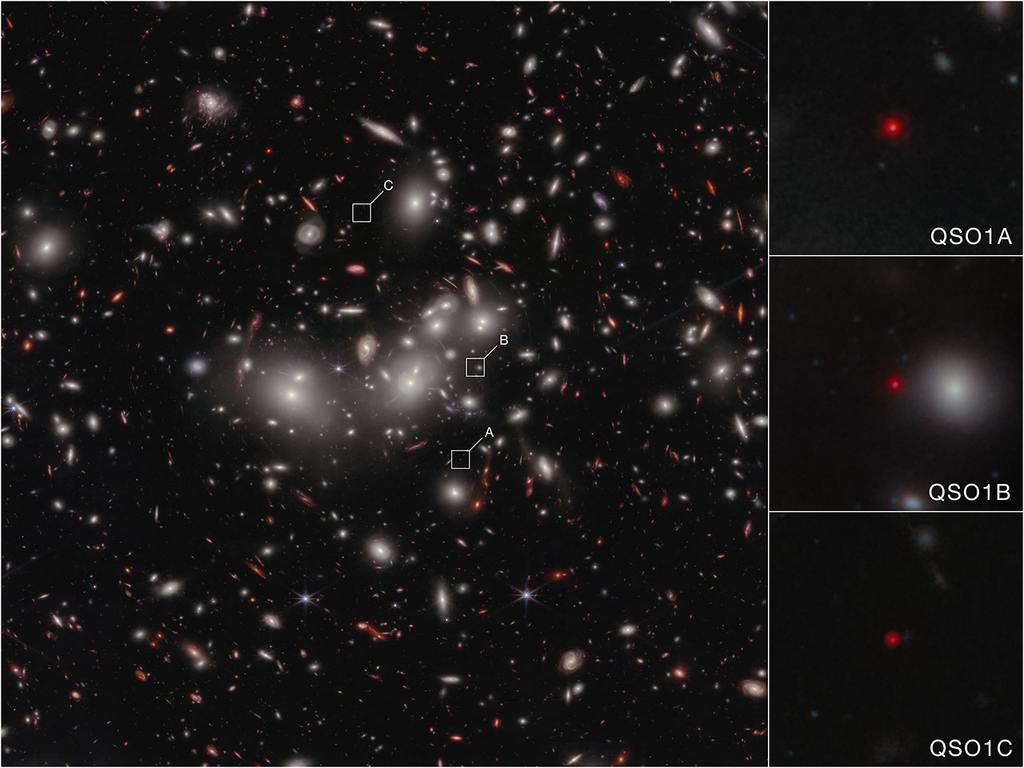
Central to the recent investigation is the specific object known as Abell 2744-QSO1. Situated approximately 13.1 billion light-years from Earth, this object has become a primary laboratory for testing the PBH hypothesis. What distinguishes QSO1 from other celestial targets is its chemical composition; spectral data from the JWST suggest that the object is almost entirely comprised of hydrogen and helium. These are the primordial elements synthesized during the Big Bang, implying that the object has not been enriched by the later life cycles of stars.
Researchers from the Department of Physics and Astronomy at Johns Hopkins University (JHU) conducted a comprehensive modeling study to determine if a PBH could realistically grow to the observed size of QSO1 within the limited timeframe provided by the early universe. The team, including physicists Valerio De Luca and Loris Del Grosso, assessed three distinct evolutionary scenarios. Their findings indicated that the most plausible explanation involves a primordial black hole seeded in the immediate aftermath of the Big Bang, which then underwent a phase of rapid accretion, consuming surrounding primordial gas and energy to reach its present-day proportions.
Defining the Distinction: Primordial vs. Astrophysical
To understand the significance of this discovery, one must distinguish between the two primary classes of black holes. An astrophysical black hole is the end-product of stellar evolution. When a massive star exhausts its nuclear fuel, it can no longer support itself against gravity, leading to a supernova explosion and the formation of a stellar-mass black hole. Because this process requires the prior existence of stars, there is a theoretical limit to how early these objects can appear in the cosmic timeline.
Conversely, primordial black holes are "top-down" entities. They are forged by the density fluctuations of the early universe, a period characterized by exponential expansion and extreme energy densities. As Valerio De Luca noted in a recent statement, the mechanisms governing PBHs are entirely separate from the stellar life cycle. "They come from the physics of the early universe that predates the first stars," De Luca explained. If confirmed, the identification of a PBH would provide a rare "fossil record" of the conditions present during the first micro-seconds of existence, effectively allowing scientists to "look back" at the Big Bang through a gravitational lens.
Scientific Constraints and Statistical Hurdles
Despite the excitement, the research team remains cautious. The scientific community has placed strict constraints on the abundance of primordial black holes. Cosmological observations regarding the Cosmic Microwave Background (CMB) and gravitational lensing suggest that there cannot be an infinite number of these objects; they must exist in specific densities and distributions.
Loris Del Grosso emphasized that the team’s work is intended to refine these constraints. "There can only be so many primordial black holes in the universe, for example, and there cannot be too many of them in a given cluster," Del Grosso stated. By modeling the specific formation conditions for QSO1, the researchers have effectively "cracked open" the door to this theory, demonstrating that while not all Little Red Dots may be PBHs, the mathematical likelihood for some is significantly higher than previously estimated. The team is now pivoting to analyze the remaining catalog of over 100 Little Red Dots identified by the JWST to establish a census of potential candidates.
Broader Implications for Cosmology
The potential confirmation of primordial black holes would represent one of the most significant shifts in modern physics. If these objects are identified, it would force a re-evaluation of the Standard Model of Cosmology. Currently, the Lambda-CDM model—which assumes dark energy and cold dark matter drive the universe’s structure—does not explicitly account for a population of supermassive, early-universe black holes.
The existence of such objects would suggest that the early universe was significantly more "clumpy" than previously assumed, providing new data on the nature of dark matter. Some theoretical physicists have long argued that primordial black holes themselves could constitute a portion of the universe’s missing dark matter, a hypothesis that has gained renewed interest following the JWST’s recent data releases.
Furthermore, these findings challenge the speed at which supermassive black holes grow. If these black holes were present at the very beginning, they would have had a "head start" on growth, explaining why the JWST has found surprisingly large black holes in the very early universe—a phenomenon that has left many astronomers struggling to reconcile current observation with traditional accretion theory.
Moving Toward Empirical Proof
The next phase of the research involves high-resolution spectroscopic follow-ups using the JWST’s Near-Infrared Spectrograph (NIRSpec). By obtaining more detailed data on the emission lines surrounding these Little Red Dots, researchers hope to isolate the unique gravitational or radiation signatures that would definitively separate a primordial black hole from a dense, dust-enshrouded starburst galaxy.
The collaboration between the JHU team and the global astronomical community underscores the iterative nature of modern space science. As the JWST continues to peer into the "dark ages" of the universe, the distinction between established science and theoretical possibility continues to blur. Whether or not these Little Red Dots are ultimately proven to be the ghosts of the Big Bang, their study is already yielding a clearer picture of the violent, high-energy environment that characterized the infancy of our universe.
For now, the scientific community awaits further data with anticipation. As De Luca concluded, "If primordial black holes do exist, then something had to happen to make them in the first place, which would be a groundbreaking discovery in physics." This ongoing investigation not only highlights the capability of the JWST to look back in time but also its role as a tool for testing the very foundations of the laws of nature, pushing the boundaries of what is known about the origins of the cosmos.