United Launch Alliance Sets November 13 Return-to-Flight Date for Vulcan Rocket Following Booster Anomaly Investigation

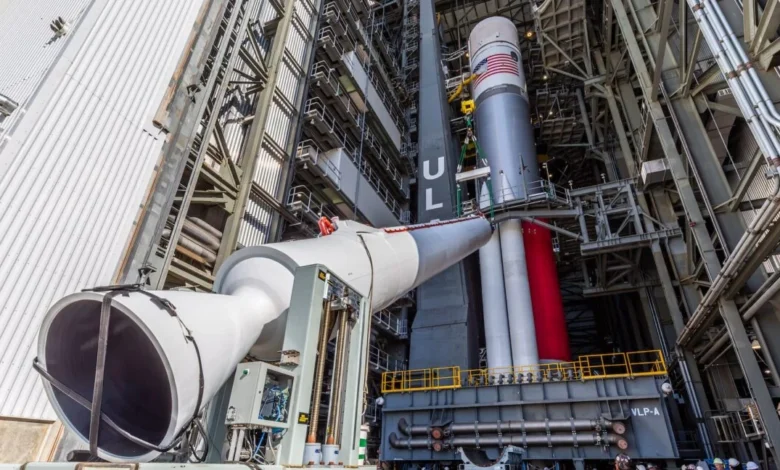
United Launch Alliance (ULA) has officially scheduled the return-to-flight mission of its Vulcan Centaur rocket for November 13, marking a pivotal moment for the aerospace company as it seeks to restore confidence in its next-generation launch vehicle. This announcement comes nine months after a technical failure involving the rocket’s solid rocket boosters (SRBs) forced a comprehensive stand-down of operations, effectively disrupting the company’s ambitious 2026 launch cadence and casting uncertainty over a critical period for national security space missions.
The upcoming mission will carry 40 satellites for Amazon’s Project Kuiper, a low-Earth orbit (LEO) broadband constellation designed to provide high-speed internet access globally. This launch represents the first of 38 contracted Vulcan flights dedicated to the deployment of the Amazon network, a cornerstone contract that underscores the commercial viability of the Vulcan platform. The mission is set to lift off from Space Launch Complex-41 at Cape Canaveral Space Force Station in Florida, contingent upon final regulatory approval from the Eastern Range.
The Genesis of the Grounding: A Chronology of Technical Challenges
The Vulcan Centaur, designed to replace the legacy Atlas V and Delta IV Heavy rockets, was envisioned as a cost-effective, high-performance vehicle capable of meeting the rigorous demands of both commercial and national security customers. However, the program’s early flight history has been marked by technical hurdles that have necessitated a cautious, iterative approach to development.
The current grounding follows a February mission in which an anomaly occurred within the nozzle of the Northrop Grumman-built GEM 63XL solid rocket boosters. While the rocket successfully reached orbit and completed its primary objectives, the incident was the second of its kind in the vehicle’s first four flights. Following the February anomaly, ULA and the U.S. Space Force—the company’s primary customer—initiated an exhaustive root-cause analysis.
The chronology of this development phase is as follows:
- January 2024: Vulcan completes its first successful Certification flight (Cert-1), carrying a private lunar lander.
- September 2024: The second certification flight (Cert-2) takes place. During this flight, a nozzle anomaly is observed on one of the solid rocket boosters.
- February 2025: A third mission experiences a similar anomaly, triggering an immediate suspension of flight operations to facilitate a thorough investigation.
- November 2025: ULA announces the targeted return-to-flight date, pending final safety reviews.
Engineering Improvements and Mitigation Strategies
In a statement issued Wednesday, ULA emphasized that its engineering teams have made "great strides" in identifying the factors contributing to the nozzle failures. The company reported that they have isolated several potential causes, ranging from thermal stresses to material fatigue under the high-pressure conditions of the booster’s operation.
To rectify these issues, ULA has implemented a series of design and process improvements to the nozzle assembly. These modifications include enhanced thermal insulation, refined manufacturing tolerances, and updated structural reinforcements intended to ensure the integrity of the boosters during the high-dynamic pressure phase of flight.
"To support our customers, this upcoming launch will utilize the improved nozzle design, and additional testing and analysis will continue in parallel with the mission," the ULA statement read. "By flying the improved design, ULA gains valuable flight data that validates these improvements and is the most beneficial path in support of all our customers."
By utilizing the improved hardware on the November 13 flight, ULA is opting for a "flight-test" validation approach. This methodology, while carrying inherent risks, allows the company to gather empirical data in a real-world environment, which is often considered more valuable than ground-based simulation alone, provided that safety protocols have been adequately addressed.
The Stakes of National Security and Commercial Viability
The importance of the Vulcan program cannot be overstated, particularly concerning the U.S. Department of Defense. The Pentagon has entrusted ULA with approximately 50% of its major launch requirements through the early 2030s. The Vulcan rocket was formally certified for national security space launches in 2025, a designation that serves as a prerequisite for carrying the nation’s most sensitive military and intelligence satellites.
Space Force officials have been closely monitoring the investigation, as any prolonged delay in Vulcan’s operational status could create a bottleneck in the U.S. launch manifest. With the retirement of older launch vehicles and the increasing reliance on domestic heavy-lift capabilities to counter global competitors, the reliability of Vulcan is viewed as a national security imperative.
Industry analysts suggest that the Space Force’s scrutiny of the November 13 mission will be intense. The military’s "man-rating" and certification standards require a level of statistical confidence that the current anomalous history has yet to provide. The successful completion of this return-to-flight mission, without further booster issues, will be the primary metric by which the U.S. government assesses the program’s long-term health.
Amazon’s Project Kuiper: A Crucial Partnership
Beyond government contracts, the success of Vulcan is intrinsically linked to the success of Amazon’s Project Kuiper. Amazon has secured 38 launches with ULA to deploy thousands of satellites, making it one of the largest commercial launch agreements in history. The 40 satellites scheduled for the November 13 mission represent the beginning of the deployment phase for a network intended to compete directly with SpaceX’s Starlink.
For Amazon, the timeline is critical. As the global broadband market expands, the ability to rapidly launch and replenish their constellation is a competitive necessity. Any further delays to the Vulcan launch cadence would not only impact ULA’s bottom line but could also jeopardize Amazon’s ability to meet regulatory deployment milestones established by the Federal Communications Commission (FCC).
Market Implications and Future Outlook
The broader implications of the November 13 launch extend to the overall health of the United States aerospace industrial base. ULA, a joint venture between Lockheed Martin and Boeing, is currently navigating a highly competitive landscape. The rise of SpaceX’s Falcon 9 and Falcon Heavy, combined with the development of reusable vehicle technologies by other private entities, has shifted market expectations.
ULA’s strategy has centered on the Vulcan’s reliability and its ability to perform high-energy, direct-to-orbit missions for the military, often requiring complex orbital insertions that demand high-performance upper stages. The Centaur V upper stage, which powers Vulcan, is widely considered the most advanced in the industry, capable of long-duration burns and complex maneuvers in deep space.
Looking forward, the success of this mission will likely serve as the "go-ahead" for a surge in launch frequency. If the improved booster nozzles perform as expected, ULA is expected to clear a backlog of missions that have been delayed throughout 2025. This would involve transitioning to a more rapid launch tempo, potentially targeting a cadence of one launch per month by mid-2026.
However, the margin for error remains thin. A third consecutive anomaly, or a failure to meet the specific requirements of the Space Force during this flight, could lead to a deeper re-evaluation of the Vulcan’s design, potentially forcing ULA to consider more fundamental changes to the booster configuration or the integration of alternative propulsion systems.
Conclusion: A Defining Moment
As November 13 approaches, the aerospace industry will be watching closely. The Vulcan rocket represents more than just a new piece of hardware; it is the centerpiece of a strategic pivot for ULA. The resolution of the solid rocket booster anomaly is a necessary step to restore the rocket’s reputation and secure the trust of a government that relies on it for critical national security infrastructure.
The transparency provided by ULA regarding the "potential contributors" to the failure, and their commitment to utilizing the improved hardware in an active mission, demonstrates a willingness to address technical debt head-on. Whether this mission marks the beginning of a new era of reliability for the Vulcan Centaur or the start of a more prolonged period of refinement will be determined by the performance data returned from the upcoming flight. For ULA, Amazon, and the U.S. Space Force, the mission is not merely a test of engineering—it is a test of the company’s future in an increasingly crowded and demanding space sector.