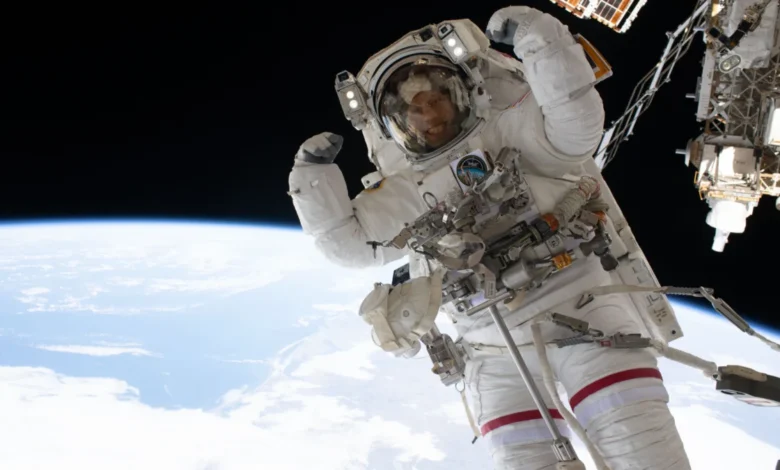
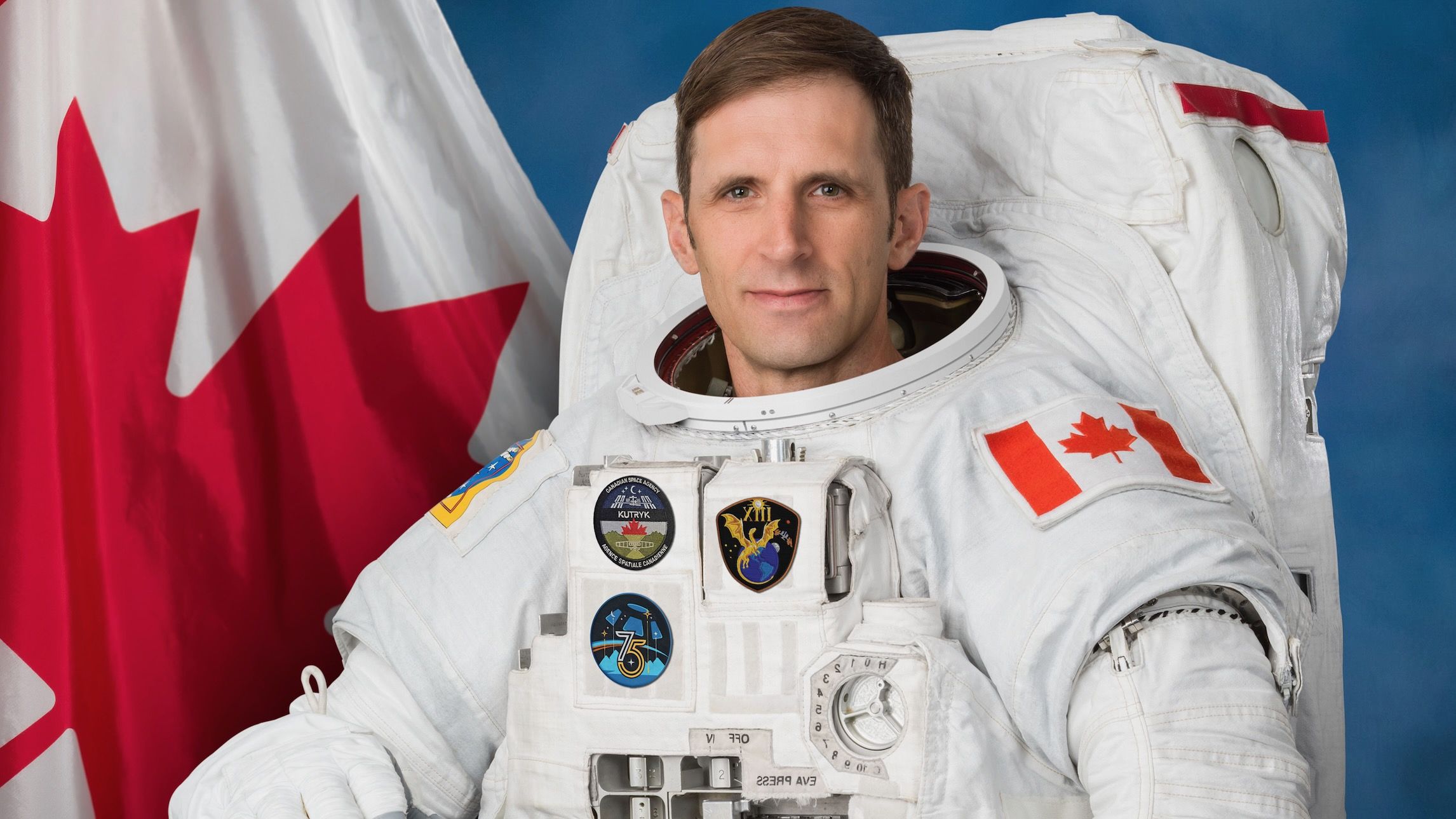
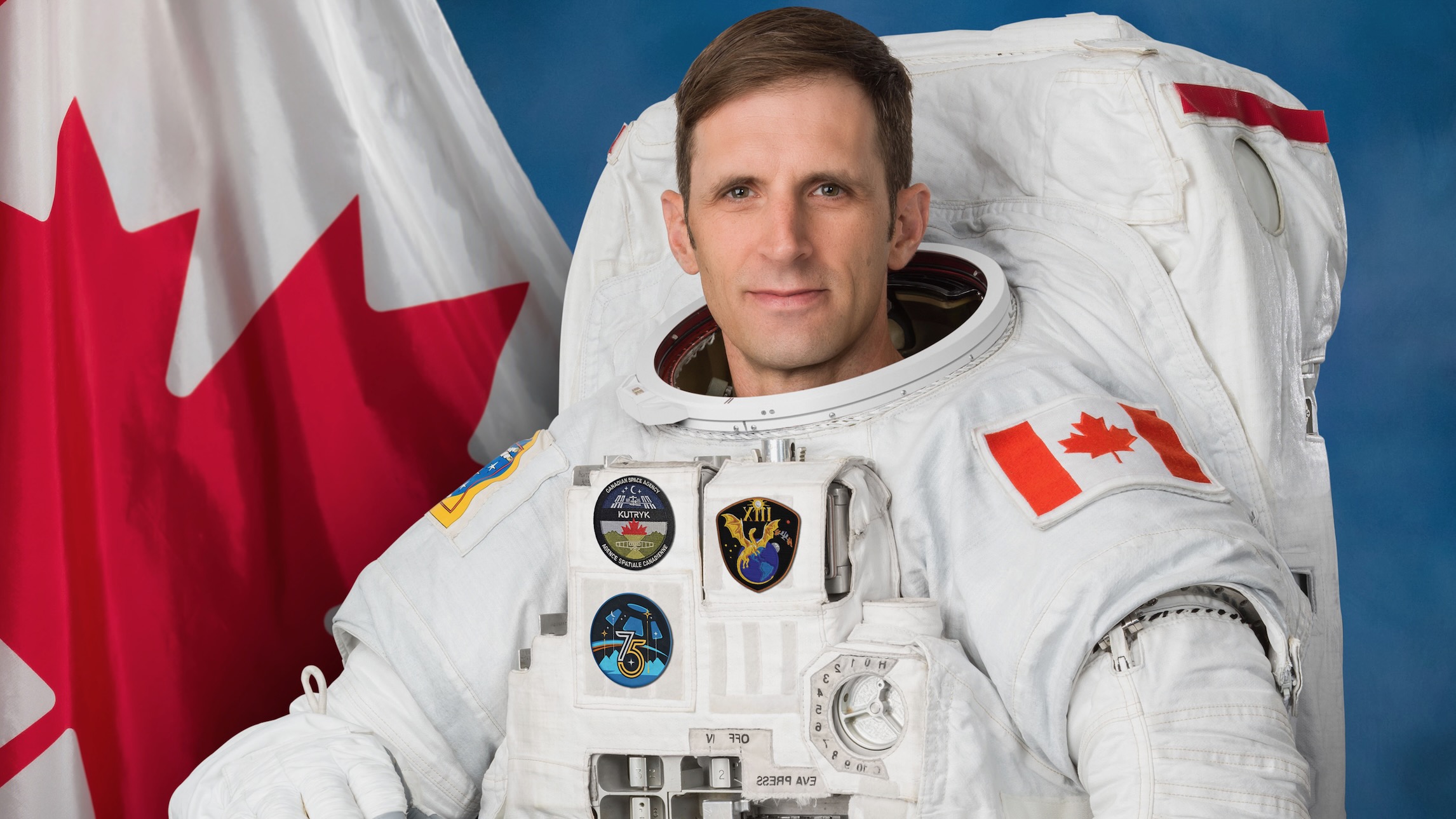
The International Space Station is preparing for a significant maintenance milestone as Canadian Space Agency astronaut and Royal Canadian Air Force Colonel Joshua Kutryk prepares to conduct his first-ever spacewalk on October 29. This mission marks a pivotal moment for the Canadian space program, as Kutryk will become the first Canadian to venture outside the orbiting laboratory in seven years. Accompanied by NASA astronaut and U.S. Space Force Colonel Anil Menon, the duo will undertake a complex series of extravehicular activities (EVAs) aimed at bolstering the station’s electrical grid by installing the seventh and eighth International Space Station Roll-Out Solar Arrays (iROSAs).
The mission, which is scheduled to commence at 8:00 a.m. EDT (1200 GMT), represents a sophisticated intersection of international cooperation, robotic precision, and long-term orbital infrastructure management. The spacewalk is expected to last approximately 6 hours and 45 minutes, with the primary objective being the deployment of advanced solar technology designed to mitigate the power degradation inherent in the station’s original, decades-old solar arrays.
The Technical Challenge: Upgrading the ISS Power Grid
The current solar arrays on the International Space Station have served the facility for over twenty years. While they remain functional, they have naturally reached the end of their design life, exhibiting signs of wear and reduced power generation efficiency. The iROSA initiative was launched in 2021 as a strategic solution to ensure the station can support the increased power demands of modern scientific research and commercial activities.
Each iROSA unit, when fully unfurled, measures approximately 20 feet (6 meters) in length. During transport, they are folded into a compact, 10-foot (3-meter) configuration. Despite their compact nature, each array weighs roughly 750 pounds (340 kilograms) on Earth, posing significant handling challenges for astronauts operating in microgravity. According to NASA flight director Garrett Hehn, the installation process requires a high degree of precision to ensure the arrays are properly integrated with the existing electrical channels.
The installation of these final two arrays is critical to the station’s operational future. Once the eighth iROSA is fully integrated, the ISS will see its total power capacity climb from the current 160 kilowatts to approximately 215 kilowatts—a substantial 30% increase in energy production. This boost is essential for maintaining life support systems, laboratory equipment, and the growing array of external payloads attached to the station’s truss structure.
The Role of Canadarm2 and Robotics
A defining feature of this mission is the reliance on Canadian technology, specifically the Canadarm2 robotic arm. This sophisticated manipulator system has been the backbone of station maintenance for years, and it will play an indispensable role in moving the massive iROSA units from their storage location on a SpaceX Dragon cargo craft to the installation site.
The coordination between the astronauts outside and the ground controllers—and the astronauts inside the station—is a testament to the seamless integration of human and robotic effort. NASA astronauts Luke Delaney and Jessica Watkins, operating from inside the station, will manipulate the robotic arm to transport Menon and the array to the designated port. The choreography is highly specific: the team must rotate the arrays around their center of mass rather than the crew member to conserve the astronauts’ energy and ensure the safety of the delicate hardware.
This "leapfrog" maneuver, as described by mission planners, is a lesson learned from previous EVAs. By refining the handling procedures, NASA aims to reduce the physical toll on the crew, allowing them to perform the high-stakes work of electrical connection with greater efficiency.
Historical Context and Canadian Participation
The return of a Canadian astronaut to the outside of the ISS is a significant milestone for the Canadian Space Agency (CSA). The last Canadian to perform an EVA was David Saint-Jacques, who participated in a challenging maintenance mission in April 2019. That mission, which involved intricate cable upgrades, set a high bar for Canadian technical contributions to the ISS.
Joshua Kutryk’s journey to this moment has been marked by both professional excellence and operational hurdles. Originally slated for a 2024 launch on Boeing’s Starliner spacecraft, the mission was delayed due to the technical complications encountered during the Starliner’s crewed demonstration flight. His eventual launch on October 1 aboard a SpaceX Crew Dragon not only solidified his place on this mission but also highlighted the resilience and adaptability required of modern astronauts.
The current atmosphere in Canada regarding its space program is one of high activity. The nation is witnessing a rare period where two CSA astronauts are active in high-profile missions in the same year, with Artemis II astronaut Jeremy Hansen serving as a key figure in the lunar exploration program. This frequency of activity has prompted a renewed focus on space policy within the Canadian government.
Strategic Implications and Future Policy
The Canadian government has recently taken steps to translate this momentum into long-term strategic growth. The announcement of the first-ever bipartisan space caucus and the appointment of Jeremy Hansen as a space advisor to the Prime Minister signals a shift toward a more formalized national space strategy. This strategy is expected to address the need for consistent mission assignments for CSA astronauts, ensuring that Canada remains a viable partner in international space efforts.
Beyond the political sphere, the industry sector is seeing substantial investment aimed at securing domestic launch capabilities. The recent $20 million commitment to NordSpace for launch pad access in Newfoundland and Labrador, combined with a $200 million investment in Maritime Launch Services in Nova Scotia, demonstrates a clear intent to build a self-sustaining space ecosystem. These initiatives are not merely symbolic; they are designed to position Canada as a competitive player in the global space economy, catering to both defense requirements and commercial satellite deployment.
The Human Element: Training and Coordination
Behind the scenes, the success of these spacewalks rests on the shoulders of the ground support teams. Jenni Gibbons, who will serve as the capcom (capsule communicator) for both the October 29 and November 5 EVAs, provides a vital link between the astronauts and the mission control center. Her experience as a lead capcom for the Artemis missions underscores the depth of talent within the Canadian astronaut corps.
The coordination required for this mission is immense. The astronauts must manage the thermal constraints of the station’s orbit, as they cannot handle electrical cables while the station is in direct sunlight. This necessitates a precise timeline, as the station circles the Earth every 90 minutes. The planning team has developed a series of maneuvers that ensure the astronauts are in the right position at the right time, minimizing the risks associated with exposure to the harsh environment of space.
Looking Ahead
As the ISS nears the end of its projected operational life—currently planned through 2030—the work performed by Kutryk and Menon serves as a vital bridge to the next era of space exploration. The increased power capacity will not only sustain the station through its final years of operation but will also serve as a testbed for technologies that will be used in future lunar and Martian missions.
For Canada, the sight of a Canadian flag on a spacesuit during an EVA is a powerful symbol of the nation’s commitment to scientific progress. As Joshua Kutryk steps out into the vacuum of space, he carries with him the hopes of a nation that is increasingly looking toward the stars as a cornerstone of its future industrial and scientific identity. The success of this mission will likely serve as a catalyst for future investment, further cementing Canada’s role as a trusted and capable partner in the global effort to explore and utilize the space environment for the benefit of all.
The upcoming weeks will be a rigorous test of endurance and skill for the crew. With the successful completion of these two EVAs, the International Space Station will be better equipped than ever to handle the demands of the modern space age, providing a robust platform for the next decade of discovery.