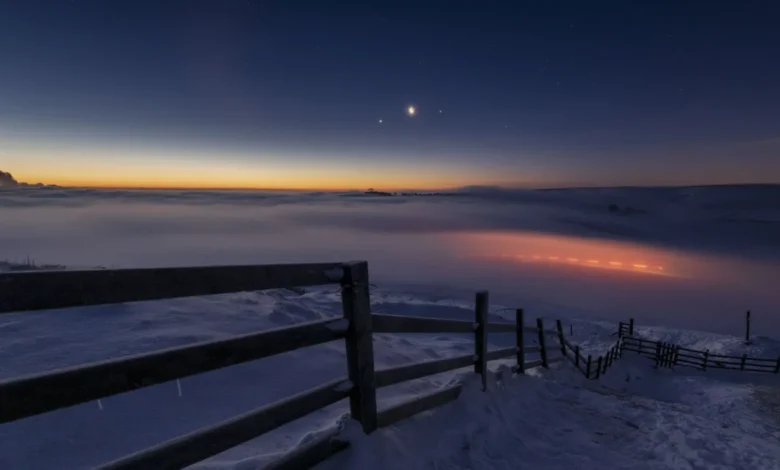
Early morning commuters and early risers across the globe are currently witnessing one of the most spectacular astronomical events of the year, as the planet Venus makes a triumphant return to the predawn sky. After passing through inferior conjunction—the point at which the planet sits directly between the Earth and the sun—on October 24, Venus has emerged from the solar glare to reclaim its title as the most luminous object in the morning heavens. This transition marks the beginning of a months-long period of high visibility, providing a rare opportunity for both amateur stargazers and casual observers to view the "Morning Star" in its full, radiant glory.
A Celestial Transformation: The Mechanics of the Apparition
The sudden prominence of Venus is a result of its orbital mechanics relative to Earth. During its inferior conjunction in late October, the planet was effectively "lost" in the sun’s brilliance, rendered invisible to observers on the ground. However, as it continues its orbital trek, it is moving away from the sun from our terrestrial perspective, thereby increasing its elongation and allowing it to rise earlier each morning.
This phenomenon is not merely a matter of position, but of geometry. As Venus moves along its orbit, the angle between the sun, the planet, and the Earth changes, allowing more of the planet’s sunlit hemisphere to be visible from our vantage point. This phase change, combined with its decreasing distance from Earth, contributes to its rapidly increasing apparent magnitude. Astronomers note that this is a predictable, cyclical event, yet it remains one of the most striking displays of planetary movement accessible to the naked eye.
Chronology of the Morning Visibility
For those tracking the movement of the planet, the timeline for the coming months is well-established by orbital calculations. As of early November, Venus is already rising more than 90 minutes before the sun. This gap will widen significantly as the year progresses. By mid-December, specifically around December 17, the planet will rise approximately 3 hours and 50 minutes before sunrise. During this period, observers in regions with minimal light pollution will be treated to the sight of Venus blazing in a completely dark sky for over two hours before the onset of morning twilight.
The peak of this apparition is expected to occur on November 29. On this date, Venus will reach a staggering magnitude of -4.9. In the logarithmic scale of astronomical magnitude—where lower numbers indicate greater brightness—this figure represents an extreme level of luminosity. To put this into perspective, Venus will be roughly 12 times brighter than Jupiter, the next most luminous planet currently in the sky, and nearly 25 times more radiant than Sirius, the brightest star in the night sky.
Following this peak in late December, the planet will begin its slow descent toward the horizon. Starting on New Year’s Day, the interval between the planet’s rise and sunrise will begin to contract by approximately 90 seconds each day. By the end of March, Venus will rise roughly 100 minutes before dawn. The display will continue to wane throughout the spring, culminating in late June when the planet will rise less than an hour before sunrise. By July, Venus will once again drift too close to the sun, disappearing into the morning twilight for a "summer sabbatical" before eventually reappearing as an evening star late next year.
The Physics of Planetary Brilliance
The extreme brightness of Venus is primarily due to two factors: its proximity to Earth and its high albedo. Venus is covered in thick, highly reflective clouds composed of sulfuric acid droplets. These clouds reflect approximately 70% of the sunlight that strikes them, giving the planet a brilliant white appearance.
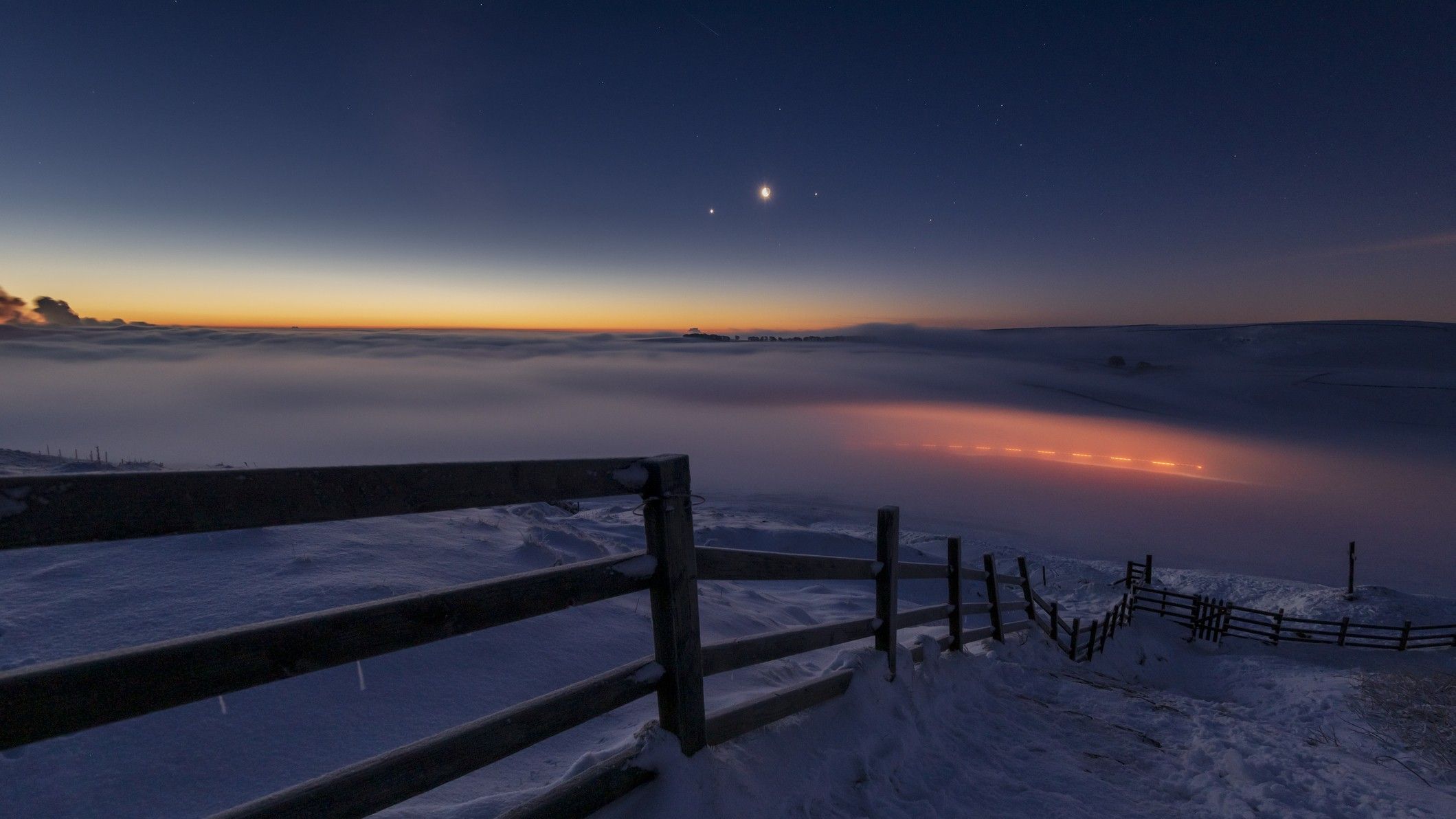
Under ideal viewing conditions—specifically in rural areas with low light pollution—the radiance of Venus is so intense that it can produce a faint, yet perceptible, shadow on the ground. This is a rare feat for a point of light in the night sky, usually reserved for the full moon. Furthermore, because of its high magnitude, Venus can often be tracked with the naked eye even after the sun has risen. Observers who know exactly where to look can spot it as a distinct, steady white speck against the blue canvas of the daytime sky. This capability has frequently led to public confusion, with reports of "UFOs" or unidentified aerial phenomena spiking during periods of high Venusian visibility.
Historical and Cultural Significance
The term "Morning Star" has been applied to Venus for millennia, appearing in the mythologies and scientific records of nearly every major civilization. Its appearance in the east has historically been associated with the arrival of dawn and, in various religious traditions, has been used as a celestial signifier. In the context of the modern astronomical calendar, the current apparition’s timing—peaking near the end of the year—has led some to draw parallels to the biblical "Christmas Star." While the historical and astronomical identity of the Star of Bethlehem remains a subject of intense debate among scholars, the current position of Venus serves as a contemporary reminder of how celestial events have shaped human observation and storytelling for generations.
Professional Guidance for Observers
For those interested in tracking Venus, professional astronomers from institutions like the Hayden Planetarium suggest that no specialized equipment is required. Unlike meteor showers or distant nebulae, which may require binoculars or telescopes, Venus is easily visible to the naked eye. The primary challenge for the observer is simply the time of day and the orientation of the horizon.
"For those who are heading out to work or school in the early morning, simply look to the east-southeast," notes Joe Rao, a veteran skywatching columnist and instructor. "The planet will be unmistakable. It does not twinkle like a star; it maintains a steady, intense light. If you find yourself wondering if it is a plane or a satellite, the lack of movement and the consistent brightness are your primary indicators that you are looking at the second planet from the sun."
Broader Astronomical Implications
The study of Venus remains a high priority for space agencies, including NASA and the European Space Agency (ESA). While the current view from Earth provides a beautiful spectacle, it also highlights the stark differences between our planet and its neighbor. Venus is often described as Earth’s "evil twin"—a world of crushing atmospheric pressure and surface temperatures hot enough to melt lead.
Observing the planet from Earth provides a bridge between public interest and scientific inquiry. Increased public engagement during these periods of high visibility often correlates with heightened interest in planetary science missions, such as the upcoming DAVINCI and VERITAS missions, which aim to study the atmospheric and geological composition of Venus. By understanding how Venus reached its current, inhospitable state, scientists hope to gain critical insights into the long-term climate evolution of Earth.
Summary of Observation Tips
- Location: Focus your gaze on the east-southeast horizon.
- Timing: For optimal viewing, aim to look about 90 minutes to two hours before sunrise.
- Identification: Venus will appear as a bright, steady, white light. It will not flicker or twinkle like a star, and it will be significantly brighter than any other object in that portion of the sky.
- Daytime Observation: As the planet approaches peak magnitude in late November, try searching for it shortly after sunrise. Use a clear, stationary landmark to help pinpoint its location in the blue sky.
As Venus continues its current trajectory, it will serve as a constant, brilliant companion to early risers through the winter months. Whether viewed as a subject of scientific fascination or a simple, serene start to a morning routine, the current apparition stands as a testament to the dynamic and predictable nature of our solar system. For those who miss this window, the wait for a similarly spectacular morning display will be substantial, making the next few weeks an ideal time for skywatchers to look upward.