NASA Launches $1 Million Moon Base Student Challenge to Shape the Future of Lunar Exploration

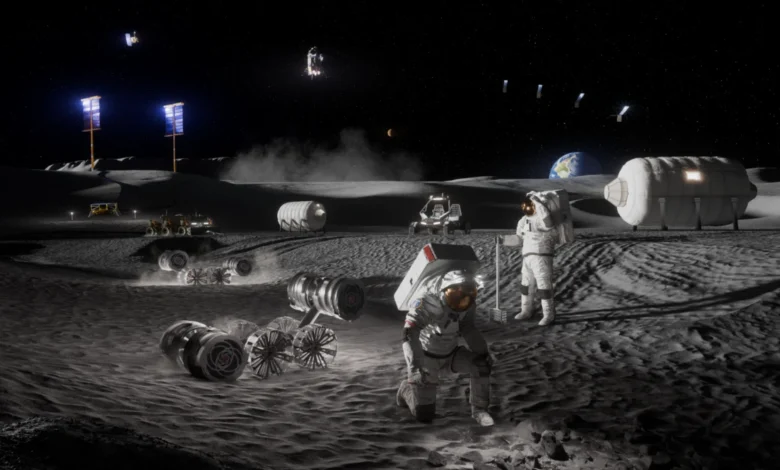
The National Aeronautics and Space Administration (NASA) officially announced the launch of its ambitious $1 million Moon Base Student Challenge on Sunday, setting the stage for a new era of space exploration driven by the next generation of American scholars. Unveiled during a high-energy MAX POWER event held at the Kennedy Space Center Visitor Complex in Florida, the nationwide competition calls upon student teams from U.S. high schools, vocational institutions, and post-secondary colleges and universities to conceptualize and design critical elements of humanity’s future permanent footprint on the Moon.
This major national initiative arrives at a pivotal juncture for the agency, often described as part of a renewed Golden Age of Science. As NASA moves steadily toward establishing a sustained human presence on the lunar surface, the agency is actively looking beyond traditional aerospace contractors to harness the unbridled creativity, fresh perspectives, and bold ideas of students who will ultimately live, work, and build their careers in a world where humanity has a permanent outpost beyond Earth.
Unlocking Student Ingenuity for Deep Space Survival
The primary objective of the Moon Base Student Challenge is to tackle authentic environmental and mission design parameters that astronauts will face at the lunar South Pole. This region has been selected by NASA for its unique illumination conditions and potential water-ice reserves, making it an ideal location for a long-term habitation base. However, living and working in the harsh, high-radiation, and ultra-low-gravity environment of the lunar South Pole presents unprecedented engineering and logistical challenges.
To address these hurdles, participating student teams are tasked with developing innovative design solutions across six essential categories:
- Power generation and storage systems capable of surviving the punishing 14-day lunar night.
- Advanced construction techniques utilizing in-situ resource utilization (ISRU) to build habitats out of lunar regolith.
- Closed-loop life-support systems to ensure sustainable air, water, and waste recycling.
- Surface mobility assets, including rovers and heavy-duty transport vehicles.
- Robust communication networks designed to handle extreme topography and interference.
- Astronaut safety measures addressing health, radiation shielding, and emergency protocols.
Significantly, the competition is structured to be multidisciplinary and inclusive. The deliverables required by the challenge reflect true-to-life industry skills, such as comprehensive trade studies, detailed concept proposals, and professional stakeholder briefings. This framework allows participants across technical, vocational, and various academic tracks to build career-relevant competencies without necessarily requiring prior specialized engineering or technical expertise.
Leadership Perspectives and the Call to Action
During the official rollout at the Kennedy Space Center, NASA leadership emphasized that the agency cannot wait for students to graduate before incorporating their ideas into the nation’s space architecture.
“We’re looking for students ready to think creatively, work as a team, and take on real problems connected to NASA’s future on the Moon,” said NASA Administrator Jared Isaacman. “You do not have to wait until graduation to contribute. Curiosity, creativity, and the willingness to tackle hard problems without obvious answers are exactly the qualities we need as we build what comes next.”
The sentiment was echoed by Carlos García-Galán, manager of the Moon Base Program, who underscored the practical necessity of gathering diverse insights for the lunar architecture.
“As we build and design the foundations of Moon Base, we want to leverage all the ingenuity and innovation to think of every consideration our explorers might need to live and work there,” García-Galán stated. “Students bring exactly the bold ideas that we’re looking for, and I’m looking forward to their fresh perspective. Ultimately, Moon Base is for them, people who will experience a world where humans are on the Moon to stay.”
The collaboration between NASA’s Office of STEM Engagement and the Moon Base Program highlights a deliberate strategy to build the aerospace workforce of tomorrow. Elaine Ho, associate administrator for the Office of STEM Engagement at NASA Headquarters, noted the broader educational implications of the initiative.
“Students are the next generation of explorers and innovators,” Ho remarked. “Their unique perspectives are key to helping us envision a future away from Earth, and I’m excited to see the creativity and ingenuity spurred by this challenge.”
Chronology, Administration, and Key Deadlines
The launch of the $1 million challenge marks the formal beginning of a structured, multi-phase competition timeline designed to guide student teams from initial concept generation down to final evaluation.
The administration of the competition is being handled by the Institute of Competition Sciences, operating under a contract with the NASA Center of Excellence for Collaborative Innovation (CoECI), which resides within the agency’s Research and Technology Mission Directorate. This partnership ensures rigorous judging standards and broad national outreach to schools that might not traditionally participate in aerospace challenges.
Crucial dates and milestones for the Moon Base Student Challenge include:
- Sunday: Official announcement and opening of registration during the MAX POWER event at the Kennedy Space Center Visitor Complex.
- Jan. 25, 2027: Registration deadline. All interested high school and post-secondary teams must complete their official sign-ups through the online NASA STEM Gateway portal.
- Subsequent Phases (2027 and Beyond): Following registration, participating cohorts will advance through successive developmental gates, submitting trade studies, preliminary designs, and final concept proposals for evaluation by panels of NASA engineers and aerospace industry experts.
Complete competition guidelines, eligibility requirements, and official rulebooks are hosted on the dedicated portal at https://moonbasechallenge.org. Registration is managed exclusively via the NASA STEM Gateway.
Broader Implications: Paving the Way to Mars
While the immediate focus of the challenge is establishing a sustainable foothold on the lunar surface, the long-term strategic implications extend far beyond Earth’s natural satellite. NASA’s overarching space exploration strategy views the Moon as the ultimate proving ground for deep space exploration.
Operating a permanent base on the Moon allows engineers to test life-support systems, heavy machinery, power grids, and communication arrays in an environment that mimics the isolation of deep space missions while remaining close enough for emergency resupply or evacuation if necessary. The lessons learned, technologies perfected, and operational protocols established at the lunar South Pole will directly inform and enable future crewed missions to Mars and other destinations across the solar system.
Furthermore, by engaging a diverse pool of students from across the United States—spanning diverse socioeconomic backgrounds, geographic locations, and academic disciplines—NASA is actively cultivating a robust, highly skilled national workforce. This talent pipeline is viewed by economists and policy experts as vital not only for federal space missions, but also for the rapidly expanding commercial space economy, which relies heavily on private-sector innovation, advanced manufacturing, and systems engineering.
As registration opens and teams across the country begin forming, the $1 million Moon Base Student Challenge stands as a testament to NASA’s evolving philosophy: that the answers to humanity’s greatest cosmic challenges will be designed not just by seasoned veterans inside government laboratories, but by the inspired minds of students sitting in classrooms today.
Media Contacts and Inquiries
For press inquiries, media credentials, or additional information regarding the Moon Base Student Challenge, representatives of the media may contact the designated public affairs officers:
-
NASA Headquarters, Washington:
- George Alderman / Cheryl Warner
- Phone: 202-358-1600
- Email: [email protected] / [email protected]
-
NASA Johnson Space Center, Houston:
- Nilufar Ramji / Kenna Pell
- Phone: 281-483-5111
- Email: [email protected] / [email protected]