Orcas Filmed Employing Novel "Ram-to-Fragment" Strategy on Sunfish, Signaling Complex Social Learning

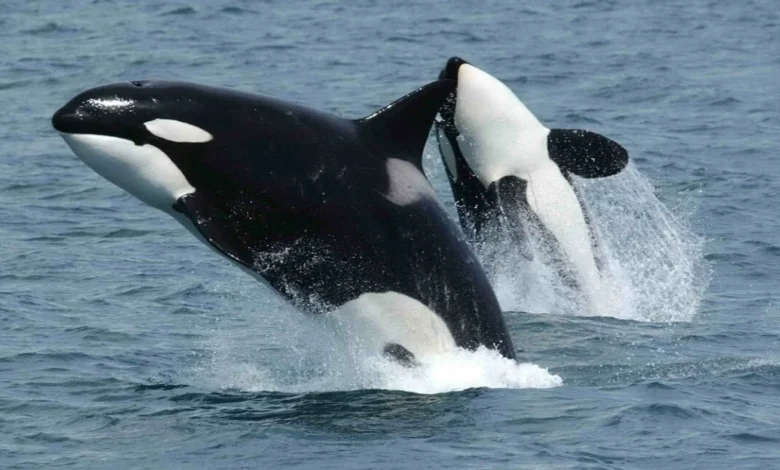
A groundbreaking observation in the Gulf of California has unveiled a previously undocumented hunting technique among orcas, or killer whales, where they cooperatively ram sunfish with such immense force that the prey disintegrates into fragments. This sophisticated behavior, detailed in a new paper published in the journal Frontiers in Ethology, represents a significant addition to the known repertoire of orca hunting strategies and provides further evidence of their remarkable capacity for culturally learned behaviors. The phenomenon has drawn comparisons to recent widely reported incidents of orcas ramming and occasionally sinking boats, suggesting a broader pattern of social transmission within these highly intelligent marine mammals.
The discovery was captured on film by a tourism operator in July 2024 off the coast of San Jose del Cabo, Mexico. The footage depicts a coordinated effort involving three adult female orcas, one male, and a juvenile, initially observed hunting and consuming a spine-tail devil ray. Immediately following this successful hunt, one of the adult females was seen holding the carcass of a sunfish in her mouth. The sunfish already bore a substantial lateral wound, indicating that its viscera had likely been removed through a more conventional hunting method. What transpired next, however, was unprecedented. The male orca then executed a powerful charge directly at the suspended sunfish carcass. Just moments before impact, the female released her hold on the prey. The collision resulted in an audible sound and the immediate fragmentation of the carcass, scattering bits of flesh throughout the water. The juvenile orca promptly consumed these smaller fragments, while the adult orcas fed on the larger remnants of the now split-open body.
The "Ram-to-Fragment" Phenomenon: A Deeper Dive into Orca Ingenuity
This "ram-to-fragment" technique diverges significantly from the typical orca hunting patterns observed for sunfish, also known as Mola mola. Historically, orcas hunting sunfish have been noted to employ a three-pronged approach: first targeting the pectoral fins to immobilize the fish, then slashing its body to remove the viscera, and finally using their beaks to access the remaining tissue. The newly observed behavior, however, appears to be an advanced or supplementary strategy, potentially aimed at making the prey more accessible, particularly for younger pod members.
Co-author Kathryn Ayres of Beneath The Waves, a non-profit organization dedicated to ocean health, commented on the findings, stating, "We think this may help younger orcas feed more easily, or it could also just be for fun. Orcas are known for playing with their food." This statement encapsulates the dual potential motivations behind such complex behavior: pragmatic nutritional benefit and social engagement or play. The fragmentation of the sunfish not only provides easily manageable pieces for the juvenile but also suggests a form of cooperative food preparation, ensuring equitable distribution within the pod. Such acts underscore the highly social and altruistic aspects of orca behavior, where collective effort often benefits all members, especially the youngest and most vulnerable.
Orca Cooperative Hunting: A Legacy of Sophistication
The "ram-to-fragment" strategy is not an isolated incident of orca ingenuity but rather fits within a broader tapestry of their incredibly diverse and sophisticated cooperative hunting techniques. Orcas are apex predators renowned for their adaptability and the sheer variety of their prey, which ranges from small fish to large whales, seals, and even sharks. Their hunting methods are often tailored to specific prey species and local environmental conditions, highlighting their remarkable cognitive flexibility.
Previous observations have documented orcas engaging in elaborate cooperative strategies that include:
- Targeted striking and killing: Orcas are known to strike and kill other animals, sometimes consuming them entirely, sometimes only parts, and occasionally not eating them at all, suggesting elements of social interaction, play, or practice.
- Coordinated attacks on large prey: In instances involving large marine animals like whale sharks, orcas have been observed with one individual holding the prey steady while another rams it, a clear precursor to the sunfish fragmentation.
- Herding and encirclement: Highly mobile prey, such as rays, are often herded into confined spaces or encircled by multiple orcas to prevent escape.
- Blocking escape routes: When hunting agile predators like white sharks, orcas have demonstrated the ability to anticipate and block escape paths, cornering their prey effectively.
- Wave-washing: Perhaps one of the most famous examples of their cooperative brilliance, orcas in polar regions create powerful waves by swimming in unison to dislodge seals or penguins from ice floes, making them vulnerable.
These examples collectively illustrate that orca hunting is far more than a simple act of predation; it is a complex, socially learned activity that involves planning, communication, role assignment, and adaptability. The "ram-to-fragment" behavior adds another layer of complexity, demonstrating an advanced understanding of biomechanics and prey manipulation to optimize feeding efficiency for the entire pod.
The Sunfish: An Unlikely Target for Fragmentation
The ocean sunfish (Mola mola), the target of this novel hunting technique, is the world’s heaviest known bony fish, with adults often weighing over 1,000 kilograms (2,200 pounds) and reaching lengths of up to 3.3 meters (11 feet). Despite their colossal size, sunfish are relatively docile and slow-moving, feeding primarily on jellyfish, small fish, and zooplankton. Their large, flat bodies and relatively soft, gelatinous flesh, while imposing, might actually make them ideal candidates for a fragmentation strategy once the initial defensive layers are breached.
Unlike more muscular or armored prey, a sunfish’s body, once breached, could be susceptible to explosive fragmentation under extreme force. This characteristic might explain why the orcas have evolved such a method specifically for this species. The typical three-pronged strategy for sunfish, involving the removal of pectoral fins and viscera, already indicates a focus on incapacitating and then dismembering the large fish. The "ram-to-fragment" behavior could be seen as an extension of this, a more efficient way to process a large, cumbersome carcass into manageable portions.
The Gulf of California: A Dynamic Marine Ecosystem
The Gulf of California, also known as the Sea of Cortez, is a biologically rich and diverse marine environment, often referred to as "the world’s aquarium" by Jacques Cousteau. Its unique oceanographic conditions, including upwellings and a complex system of currents, support an incredible array of marine life, making it a prime hunting ground for apex predators like orcas. The presence of abundant prey species, including various rays, sharks, and sunfish, provides ample opportunities for orcas to refine and experiment with their hunting strategies.
This region has long been recognized as an important habitat for several cetacean species, including various whale and dolphin populations. Orcas in the Gulf of California exhibit specific cultural behaviors, much like other orca populations around the globe, each adapted to their local ecological niches. The continued observation of these pods in such vibrant ecosystems is crucial for understanding the dynamic interplay between predator and prey and the evolution of complex behaviors.
Culturally Learned Behaviors: A Link to Boat Ramming Incidents?
The discovery of the "ram-to-fragment" sunfish hunting method comes at a time when the scientific community is grappling with another perplexing and concerning orca behavior: the ramming and occasional sinking of boats, predominantly observed in the Strait of Gibraltar and off the Iberian Peninsula since 2020. Scientists have increasingly posited that these boat interactions are a form of culturally learned behavior, spread within orca pods through social transmission.
While the motivations behind the boat ramming incidents are still debated—ranging from playfulness to curiosity, frustration, or even a retaliatory response to perceived threats—the underlying mechanism of cultural learning appears to be a common thread with the sunfish fragmentation. Orcas are known for their strong matriarchal social structures, where older, experienced females often lead the pod and are instrumental in transmitting knowledge and behaviors across generations. A behavior initiated by one individual or a small group can quickly disseminate throughout the pod, and even to neighboring pods, if it proves beneficial or engaging.
The "ram-to-fragment" technique, whether primarily for ease of feeding or for amusement, clearly demonstrates the capacity for orcas to innovate and pass on complex actions. This strengthens the hypothesis that behaviors like boat ramming could similarly propagate, regardless of whether they are predatory, defensive, or purely recreational. The key takeaway is the remarkable ability of orcas to learn, adapt, and share novel behaviors, shaping the collective culture of their pods. Researchers emphasize that while both behaviors involve ramming, the contexts and inferred motivations are distinct: one is clearly predatory/playful with prey, while the other involves interaction with human vessels, potentially driven by curiosity or even stress. However, the commonality lies in the sophisticated social learning mechanisms at play.
Implications for Marine Science and Conservation
This groundbreaking observation of the "ram-to-fragment" technique significantly advances our understanding of orca intelligence, their social learning capabilities, and their adaptability as apex predators. It highlights the dynamic nature of marine ecosystems and the continuous evolution of species interactions.
For marine science, this discovery prompts further investigation into:
- The prevalence of this behavior: Is this an isolated incident, or is it becoming a widespread strategy within this specific orca population or others?
- Developmental learning: How do juvenile orcas learn and master such complex, cooperative maneuvers? What is the role of observation and practice?
- Energetic costs and benefits: What are the energetic efficiencies of this method compared to traditional hunting strategies for sunfish?
- Cognitive insights: What does this reveal about the orca brain’s capacity for planning, problem-solving, and social coordination?
From a conservation perspective, understanding these complex behaviors is crucial. As human activities increasingly impact marine environments, observations like these provide vital data points on the health and adaptability of orca populations. Changes in hunting strategies could reflect shifts in prey availability or environmental conditions, serving as indicators for broader ecological changes. Moreover, as interactions between humans and orcas become more frequent, whether through tourism or fishing, a deeper appreciation for their complex social learning mechanisms can inform more effective management and conservation strategies, minimizing conflict and promoting coexistence.
Experts are calling for sustained, non-invasive observation and research efforts to monitor the spread and evolution of this and other novel orca behaviors. This will not only enrich our scientific understanding but also aid in protecting these magnificent creatures and their intricate marine world. The "ram-to-fragment" strategy serves as a compelling reminder that the oceans still hold countless mysteries, and the intelligence of its inhabitants continues to astound and inspire.