US military explores deployment of a proliferated cislunar satellite constellation around the Moon


The United States Department of the Air Force has issued a formal Request for Information (RFI) that marks a significant pivot in American defense strategy, signaling a transition from Earth-centric orbital surveillance to an active, sustained military presence in the lunar vicinity. This move, documented on federal procurement channels, underscores the Pentagon’s growing concern over the rapid militarization of cislunar space—the region extending from Earth’s geostationary orbit to the Moon. As international competition for lunar resources and strategic landing sites intensifies, the U.S. Space Force is actively seeking private-sector partnerships to construct a "proliferated cislunar constellation" by 2029.
The Strategic Shift Toward Cislunar Dominance
For decades, the United States military’s reach has been capped at geostationary orbit, approximately 22,000 miles above Earth, where satellites provide critical missile warning, communication, and intelligence data. However, the rapid acceleration of global space programs—most notably those of China and the United States—has fundamentally altered the strategic map. With multiple nations now targeting the Moon’s south pole for resource extraction, specifically the harvesting of water ice, the Department of Defense (DoD) has identified a need to expand its operational theater.
This shift in posture was codified in a December 2025 executive order signed by President Donald Trump, which directed federal agencies to prioritize the detection, characterization, and counter-threat capabilities required to ensure American superiority in cislunar space. Maj. Gen. Stephen Purdy, the Space Force’s acquisitions chief for advanced programs, has been a vocal proponent of this expansion. During the Space Systems Command Industry Days in October, Purdy urged private industry to "jump on the cislunar bandwagon," explicitly framing the Moon as a "warfighting domain." This rhetoric aligns with the official stance of the Secretary of the Air Force and the Chairman of the Joint Chiefs, who have increasingly categorized the Earth-Moon system as a critical environment for national security.

Chronology of the Cislunar Initiative
The path to a permanent military footprint in the lunar neighborhood has been building for several years, characterized by a transition from scientific exploration to operational readiness.
- 1994: The joint NASA-DoD "Clementine" mission serves as the foundation for modern interest, proving the existence of water ice in the Moon’s permanently shadowed polar craters.
- 2025 (December): The Trump administration issues an executive order establishing a clear policy mandate for U.S. space superiority from low-Earth orbit to the Moon.
- 2026 (September): The U.S. military publicly confirms, for the first time, the deployment of offensive-capable space assets in orbit, heightening international awareness of orbital security.
- 2026 (November 2): The Department of the Air Force issues a formal RFI for a "Cislunar Space System," requesting preliminary design studies for up to five initial satellites.
- 2027 (Mid-Year): Scheduled launch of the Oracle-Mobility mission, a $75 million Air Force Research Laboratory (AFRL) project designed to test autonomous navigation in deep space.
- 2027 (Late Year): Targeted launch of Oracle-Prime, a mission focused on tracking space debris and satellites from Earth-Moon Lagrange Point 1 (L1).
- 2029: The DoD’s goal for the initial deployment of the Cislunar Space System to meet operational mission needs.
Technical Objectives and Programmatic Vision
The recently released RFI provides a glimpse into a modular approach to building this constellation. The military is seeking "rapid" and "low-risk" solutions from commercial providers. The current plan involves awarding up to five firm fixed-price contracts for preliminary design studies. These initial five spacecraft are intended to serve as "seed vehicles," providing the necessary data to inform the development of a much larger, fully integrated, and proliferated constellation in the following decade.
While the government has remained tight-lipped regarding the specific payloads each satellite will carry, the requirements emphasize the necessity of maintaining "custody" of objects in the region. This suggests a primary mission of Space Domain Awareness (SDA)—the ability to track and identify potentially hostile or interfering objects in an environment that is significantly more complex and gravitationally dynamic than the standard Earth-orbit environment.
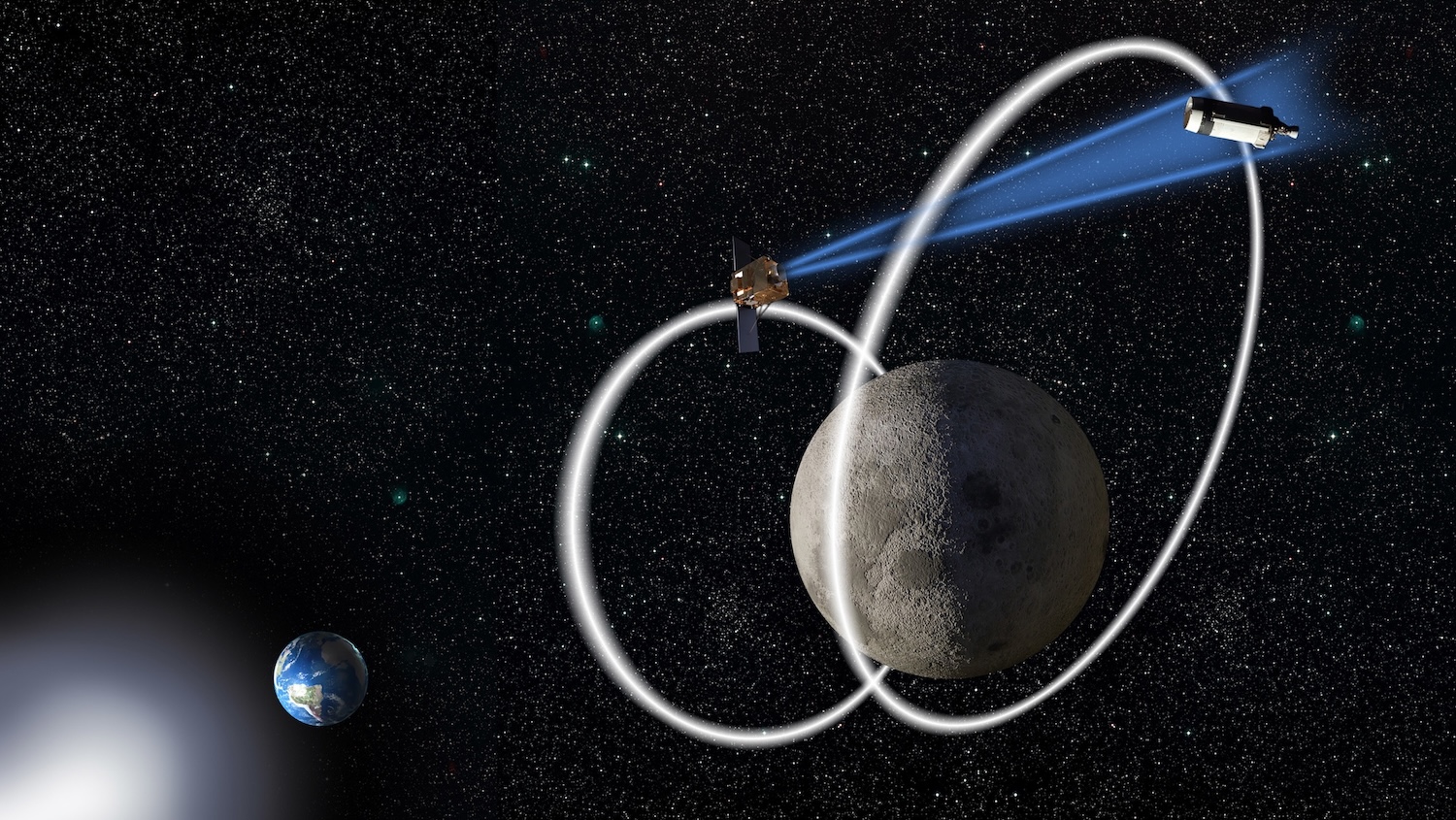
The AFRL’s Oracle series of missions serves as the testbed for this technology. By experimenting with highly mobile spacecraft capable of traversing the cislunar region, the Air Force aims to mitigate the technical risks associated with long-range orbital maintenance. These missions will test navigation techniques in the complex gravitational interplay between the Earth and the Moon, a prerequisite for any permanent military satellite presence.
The Role of Commercial Partnerships
The U.S. military’s decision to involve the private sector is a recognition that the pace of technological development in the commercial space industry currently outstrips traditional government procurement cycles. By seeking "commercial-off-the-shelf" or adaptable private solutions, the Pentagon hopes to avoid the protracted development timelines that have historically plagued large-scale defense programs.
"We have a role to play, but we’re not the lead," noted Gen. Chance Saltzman, the former top general of the Space Force, prior to his retirement. His comments reflect a pragmatic acknowledgment of the evolving nature of space operations: the military is not attempting to replace the scientific exploration led by NASA, but rather to establish a "security umbrella" for it. The goal is to avoid being "caught flat-footed" should the environment around the Moon become contested.
Industry experts anticipate that the contracts for the 2029 mission will likely be finalized by 2027, given the typical two-to-three-year development cycle for high-reliability satellite hardware. The RFI represents the first formal step in a competitive bidding process that will likely involve major defense contractors as well as emerging aerospace companies specializing in small-satellite constellations.
Broader Implications for International Space Law
The expansion of military activities into cislunar space poses significant questions regarding international space law, specifically the 1967 Outer Space Treaty. While the treaty prohibits the placement of "nuclear weapons or any other kinds of weapons of mass destruction" in orbit or on celestial bodies, it is notoriously vague regarding the deployment of conventional military surveillance, communication, or defensive assets.

The U.S. government argues that its actions are consistent with the "peaceful use" of space, provided they serve to protect assets and ensure the freedom of navigation. However, as the number of satellites in the cislunar region increases, the risk of misinterpretation of intent—or "accidental escalation"—rises. The presence of military-specific constellations, particularly those designed for "characterization" and "surveillance," may prompt other spacefaring nations to accelerate their own defensive or offensive programs, potentially leading to a localized arms race in the lunar vicinity.
Furthermore, the competition for "real estate" at the lunar south pole introduces a physical dimension to these geopolitical tensions. With limited landing zones that offer access to sunlight for power and water ice for life support and fuel, the ability of a nation to secure and monitor its interests will likely become a cornerstone of lunar policy.
Analysis: A New Era of Orbital Defense
The shift toward a cislunar constellation represents a transition from treating the Moon as a distant objective to treating it as an extension of the sovereign domain. The military’s interest in this region is not merely about exploration; it is about infrastructure. In the same way that global communications and commerce rely on the constellation of satellites in low-Earth orbit, a future lunar economy—involving mining, base operations, and deep-space transit—will require a similar architecture of support.
The Pentagon’s current strategy is one of prudent, proactive hedging. By developing the technology for a proliferated constellation now, the U.S. ensures that it maintains the capability to respond to potential threats in a region that will soon be bustling with human and robotic activity. While the current mission scope is limited, the trajectory of the program indicates that the Department of Defense is preparing for a long-term commitment. The coming years will be critical as the Space Force balances the need for rapid deployment with the complexities of operating in the unique and demanding environment of cislunar space.