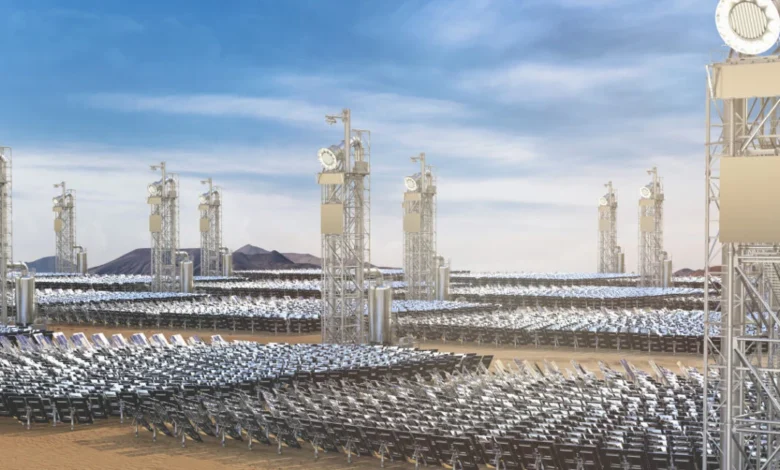
The challenge of intermittency has long been the primary obstacle to the universal adoption of solar energy. While photovoltaic (PV) panels have become the most cost-effective means of electricity generation in history, their inability to produce power after sunset or during inclement weather necessitates the construction of expensive, secondary infrastructure. Traditionally, this has meant pairing solar farms with massive lithium-ion battery arrays or keeping natural gas-fired "peaker" plants on standby. Now, a startup named 247Solar is piloting a modular, concentrated solar power (CSP) design that integrates a fossil-fuel-ready backup system directly into the generating hardware, potentially rendering dedicated, auxiliary power plants obsolete.
The Evolution of Concentrated Solar Power
To understand the significance of this development, one must look back at the trajectory of solar thermal technology. Over the past decade, concentrated solar energy—a method that uses mirrors to focus sunlight onto a central receiver to generate high-temperature heat—was widely viewed as the most promising solution for round-the-clock renewable power. Unlike PV panels, which convert photons directly into electricity, CSP systems generate heat that can be stored in molten salts or other thermal media, allowing turbines to spin long after the sun has set.
However, the rapid, unforeseen decline in the cost of PV technology fundamentally altered the landscape. As PV panels became commoditized, the capital-intensive nature of CSP plants, combined with their reliance on complex moving parts and high-maintenance, corrosive working fluids, made them difficult to justify. By the mid-2010s, investment in large-scale solar thermal projects slowed to a trickle, and the industry largely fell out of favor with major grid operators.
A Hybrid Approach to Grid Stability
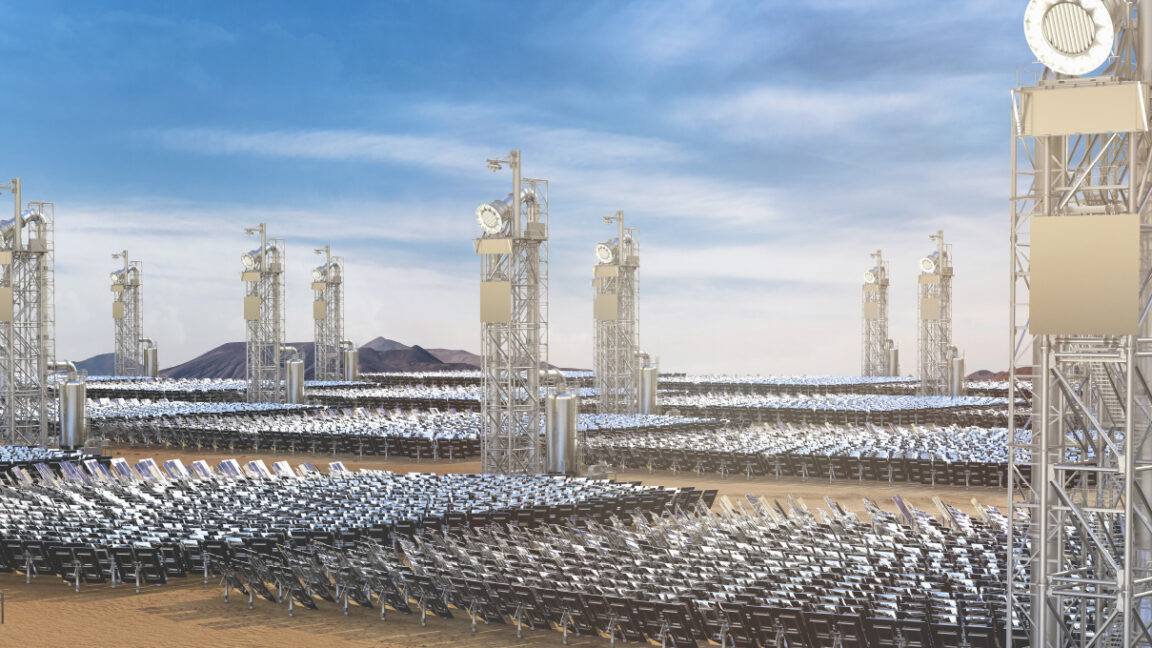
The innovation proposed by 247Solar involves a departure from the traditional, massive-scale CSP towers that dominated early industry efforts. Instead, the company utilizes a modular design that replaces traditional molten salt storage with ceramic pellets. By focusing sunlight onto a receiver that heats ambient air to approximately 970°C, the system creates a high-temperature thermal reserve.
Crucially, this system is engineered to be fuel-agnostic. The heat exchanger, which serves as the heart of the power cycle, is designed to be a "drop-in" replacement for the combustion chamber of a standard gas turbine. When solar energy is abundant, the stored heat from the ceramic pellets drives the turbine. During periods of low solar irradiation, such as consecutive cloudy days or extended nocturnal periods, the system can pivot to burning various fuels to heat the air in the exchanger, maintaining consistent power output without the need for a separate, secondary power plant.
Mark von Keszycki, a representative for 247Solar, emphasizes that this dual-purpose hardware effectively acts as its own insurance policy. "During times of low solar resource—long duration, bad weather, whatever the case may be—they’re able to burn a variety of fuels," von Keszycki stated. The integration of this backup capability adds less than 10 percent to the total system cost, a marginal premium for what is essentially a built-in power security feature.
Project Timeline and Technical Validation
The current pilot project in India represents the first major real-world test for this technology. While the initial installation is modest—operating at a 1-megawatt capacity with two 200 kW generators—it is intended to serve as a proof-of-concept for the system’s engineering reliability.
The timeline for the project centers on validating the "unknown unknowns," as described by company executive Bruce Anderson. By focusing on a small-scale, modular deployment, the company aims to collect high-fidelity data on thermal efficiency, turbine integration, and maintenance cycles. Following this validation phase, 247Solar intends to scale to 3-megawatt facilities. These larger installations will utilize a centralized tower configuration that feeds multiple receivers and heat storage units, allowing for greater economies of scale.
Economic and Industrial Implications
The economic viability of this system extends beyond the standard municipal power grid. Remote industrial operations, such as mining sites, represent a particularly attractive market. Currently, these sites often rely on diesel generators, necessitating the costly and carbon-intensive transport of fuel to remote locations.
A modular 247Solar installation could provide these operations with a renewable primary power source while retaining the ability to burn stored fuels during periods of low sunlight. Furthermore, the system produces "waste" heat at approximately 250°C, which can be harvested for industrial processes or absorption cooling. This creates a high-efficiency energy loop that could significantly lower operational costs for industries that require both consistent electricity and process heat.
From a grid-level perspective, the implications are equally significant. Many regional power grids are currently burdened by the cost of maintaining "peaker" plants—fossil fuel facilities that only run for a small fraction of the year to stabilize the grid when solar or wind production drops. If a solar installation can provide its own backup capacity within the same footprint, the requirement for dedicated, underutilized fossil fuel infrastructure diminishes.

Challenges and Future Outlook
Despite the technical promise, the transition to this hybrid model faces significant market hurdles. Current grid incentives in many jurisdictions are not designed to reward "around-the-clock" renewable energy; rather, they prioritize the lowest cost-per-kilowatt-hour, often ignoring the hidden costs of grid stabilization and backup capacity.
Furthermore, the technology must prove that it can withstand the wear and tear of daily thermal cycling. While the use of ceramic pellets avoids the phase-transition issues associated with molten salts, the long-term performance of the heat exchanger—which is subject to high-pressure, high-temperature fluctuations—remains a key area of study for industry analysts.
The 247Solar project arrives at a time when global energy policy is increasingly focused on the dual goals of decarbonization and grid reliability. As countries move to phase out coal-fired power, the ability to repurpose existing grid infrastructure—such as replacing combustion chambers in existing turbines with solar-compatible heat exchangers—could offer a cost-effective pathway to a cleaner energy future.
While the 1-megawatt pilot in India is small by global standards, its success could signal a shift in how utility providers approach the design of renewable energy assets. By moving away from the "all or nothing" model of solar generation and toward a system that integrates reliable, fuel-based backup as a standard feature, the energy sector may finally be finding a way to balance the intermittent nature of the sun with the uncompromising reliability required by a modern, electrified economy.
As the industry observes the results of the Indian installation, the focus will remain on whether these modular systems can achieve the projected cost-parity with traditional PV-plus-battery configurations. Should they prove successful, the "back to the future" approach of reviving concentrated solar—updated with 21st-century materials and modular engineering—may well become a cornerstone of the next generation of power generation.