Ford Reveals Mustang Mach-E Battery Longevity Data to Combat Electric Vehicle Range Anxiety

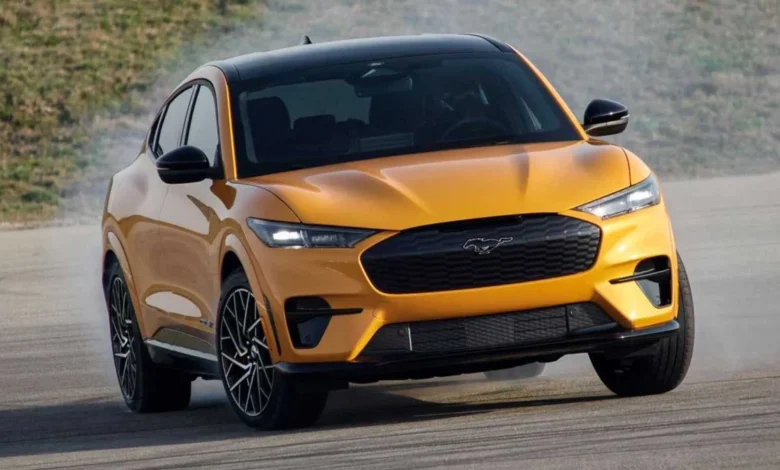
Many consumers remain hesitant to transition to battery-electric vehicles, often citing concerns regarding charging infrastructure, overall vehicle reliability, and the potential for prohibitive long-term maintenance costs. Among these fears, the prospect of premature battery degradation and the subsequent financial burden of a full battery pack replacement stands out as a primary psychological barrier for prospective buyers. However, recent data provided by Ford Motor Company suggests that these concerns may be significantly overstated, painting a much more optimistic picture of the durability of modern lithium-ion propulsion systems.
By examining the real-world performance of approximately 36,000 first-year Mustang Mach-E SUVs from the 2021 model year, Ford has compiled a comprehensive dataset that challenges the narrative of rapid battery capacity loss. The results of this analysis indicate that 95 percent of these early-production vehicles currently retain between 87 and 97 percent of their original battery health. On average, this cohort—which has now been on the road for several years—retains 92 percent of its initial capacity. This data serves as a critical empirical touchstone for the automotive industry as it attempts to normalize the ownership experience of electric vehicles.
A Chronology of Battery Performance Expectations
The automotive industry has long utilized a standard benchmark for battery lifespan: the goal of retaining at least 90 percent capacity after 100,000 miles of operation. Ford designed the battery architecture for the Mustang Mach-E with this decade-long performance target in mind. The latest figures from the manufacturer suggest that this goal is not only being met but, in many instances, surpassed by early adopters.
To better understand the trajectory of these batteries, it is helpful to look at the specific subsets of the data. Ford identified over 2,000 Mustang Mach-E units that have surpassed the 100,000-mile mark. Despite the heavy usage, these vehicles continue to exhibit an average battery health rating of better than 91 percent. Perhaps even more telling are the "hyper-milers"—a group of over 30 vehicles from the 2021 model year that have collectively exceeded 200,000 miles. Even among this high-mileage group, the average state-of-health (SoH) remains at a robust 88 percent.
These figures indicate that the degradation curve for modern EV batteries is not linear or precipitous, as some critics once feared. Instead, the capacity loss tends to occur most rapidly during the initial phase of the battery’s life before plateauing into a long-term, stable state of performance. This stability is fundamental to the resale value and utility of electric vehicles as they move into the secondary market.
Technical Context and Battery Chemistry Variations
The data provided by Ford pertains primarily to vehicles equipped with nickel-cobalt-manganese (NCM) battery chemistries. NCM batteries have long been the industry standard for high-performance electric vehicles because they offer a superior balance of energy density, power output, and weight. However, the automotive landscape is shifting.
In an effort to diversify supply chains and reduce costs, Ford and other major manufacturers are increasingly integrating lithium iron phosphate (LFP) battery packs into their product lines. LFP batteries are inherently more robust and typically offer a longer cycle life than their NCM counterparts. While they possess lower energy density—meaning they are heavier and provide slightly less range for the same physical volume—their chemical stability makes them highly resistant to degradation over time.

The primary drawback of LFP technology remains its performance in extreme cold, where the chemistry can struggle to maintain the same discharge rates as NCM cells. Despite this, the move toward LFP is expected to further enhance the long-term reliability profile of the broader EV fleet, as these batteries can withstand more frequent full-charge cycles without suffering the same rate of capacity loss.
Expert Recommendations for Battery Preservation
While the data supports the conclusion that EV batteries are inherently reliable, Ford emphasizes that owner behavior plays a non-trivial role in determining the long-term health of these components. The primary enemy of the modern lithium-ion pack is extreme thermal stress. Consistent exposure to either excessive heat or extreme cold can accelerate the degradation of the internal cell structure.
Ford’s engineering team has outlined several best practices to mitigate these effects:
- Optimized Preconditioning: Owners are encouraged to precondition their vehicles—heating or cooling the cabin and battery—while the car is still plugged into a power source. This ensures that the battery reaches an optimal operating temperature using grid power rather than drawing from its own stored energy, reducing the load on the cells during the initial drive.
- Strategic Charging Habits: While DC fast charging is a convenience necessity for long-distance travel, Ford recommends that owners rely primarily on Level 2 (AC) charging for daily use. Constant, high-intensity fast charging can generate significant heat, which, over thousands of cycles, may contribute to premature capacity loss.
- Environmental Awareness: In regions with high ambient temperatures, parking in the shade or in climate-controlled garages can prevent the battery management system (BMS) from having to work harder to maintain safe cell temperatures.
- Utilization of Digital Tools: The official Ford mobile application provides users with specific, vehicle-tailored charge-level recommendations. These guidelines are designed to help owners avoid keeping their batteries at 100 percent state-of-charge for extended periods, which is known to stress the electrolyte solution within the cells.
Broader Industry Implications and Market Trends
The release of this data comes at a pivotal moment for the electric vehicle transition. Various academic and industry-led studies have reached similar conclusions: modern EV batteries are, on the whole, outperforming early market expectations. Research analyzing independent fleets has frequently shown that even at 150,000 miles, many batteries retain between 81 and 91 percent of their original capacity, which is more than sufficient for the daily needs of the average driver.
The implications for the automotive market are twofold. First, the reliability of these battery packs suggests that the "ticking time bomb" narrative—where a vehicle is considered effectively totaled the moment the battery warranty expires—is increasingly outdated. As confidence in the longevity of these components grows, it is expected that the secondary market for used electric vehicles will stabilize. A vehicle with 100,000 miles that still retains 90 percent of its range is a significantly more attractive proposition than early skeptics predicted.
Second, the shift in focus from mere mileage to charging habits highlights a transition in consumer education. The challenge for automakers is no longer just building a battery that lasts; it is educating the consumer on how to operate that battery to ensure it reaches its maximum potential lifespan.
While manufacturers continue to invest in battery research and development, the data provided by the Mustang Mach-E fleet serves as a quantitative baseline. It confirms that the technology is maturing at an accelerated rate, and that the long-term viability of electric vehicles is supported by hard, verifiable evidence. For the average driver, the takeaway is clear: while the technology requires a different set of habits than a traditional internal combustion engine, it is proving to be a durable and reliable solution for long-term transportation needs. As more vehicles reach these high-mileage milestones, the automotive industry will continue to refine its understanding of battery aging, likely leading to even more efficient thermal management systems and more durable battery architectures in the coming generation of EVs.