
Trump Putin Liverpool Diddy Trial Uruguays Phantom Cows
Trump Putin Liverpool Diddy Trial Uruguay’s Phantom Cows: Unraveling Interconnected Threads of Global Intrigue
The nexus of global events, often perceived as disparate and isolated, can surprisingly reveal startling connections when examined through a lens of interconnectedness. This exploration delves into the seemingly unrelated phenomena of Donald Trump’s political trajectory, Vladimir Putin’s geopolitical maneuvering, the Sean "Diddy" Combs legal entanglements, the cultural significance of Liverpool, and the peculiar case of Uruguay’s phantom cows. While initially appearing as isolated news cycles, a deeper analysis suggests underlying currents of power, influence, and the manipulation of narratives that resonate across continents and disciplines. Understanding these linkages is crucial for a comprehensive grasp of contemporary global dynamics, impacting everything from international relations and economic policy to the subtle ways information is disseminated and perceived.
Donald Trump’s presidency and post-presidency have been characterized by a disruptive approach to established norms and international alliances. His "America First" policy, while resonating with a segment of the American populace, led to significant friction with traditional allies and a questioning of multilateral institutions. The rhetoric employed during his tenure often leaned towards strongman leadership, a style that finds parallels in the political discourse of other global figures. His business dealings, pre-dating his political career, have also been subject to intense scrutiny, with accusations of financial impropriety and dealings with foreign entities becoming a recurring theme. This aspect of his persona – the businessman turned politician – is significant, as it blurs the lines between personal enrichment and national interest, a theme that can be observed in various political landscapes. The constant media attention, both positive and negative, surrounding Trump has cemented his status as a perpetual newsmaker, often dominating headlines and shaping public discourse. This ability to command attention, regardless of the substance of the news, is a potent tool in the modern information age.
Vladimir Putin, the long-serving leader of Russia, has consistently projected an image of strength and strategic prowess on the international stage. His actions, from the annexation of Crimea to interventions in Syria and the ongoing conflict in Ukraine, have fundamentally altered the geopolitical landscape. Putin’s approach is often characterized by a calculated use of power, information warfare, and a willingness to challenge the existing world order. He has adeptly navigated complex international relations, often exploiting divisions among Western nations to advance Russia’s interests. The relationship between Trump and Putin, though often characterized by ambiguity and speculation, was a focal point during Trump’s presidency. The perceived alignment or mutual understanding between these two leaders raised concerns among international observers about the potential for a shift in global power dynamics. Putin’s long-term vision for Russia, often articulated through a narrative of historical grievance and a desire for renewed national prestige, provides a stark contrast to the more transactional and nationalist rhetoric of Trump, yet the common ground they sometimes found lay in a shared skepticism of established international norms.
The legal troubles surrounding Sean "Diddy" Combs, a prominent figure in the music and entertainment industry, represent a different facet of global intrigue, yet they touch upon themes of power, wealth, and allegations of misconduct that echo in other spheres. The numerous lawsuits and investigations, including allegations of sexual assault, human trafficking, and drug-related offenses, have cast a shadow over his public image and business empire. These legal battles highlight the potential for immense wealth and influence to be accompanied by allegations of abuse of power and exploitation. The media’s extensive coverage of these unfolding legal dramas, much like the coverage of Trump and Putin, demonstrates the public’s fascination with the lives of the wealthy and powerful, and the inherent interest in scandals that expose the darker underbelly of celebrity and industry. The interconnectedness here lies not in direct geopolitical strategy, but in the shared cultural narrative of immense power and its potential for corruption, a narrative that resonates globally.
Liverpool, a city with a rich cultural heritage, particularly its indelible association with The Beatles, also possesses a complex modern identity. Beyond its musical legacy, Liverpool has faced significant economic and social challenges, undergoing periods of regeneration and grappling with issues of urban decay and social inequality. Its resilience and distinct cultural character, however, remain a powerful force. In the context of global narratives, Liverpool serves as a microcosm of urban centers worldwide, facing the pressures of globalization, economic shifts, and the constant negotiation of identity. While seemingly tangential, the global dissemination of culture, whether through music, art, or even sports, can subtly influence public perception and contribute to broader cultural trends. The global reach of Liverpool’s music scene, for instance, has a long-standing impact on popular culture, shaping tastes and influencing artistic movements, a testament to the pervasive power of cultural exports.
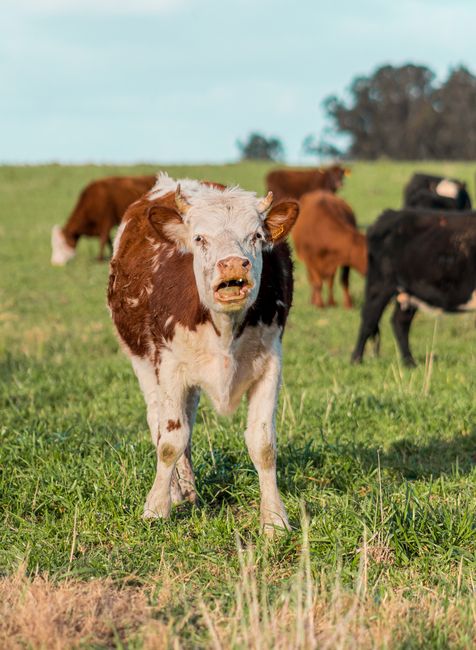
Uruguay’s "phantom cows" phenomenon, though seemingly bizarre, offers a unique lens through which to examine issues of data, regulation, and the sometimes-surreal discrepancies that can arise in complex systems. The existence of registered cattle that cannot be physically accounted for raises questions about the integrity of agricultural data, the effectiveness of oversight mechanisms, and the potential for discrepancies to be overlooked or even exploited. This case highlights the challenges of accurately tracking and managing vast numbers of livestock, a critical component of global food supply chains. The implications extend beyond agriculture, touching upon the broader themes of data reliability, regulatory compliance, and the potential for systemic failures, whether in financial markets, environmental monitoring, or indeed, agricultural registries. The very notion of "phantom" entities, whether in data or in more abstract economic terms, speaks to a hidden reality that can have tangible consequences.
The interconnections between these seemingly disparate topics begin to emerge when considering the overarching themes of power, influence, information, and narrative control. Trump’s presidency and Putin’s leadership both involved the strategic use of media and public discourse to shape perceptions and advance agendas. The allegations surrounding Diddy expose the potential for wealth and celebrity to shield individuals from accountability, a recurring theme in the public consciousness when powerful figures are involved. Liverpool, as a cultural hub, represents the global dissemination of influence, even if indirect, through cultural products. Finally, Uruguay’s phantom cows underscore the critical importance of accurate data and robust regulatory frameworks in maintaining the integrity of complex systems.
One can draw parallels between the manipulation of narratives in politics and the dissemination of potentially misleading information in other spheres. The constant barrage of news and opinion surrounding Trump and Putin, often framed in starkly partisan terms, can obscure factual realities and foster an environment where perception trumps evidence. Similarly, the intense media scrutiny of Diddy’s legal situation, while crucial for public awareness, can also contribute to a climate where speculation and public opinion heavily influence the narrative before legal processes are concluded. In this regard, the "phantom cows" represent a different kind of informational deficit – a factual void that raises questions about systemic transparency and the efficacy of oversight.
The economic underpinnings of power are also a unifying thread. Trump’s business background, Putin’s control over significant national resources, and Diddy’s vast entertainment empire all speak to the immense financial power wielded by individuals and states. The ability to amass and leverage wealth can profoundly influence political outcomes, regulatory environments, and even the flow of information. The phantom cows, while appearing to be a minor agricultural anomaly, could have broader implications if they point to systemic weaknesses that could be exploited for illicit financial gain or to circumvent agricultural regulations designed to ensure fair trade and food safety.
Furthermore, the globalized nature of information dissemination amplifies these connections. News and narratives travel instantaneously across borders, influencing public opinion and shaping perceptions of events in distant lands. The scandals involving Diddy, the political maneuvering of Trump and Putin, and even the peculiar story from Uruguay, are all consumed and interpreted within a globalized media ecosystem. This interconnectedness means that events in one part of the world can have ripple effects, influencing perceptions of leadership, justice, and economic stability elsewhere.
The "phantom cows" could also be viewed metaphorically. In the realm of international relations, are there "phantom policies" or "phantom alliances" that exist only in rhetoric or in obscured diplomatic channels? Just as the phantom cows represent a disconnect between registered data and physical reality, so too can certain international pronouncements or agreements be lacking in substantive action or genuine commitment. This metaphorical interpretation allows for a broader application of the concept of discrepancy and hidden realities across various domains.
The cultural impact of these interconnected threads is also significant. The perception of leadership, justice, and the exercise of power is continually shaped by the narratives that emerge from these diverse events. The ongoing legal battles of Sean Combs, the persistent controversies surrounding Donald Trump, and the assertive foreign policy of Vladimir Putin all contribute to a global discourse on ethics, accountability, and the nature of authority. Liverpool’s enduring cultural influence, though seemingly unrelated, adds another layer to the complex tapestry of global narratives, demonstrating how cultural products can transcend borders and influence consciousness.
Ultimately, understanding the connections between Donald Trump, Vladimir Putin, the Diddy trial, Liverpool, and Uruguay’s phantom cows requires moving beyond superficial headlines. It necessitates an examination of the underlying forces of power, influence, information control, and the inherent complexities of global systems. While these phenomena may appear unrelated on the surface, a deeper dive reveals shared themes of accountability, transparency, the impact of wealth and celebrity, and the subtle ways in which narratives are constructed and disseminated in our interconnected world. The phantom cows, in their literal and metaphorical manifestations, serve as a stark reminder of the importance of accurate data, robust oversight, and the potential for hidden realities to have profound consequences across all aspects of global affairs. The persistent scrutiny of political leaders like Trump and Putin, the ongoing legal entanglements of figures like Diddy, and the cultural resonance of places like Liverpool, all contribute to a dynamic global conversation about power, justice, and the very fabric of our interconnected existence.
