Global Hunger Declines but Regional Disparities Deepen as Africa and Western Asia Face Rising Food Insecurity

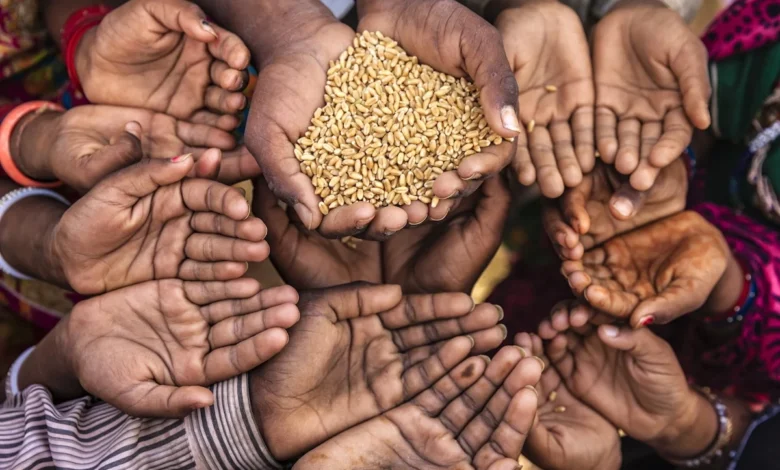
The 2025 edition of the State of Food Security and Nutrition in the World (SOFI) report, published jointly by five specialized United Nations agencies, reveals a complex and bifurcated global landscape where overall hunger levels are beginning to recede while specific regions descend deeper into crisis. Released by the Food and Agriculture Organization of the United Nations (FAO), the International Fund for Agricultural Development (IFAD), the United Nations Children’s Fund (UNICEF), the World Food Programme (WFP), and the World Health Organization (WHO), the report estimates that approximately 673 million people—roughly 8.2 percent of the global population—suffered from hunger in 2024. While this represents a marginal improvement from the 8.7 percent recorded in 2022 and 8.5 percent in 2023, the data underscores a troubling lack of uniformity in progress, with Africa and Western Asia bearing the brunt of persistent food insecurity.
A Statistical Overview of Global Undernourishment
The SOFI 2025 report provides a comprehensive data set that illustrates the volatile nature of global nutrition. According to the findings, between 638 million and 720 million people faced hunger in 2024. The mid-range estimate of 673 million reflects a decrease of approximately 15 million people from the previous year and 22 million from two years prior. This downward trend suggests that global agrifood systems are beginning to stabilize following the catastrophic disruptions of the early 2020s.
However, the headline improvement masks a deepening divide. In Asia, the proportion of the population facing undernourishment fell to 6.7 percent, a significant drop from the 7.9 percent recorded in 2022. Similarly, Latin America and the Caribbean have shown resilience; undernourishment in these regions decreased to 5.1 percent, affecting approximately 34 million people. This is a marked recovery from the 2020 peak of 6.1 percent, driven by targeted social protection programs and stabilizing local economies.
In stark contrast, the situation in Africa continues to deteriorate. The proportion of the African population facing hunger surpassed 20 percent in 2024, affecting 307 million people. This means that one in five people on the continent is currently experiencing hunger. Western Asia has also seen a negative trajectory, with 12.7 percent of the population—more than 39 million people—facing hunger, a trend largely attributed to prolonged geopolitical conflicts and economic instability in the region.
The Drivers of Insecurity: Conflict, Climate, and Cost
The report identifies a "triple threat" of drivers that have hindered the global recovery of food security: the lingering economic effects of the COVID-19 pandemic, the geopolitical shocks resulting from Russia’s invasion of Ukraine, and the accelerating frequency of extreme weather events.
The surge in global food prices between 2021 and 2023 played a central role in stalling progress. While median global food price inflation rose from 2.3 percent in late 2020 to 13.6 percent in early 2023, the impact was disproportionately felt in low-income nations. In these vulnerable economies, food price inflation peaked at a staggering 30 percent in May 2023. These price hikes effectively priced millions of families out of the market for nutritious food, forcing a reliance on calorie-dense but nutrient-poor staples.
Climate change remains a persistent "threat multiplier." The report highlights that extreme weather events, including prolonged droughts in the Horn of Africa and devastating floods in parts of Asia, have disrupted local production cycles. When combined with the disruption of global value chains—specifically the export of fertilizers and grains from the Black Sea region—the result is a fragile food system that struggles to adapt to sudden shocks.
The Affordability Crisis and Nutritional Deficits
Beyond the binary of "hunger" versus "satiety," the SOFI report emphasizes the growing crisis of dietary quality. In 2024, approximately 2.3 billion people—28 percent of the world’s population—experienced moderate or severe food insecurity, meaning they did not have regular access to adequate food.
The cost of a healthy diet remains a primary barrier to global health. Although the total number of people unable to afford a healthy diet fell to 2.6 billion globally (down from 2.76 billion in 2019), this progress was not shared by low-income nations. In these countries, the number of individuals unable to afford nutritious food rose to 545 million, up from 464 million five years ago. In lower-middle-income nations (excluding India), the figure rose to 869 million.

WHO Director-General Dr. Tedros Adhanom Ghebreyesus noted that while the world has made strides in specific areas, such as increasing the rates of exclusive breastfeeding and reducing stunting in some regions, the sheer scale of malnutrition remains an "unacceptable burden" on global public health. The inability to afford nutrient-rich foods like fruits, vegetables, and proteins leads to "hidden hunger," where individuals may consume enough calories to survive but suffer from debilitating micronutrient deficiencies.
The Impact on Vulnerable Populations and Children
The report places a heavy emphasis on the long-term consequences of undernutrition for the world’s youth. UNICEF Executive Director Catherine Russell highlighted that over 190 million children under the age of five are currently affected by wasting or stunting. These conditions do not merely represent a temporary lack of food; they result in permanent physical and cognitive impairments that limit a child’s ability to learn, work, and contribute to society in adulthood.
"Every child deserves the chance to grow and thrive," Russell stated. "Undernutrition robs them of the chance to live to their fullest potential. We must work in collaboration with governments and the private sector to ensure that vulnerable families have access to affordable, nutritious food."
The report calls for a strengthening of social protection programs, such as school meal initiatives and cash transfer systems, which have proven effective in shielding children from the worst effects of economic volatility. Furthermore, the agencies emphasize the importance of maternal nutrition and the promotion of breastfeeding as foundational pillars for lifelong health.
Policy Recommendations and the Path to 2030
With the 2030 deadline for the United Nations Sustainable Development Goals (SDGs) approaching, the SOFI 2025 report serves as a stark warning. SDG 2—Zero Hunger—is currently off track. Projections suggest that if current trends continue, 512 million people will still be chronically undernourished by 2030. Approximately 60 percent of those individuals will reside in Africa.
To avert this outcome, the UN agencies recommend a multi-pronged policy approach:
- Monetary and Fiscal Stability: Governments must implement transparent monetary policies to contain inflationary pressures on food.
- Targeted Social Safety Nets: Fiscal measures should be time-bound and specifically targeted toward the most vulnerable households to protect them during price spikes.
- Agrifood Innovation: Strategic investment in agricultural research and development (R&D) is essential to increase productivity and resilience against climate change.
- Infrastructure Development: Enhancing transportation and market information systems can reduce post-harvest losses and ensure that food moves efficiently from farms to urban centers.
IFAD President Alvaro Lario emphasized that rural and agricultural transformation is not just a humanitarian necessity but a matter of global security. "These investments are essential for ensuring food and nutrition security—they are also critical for global stability," Lario said.
Analysis of Global Implications
The findings of the SOFI 2025 report suggest a world at a crossroads. The recovery in Asia and Latin America demonstrates that when economic growth is paired with robust social policy, hunger can be reduced even in the face of global headwinds. However, the "decoupling" of Africa and Western Asia from this progress suggests that current international aid and investment strategies may be insufficient for regions plagued by systemic conflict and extreme climate vulnerability.
The persistent rise in the cost of healthy diets in low-income nations points to a structural failure in the global food trade. As long as nutritious food remains a "luxury" for 72 percent of the population in low-income countries, the cycle of poverty and malnutrition will continue to self-perpetuate.
The report concludes that achieving Zero Hunger is still possible, but it requires a fundamental shift from reactive crisis management to proactive system transformation. This includes de-risking investments for small-scale farmers, who produce much of the world’s food, and ensuring that global trade policies do not penalize the food security of the most vulnerable nations. As the world moves toward the second half of the decade, the disparity between regions serves as a critical reminder that global food security is only as strong as its weakest link.