Maserati Grecale Trofeo and Modena Redefine Performance Luxury in High-Stakes Compact SUV Segment

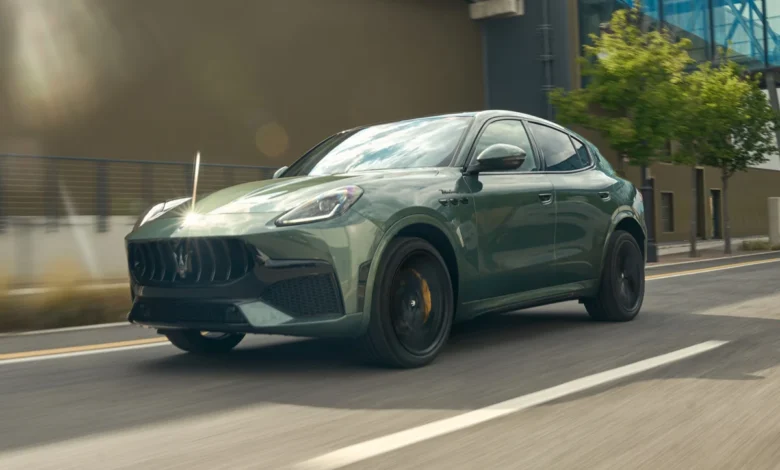
The arrival of the Maserati Grecale marks a pivotal moment for the Trident brand as it seeks to capture a significant share of the lucrative premium compact SUV market, a segment long dominated by German stalwarts. Positioned as the smaller sibling to the Levante, the Grecale represents the culmination of Maserati’s recent engineering overhaul, spearheaded by the development of the "Nettuno" engine architecture. While the brand has aggressively marketed the Nettuno V6 as a "100% Maserati" innovation, technical observers have noted a profound genealogical connection to the 2.9-liter V6 found in Alfa Romeo’s Quadrifoglio models. Both powerplants share a 90-degree "V" angle and various architectural similarities, including the plastic engine covers found within the engine bay. However, the Nettuno’s unique identity is forged through its patented Maserati Twin Combustion (MTC) technology, a dual-chamber ignition system derived from Formula 1, which allows the Grecale to achieve performance figures that challenge the upper echelons of its class.
The Evolution of the Nettuno V6 and Strategic Engineering
The genesis of the Nettuno engine was driven by Maserati’s requirement for a high-output, versatile powertrain capable of anchoring both the MC20 supercar and the high-performance variants of its SUV lineup. In the MC20, the engine utilizes a dry-sump lubrication system to handle extreme lateral G-forces; for the Grecale Trofeo, the engine has been adapted to meet the practical demands of a daily-driven luxury vehicle while maintaining a staggering 523bhp. This output places the Trofeo 20bhp ahead of the Alfa Romeo Stelvio Quadrifoglio, a margin that, while seemingly small on paper, translates to a tangible advantage in real-world acceleration and top-end speed.
Maserati’s decision to utilize the "Giorgio" platform—the same highly-praised architecture underpinning the Alfa Romeo Giulia and Stelvio—provided a robust foundation for the Grecale. However, Maserati engineers extended the wheelbase and widened the track to provide a more "grand touring" feel compared to the frenetic agility of the Alfa Romeo. This strategic positioning allows the Grecale to offer a blend of Italian soul and daily usability that the brand hopes will lure buyers away from the Porsche Macan and the BMW X3.
Performance Benchmarking: The Trofeo’s Raw Capability
In rigorous testing environments, such as the Millbrook Proving Ground, the Grecale Trofeo has demonstrated a level of performance that justifies its flagship status. Despite damp track conditions during initial evaluations, the Trofeo successfully matched its factory-claimed 0-62mph time of 3.8 seconds. This performance is facilitated by a sophisticated launch control system that allows the engine to build to approximately 3,000rpm before engaging the drivetrain. When the system is released, it unleashes 457lb ft of torque across both axles, a transition described as "violent" by those behind the wheel.
Unlike many of its competitors, which are electronically limited to a top speed of 155mph, the Grecale Trofeo is permitted to pull toward a top speed of 177mph. This lack of restriction ensures that the vehicle remains composed and powerful at autobahn speeds, where German rivals often hit a digital ceiling. However, this raw power is not without its idiosyncrasies. The Trofeo’s suspension tuning leans toward the softer side of the performance spectrum, leading to a noticeable rearward pitch during hard launches. Under maximum acceleration, the unloaded front wheels can struggle for traction, occasionally resulting in a series of "hops" as the all-wheel-drive system and electronic stability controls fight to manage the massive torque load.
The Modena V6: Balancing Power and Accessibility
While the Trofeo occupies the spotlight, the Modena trim represents the volume-selling heart of the Grecale’s six-cylinder range. Utilizing a de-tuned version of the non-electrified Nettuno engine, the Modena produces 385bhp and 369lb ft of torque. This configuration enables a 0-62mph sprint in 4.9 seconds and a top speed of 160mph. On the competitive landscape, these figures place the Modena in direct contention with the BMW X3 M50 and the Audi SQ5.
The price premium for the Modena is notable, often sitting approximately £10,000 above its German counterparts. Maserati justifies this gap through the inclusion of higher-quality materials, such as the oversized aluminum paddle shifters, and a more "operatic" engine character. However, the Modena has faced some criticism for its use of synthesized engine noise. While the Nettuno engine possesses a naturally gravelly and hoarse intake note that becomes smoother at higher revolutions, the cabin experience is heavily augmented by the vehicle’s audio system. This synthesis remains constant even in environments like tunnels, where natural exhaust echoes would typically fluctuate, leading some enthusiasts to label the acoustic experience as somewhat contrived.
Transmission and Drivability
Both the Trofeo and Modena variants utilize the ubiquitous ZF eight-speed automatic transmission, a gearbox favored by BMW’s M division and Alfa Romeo. Maserati’s calibration of the ZF unit focuses on a balance between "snappy" shifts in Sport and Corsa modes and "silky" transitions in Comfort or GT modes. While modern dual-clutch transmissions (DCTs) may offer marginally faster gear changes, the ZF’s torque-converter design provides superior smoothness in stop-and-go traffic, an essential trait for an "everyday" luxury SUV.
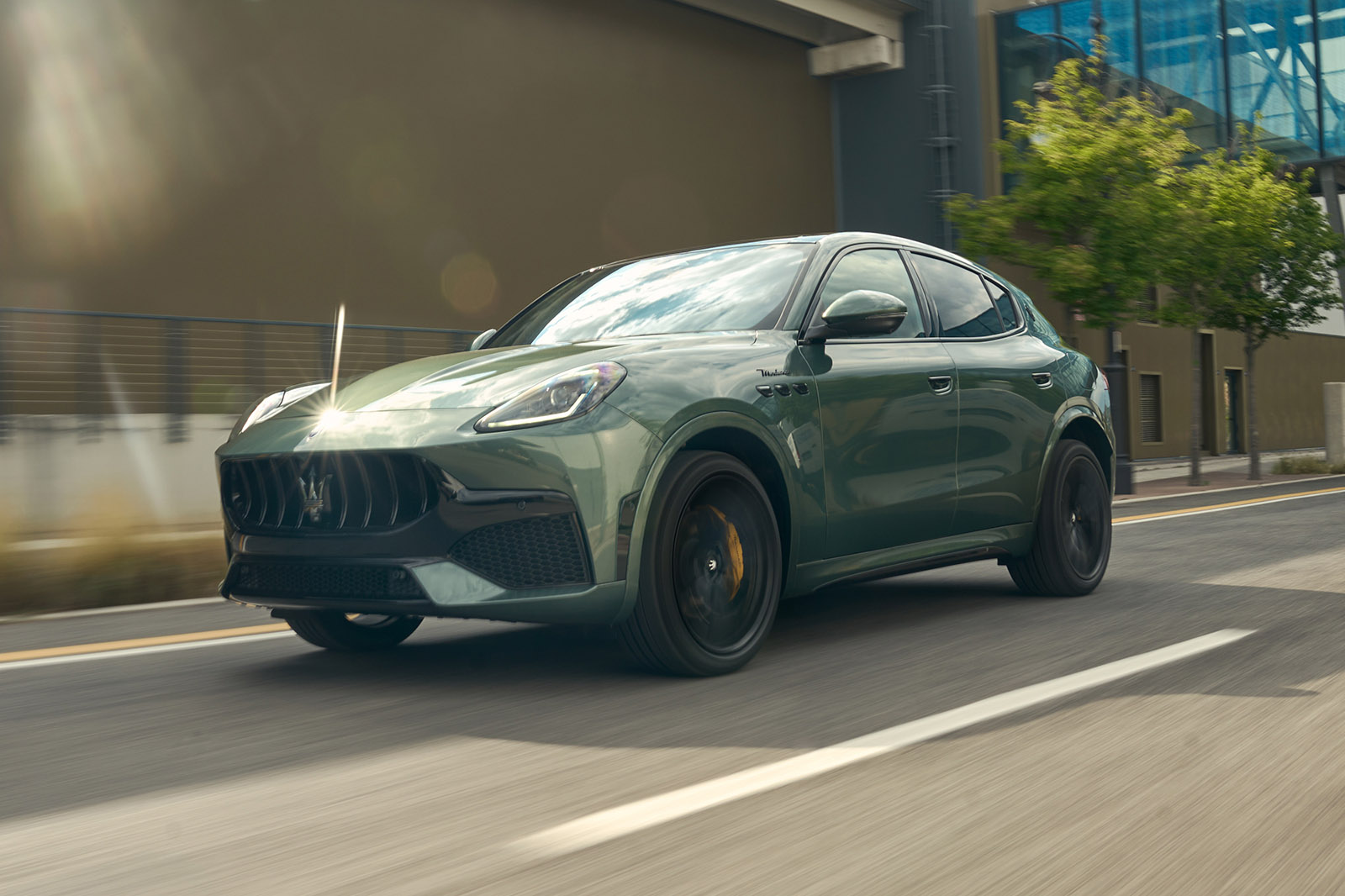
A defining characteristic of the Grecale’s drivetrain is its short gearing. In an era where many performance cars, particularly those from Porsche, feature long gear ratios that make it difficult to enjoy the engine’s full range without exceeding legal speed limits, the Maserati offers a more engaging experience. Drivers can reach the redline in second gear and progress significantly through third before reaching 60mph, providing more opportunities to utilize the column-mounted metal paddles and hear the V6’s crescendo.
Handling and Track Dynamics
On technical routes, such as the Hill Route at Millbrook, the Grecale reveals its dual nature. As a 2,000kg SUV with a focus on luxury, it is not a dedicated track machine. The suspension, even in its firmest settings, allows for a degree of body roll that requires careful management from the driver. However, once the weight is settled into a corner, the Grecale acquits itself with surprising competence.
The vehicle’s handling is bolstered by:
- Maserati-Specific Tires: The Bridgestone Potenza Sport tires were developed specifically for this chassis, providing high levels of lateral grip and communicative steering feedback.
- Rear-Biased All-Wheel Drive: The system naturally favors the rear axle, giving the car a traditional sporty feel.
- Electronic Limited-Slip Differential (eLSD): The eLSD is programmed to aggressively send power to the outside rear wheel during cornering, helping to rotate the vehicle and mitigate understeer.
Chronology of Development and Market Context
The journey of the Grecale began in late 2020 when Maserati first teased the model during the MC20 premiere. Originally slated for a 2021 release, the global semiconductor shortage forced Maserati to delay the launch until early 2022. This delay, while frustrating for the brand, allowed for further refinement of the Maserati Intelligent Assistant (MIA) infotainment system, which is based on Android Automotive OS and represents a significant leap forward in cabin technology for the brand.
The Grecale is a cornerstone of Maserati’s "Folgore" electrification strategy. While the Trofeo and Modena celebrate the pinnacle of internal combustion, they share the stage with the Grecale Folgore, the brand’s first fully electric SUV. This dual-track approach allows Maserati to cater to traditionalists who value the "Nettuno" V6’s mechanical soul while preparing the brand for the mandatory transition to zero-emission vehicles in the coming decade.
Implications for the Maserati Brand
The Grecale’s success is critical for Maserati’s financial health within the Stellantis group. By entering the high-volume D-SUV segment, Maserati is attempting to increase its annual production numbers and stabilize its revenue streams. Industry analysts suggest that the Grecale could eventually account for over 40% of Maserati’s total global sales.
The decision to distance the Nettuno engine from Alfa Romeo’s V6—at least in marketing—highlights Maserati’s desire to reclaim its status as a premier engine manufacturer. For decades, Maserati relied on Ferrari-sourced engines, but with the separation of the two brands, Maserati has had to prove it can once again engineer world-class powerplants in-house at the Modena plant.
In summary, the Maserati Grecale Trofeo and Modena offer a compelling, albeit expensive, alternative to the established German luxury SUVs. While they share certain DNA with Alfa Romeo, the infusion of the Nettuno V6, bespoke suspension tuning, and a higher level of interior craftsmanship creates a distinct Italian identity. For the driver who prioritizes character, "operatic" soundtracks, and high-speed stability over clinical German efficiency, the Grecale stands as a bold statement of Maserati’s enduring relevance in the modern era.