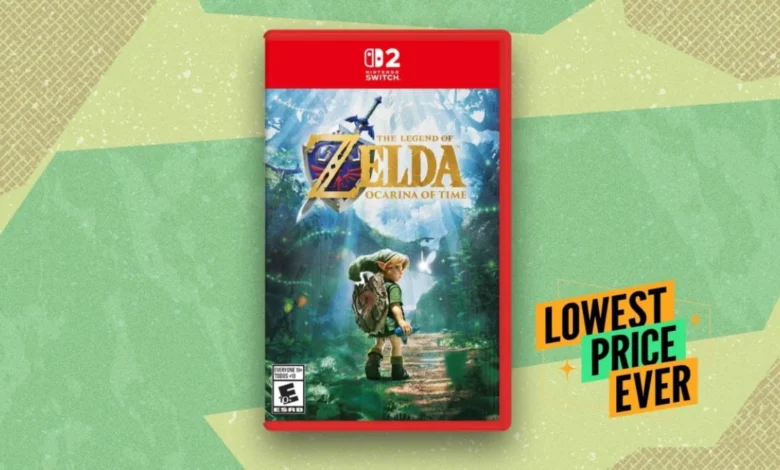
Following the highly anticipated announcement at this week’s Nintendo Direct event, retailers have officially opened pre-orders for the comprehensive remake of The Legend of Zelda: Ocarina of Time. Walmart has emerged as the frontrunner for early adopters, offering the title at a discounted price of $59.99, a $10 reduction from the standard $69.99 MSRP. This pricing strategy reflects a broader trend in the gaming industry to incentivize pre-orders for major first-party titles, particularly those intended to serve as "system sellers" for new hardware cycles.
The release of this title is scheduled for November 5, 2026, coinciding with the broader rollout of the Nintendo Switch 2. As consumer interest in the next-generation console continues to climb, the demand for high-profile software titles has intensified. Industry analysts note that the rapid pace of pre-order uptake suggests that the current discount may be one of the few opportunities for consumers to secure the game at a reduced rate prior to its launch.
Historical Context and Development Significance
The Legend of Zelda: Ocarina of Time remains one of the most critically acclaimed titles in the history of interactive entertainment. Originally released in 1998 for the Nintendo 64, it set the standard for 3D action-adventure games, introducing mechanics such as Z-targeting and context-sensitive button mapping that are now industry staples.
The 2026 remake is not merely an upscaled port. According to official briefings from Nintendo developers, the game has been rebuilt from the ground up to leverage the superior processing capabilities of the Nintendo Switch 2. Key enhancements include a complete overhaul of the graphical engine, the integration of fully voice-acted cutscenes, and modernized gameplay mechanics—most notably the inclusion of a dedicated jump button, a feature previously absent in the original 1998 release.
The decision to revisit this specific title during the 40th anniversary of the franchise underscores Nintendo’s strategic focus on leveraging its intellectual property to anchor the launch of the Switch 2. By pairing a generational hardware leap with a modernized version of a "greatest hits" title, the company aims to capture both long-term fans and a new demographic of players.
Pre-order Dynamics and Collector Incentives
The announcement of the Nintendo Switch 2 The Legend of Zelda 40th Anniversary Edition console has created a complex market for physical media. It is important for consumers to note that the special edition console does not include a bundled copy of the game, necessitating separate purchases.
Nintendo has confirmed that the initial manufacturing run of physical copies will feature "textured foil cover art." While retail listings currently do not specify whether individual pre-orders are guaranteed to include this limited-run packaging, purchasing early remains the most effective method to increase the probability of receiving this variant. Retailers are currently managing high volume, and as inventory allocations for launch day are finite, the risk of early stock depletion remains significant.
Chronology of the 40th Anniversary Celebrations
The lead-up to this release has been defined by a series of strategic milestones:

- Early 2026: Speculation regarding the Switch 2 launch lineup intensified, with rumors pointing toward a major franchise revival.
- August 2026: Nintendo officially announced the 40th Anniversary of the Legend of Zelda series, setting the stage for major project reveals.
- September 9, 2026: The Nintendo Direct event provided the first definitive look at the Ocarina of Time remake, confirming the November 5 release date.
- September 2026 (Ongoing): Major retailers, including Walmart, Amazon, and Best Buy, initiated pre-order programs, with aggressive pricing strategies being deployed to capture market share.
Industry Implications and Market Analysis
The $59.99 price point for this title is notable in an era where major AAA releases are increasingly gravitating toward a $70 baseline. By offering a discount, retailers are utilizing the game as a loss-leader to drive traffic to their gaming departments during the critical pre-holiday shopping window.
Market analysts suggest that this strategy serves two purposes. First, it ensures that the Nintendo Switch 2 launch library maintains high "attach rates"—the ratio of software units sold to hardware units sold. Second, it generates consumer goodwill, which is vital as the industry navigates a transition period between hardware generations.
There is also significant discussion surrounding the "missing" content of the original release. The original N64 version of Ocarina of Time was notoriously subject to storage limitations, which prevented the inclusion of several planned areas, most notably the "Light Temple." While Nintendo has remained tight-lipped regarding specific design changes, the promotional materials suggest a more expansive world map, leading many to speculate that the development team may finally be incorporating previously cut content into this iteration.
Technical Advancements
The jump to the Nintendo Switch 2 hardware allows for a significant departure from the limitations of the 1990s architecture. Beyond the improved textures and lighting models, the game is expected to support advanced features like high-fidelity dynamic resolution and improved frame rate stability. These technical upgrades are designed to satisfy modern expectations for open-world exploration, ensuring that the game feels contemporary while retaining the structural integrity of the original design.
For developers, the challenge lies in balancing fidelity with nostalgia. By altering movement mechanics—such as the aforementioned jump functionality—the developers are fundamentally changing how the player interacts with the environment. This necessitates a rebalancing of combat encounters and puzzle designs to ensure that the game remains challenging without becoming trivialized by increased mobility.
Consumer Guidance and Best Practices
For those looking to secure a copy, several factors should be considered:
- Platform Discrepancies: Ensure that the pre-order is specifically for the physical edition if the foil cover art is a priority, as digital pre-orders will not include physical collector elements.
- Price Protection: Many retailers offer price-matching policies; if the price fluctuates further before the November 5 release, consumers are encouraged to monitor their orders to ensure they are paying the lowest offered rate.
- Availability: Given the high historical demand for Legend of Zelda titles, the physical version of the game is likely to experience supply chain constraints. Pre-ordering through reputable, established retailers is recommended to avoid secondary market premiums.
As the industry moves toward November, the focus will shift from pre-order availability to the actual performance of the software. The success of the Ocarina of Time remake will likely serve as a barometer for how Nintendo intends to handle its back catalog moving forward. If this title performs well, it may signal a shift toward more frequent, high-fidelity remakes of classic titles, providing a steady stream of content for the Switch 2 hardware platform.
In summary, the early availability of the Ocarina of Time remake at a reduced price point represents a strategic move by retailers to capitalize on the excitement surrounding the 40th anniversary of the franchise. As the November 5 launch date approaches, consumers are advised to act swiftly to secure their copies, as the combination of limited-edition packaging and the high cultural status of the game is expected to drive demand well beyond current supply forecasts. The evolution of this game from a 1998 classic to a 2026 flagship release serves as a testament to the enduring legacy of the franchise and the ongoing innovation within the gaming industry.